











Gun violence remains one of the most urgent public safety challenges facing American cities. But you can’t solve a problem you can’t see. That’s why ShotSpotter® data has become such a critical resource for law enforcement agencies, city leaders, community organizations, and researchers working to reduce gun violence. The question isn’t just whether gunshot detection works — it’s how to think about the data it produces and how to put that data to work.
Here’s what you need to know.
Where ShotSpotter Goes — and Why
A common misconception is that ShotSpotter coverage areas are selected based on demographics. They are not. Coverage areas are determined by historical gun-related data — specifically, where gunfire incidents, shooting victims, and gun crime have been concentrated over time. The data drives the decision, not the demographics of the neighborhood.
The purpose is straightforward: put detection services where they are needed most. Every ShotSpotter sensor placed in a high-gunfire area represents an opportunity to detect a shooting faster, dispatch help sooner, and potentially save a life. At the same time, data-driven placement avoids the unnecessary costs of deploying technology in areas where gunfire activity doesn’t warrant it. The result is a more efficient use of limited public safety budgets — maximizing coverage impact while directing resources where they can do the most good.
The Data Gap ShotSpotter Fills
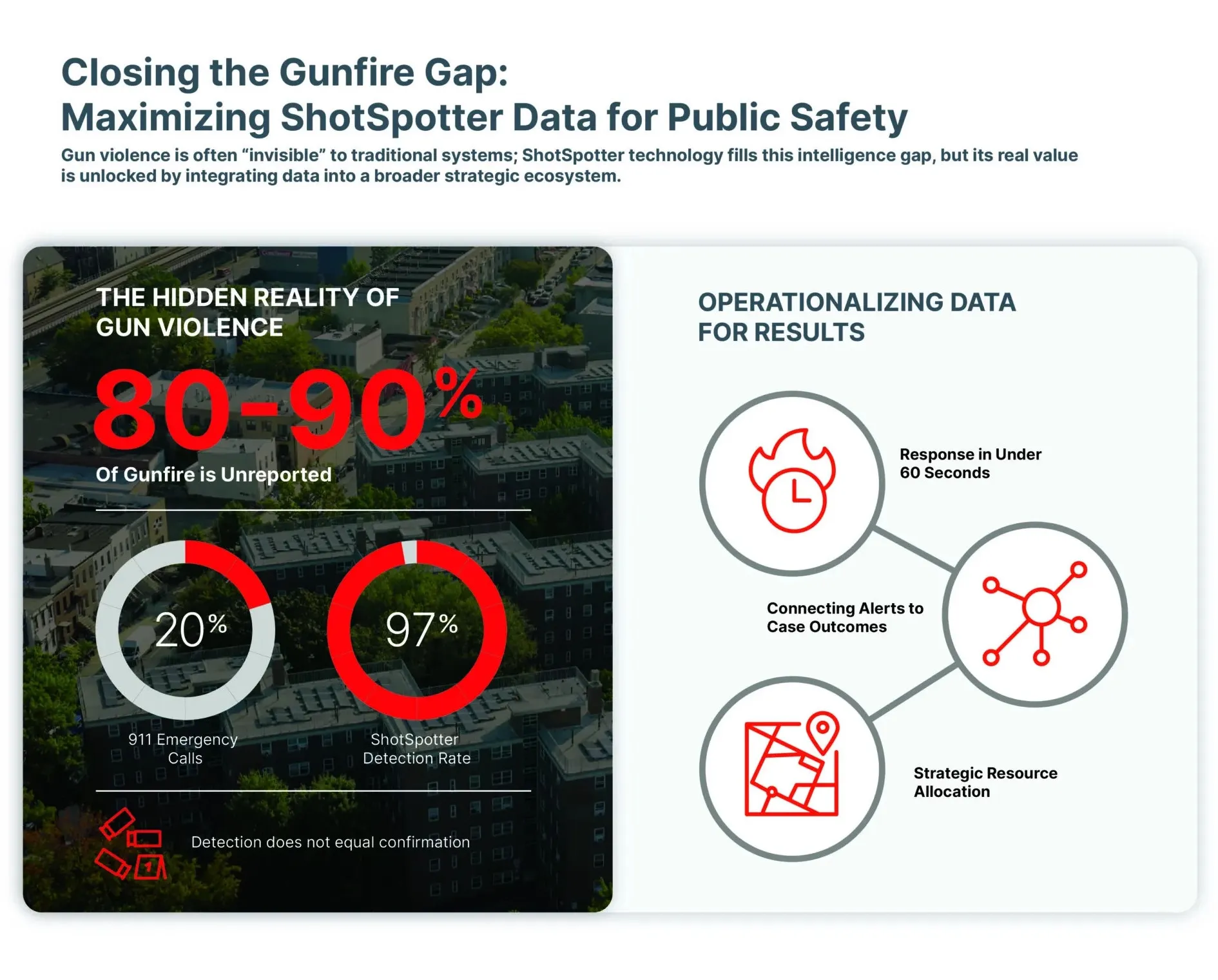
Research consistently shows that the vast majority of gunfire — as much as 80 to 90 percent — goes unreported to 911. That means cities relying solely on emergency calls are making public safety decisions based on a fraction of the real picture. ShotSpotter closes that gap by detecting gunfire events that would otherwise go unrecognized, giving agencies a far more complete understanding of when and where gun violence is actually occurring.
This distinction matters — but data alone doesn’t save lives. What matters most is what happens in the seconds and minutes after an alert is received. ShotSpotter data must be immediately combined with the next steps: dispatching officers, coordinating emergency medical response, activating cameras and other technologies, and beginning evidence collection. Time is precious, and lives may be at stake. The real value of ShotSpotter data isn’t just in knowing that gunfire occurred — it’s in triggering a rapid, coordinated response that turns awareness into action before the window to help closes.
Connecting the Dots: ShotSpotter Alerts, Calls for Service, and Case Data
One of the most overlooked challenges in gunshot detection isn’t the technology itself — it’s what happens to the data after the response. When gunfire is detected within a covered area, a ShotSpotter alert is published to the agency via Patrol and Communications, setting one chain of events in motion. When a 911 call comes in or an officer files a report, that generates a separate Call for Service (CFS) and, potentially, a case number. Too often, these two paths never cross.
The ShotSpotter alert lives in one system. The CFS lives in CAD. The case file lives in RMS. Without a deliberate effort to connect them, agencies lose the ability to understand how the ShotSpotter alert contributed to the outcome — whether it led to evidence recovery, victim identification, an arrest, or a prosecution. That intelligence gap doesn’t just affect reporting; it undermines the agency’s ability to evaluate the tool’s real-world impact and make informed decisions about resource allocation.
The root of the problem is that most agencies don’t have a built-in mechanism to tie this information back together on the back end. There’s no automatic link between a ShotSpotter alert and the downstream CFS or case record. Unless someone manually bridges that gap — through policy, workflow, or integrated technology — the connection is lost. And when that happens, the full story of what ShotSpotter made possible never gets told.
Agencies that close this loop — by linking alert data to CFS records and case outcomes — gain a dramatically clearer picture of how gunshot detection drives results. They can track which alerts led to evidence, which supported investigations, and which contributed to prosecutions. That connected data becomes the foundation for demonstrating value, securing funding, and building community trust.
Thinking About Alerts vs. Confirmed Shootings
One of the most common misunderstandings about ShotSpotter data is the relationship between alerts and confirmed shootings. An alert means the system detected a sound consistent with gunfire and dispatched that information to law enforcement. Whether that alert results in a “confirmed” shooting depends on what officers find when they arrive — shell casings, victims, witnesses, or other physical evidence.
It’s important to understand that the absence of evidence at the scene doesn’t mean no gunfire occurred. Shooters move. Casings get picked up. Bystanders scatter. A significant percentage of gunfire events leave no trace by the time officers respond. That’s precisely why the data is valuable — it captures events that the traditional system misses entirely.
Agencies that get the most value from ShotSpotter data treat alerts not as binary “confirmed or unconfirmed” events, but as investigative leads that contribute to a broader intelligence picture.
Using ShotSpotter Data Operationally
The most effective agencies don’t just respond to individual alerts — they use ShotSpotter data strategically. Here are several ways the data drives real outcomes:
- Faster emergency response. ShotSpotter typically alerts officers to gunfire in under 60 seconds, often before any 911 call is placed. That speed can be the difference between life and death for gunshot victims who need immediate medical attention.
- Evidence collection and case building. Precise time-and-location data helps detectives pinpoint where to look for shell casings, connect incidents through the National Integrated Ballistic Information Network (NIBIN), and link firearms used across multiple events. This turns isolated incidents into connected investigations.
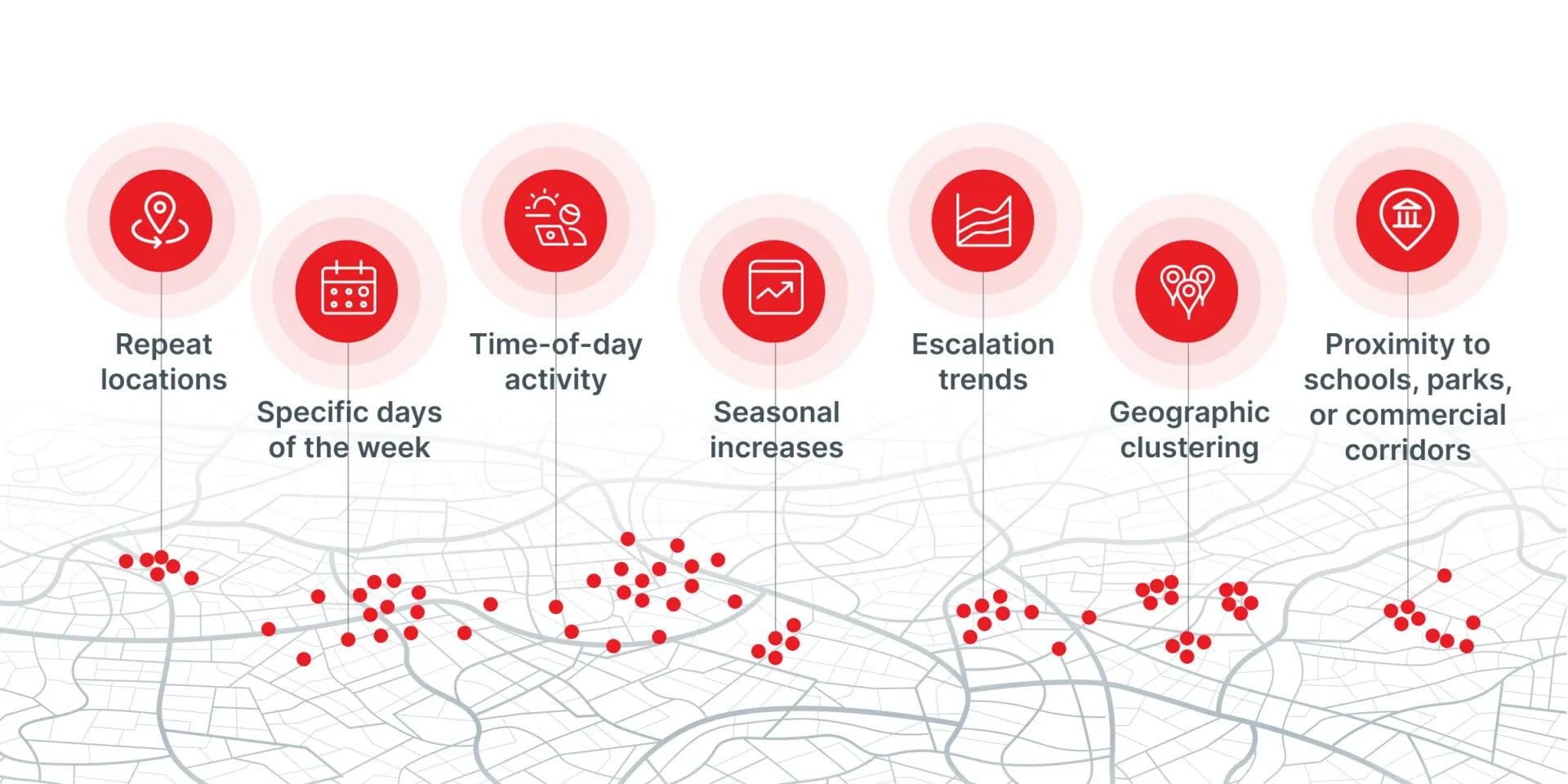
- Resource allocation. Aggregate ShotSpotter data reveals where gunfire concentrates, allowing agencies to deploy patrol, community outreach, and violence intervention resources where they’re needed most — not just where calls happen to come in.
- Integration with other technologies. ShotSpotter data works hand-in-hand with license plate readers, camera systems, real-time crime centers, and even drone-as-first-responder programs. The alert provides the “when and where” that activates these other tools.
- Community transparency. Several cities publish ShotSpotter data publicly, giving residents and community organizations a shared, objective set of facts about gunfire in their neighborhoods. This transparency supports informed conversations about public safety priorities.
What ShotSpotter Data Is Not
It’s equally important to be clear about what ShotSpotter data doesn’t do. It is not a surveillance tool that listens to conversations — the system is designed exclusively to detect the acoustic signature of gunfire, which falls outside the range of human speech. Audio snippets captured by the system are limited to the sound of the potential gunfire event, with brief baseline audio on either side, and are automatically deleted after 30 hours.
ShotSpotter data also doesn’t tell the whole story on its own. It’s one piece of a larger public safety ecosystem. Agencies that see the best results are those that integrate ShotSpotter into a comprehensive strategy — one that includes community engagement, violence intervention programs, strong investigative follow-through, and coordination with prosecutors.
Getting Started: Best Practices for Using ShotSpotter Data
If your agency is deploying or already using ShotSpotter, consider these principles for getting the most from your data:
- Define your goals. Are you focused on rapid response, investigative support, resource planning, or community transparency? Your goals shape how you collect, analyze, and act on the data.
- Engage stakeholders early. Brief prosecutors, city leadership, and community members on what the data shows and what it means. Shared understanding prevents misinterpretation.
- Look at trends, not just individual events. The real power of ShotSpotter data emerges over time. Track changes in gunfire activity week over week, month over month, and season over season to identify patterns and measure the impact of interventions.
- Develop clear policies. Establish standard operating procedures for alert response, evidence documentation, and data sharing. Consistency improves both outcomes and accountability.
- Commit to transparency. Share your data and your results. Communities deserve to understand both the scope of gun violence and what’s being done about it.
The Bigger Picture
Gun violence is a community problem that demands a data-informed response. ShotSpotter data gives cities something they’ve never had before: a real-time, objective measure of gunfire activity that doesn’t depend on whether someone picks up the phone. When used thoughtfully — as part of a broader strategy, with clear policies and community engagement — it becomes one of the most powerful tools available for understanding and reducing gun violence.
The data is there. The question is what you do with it.
At SoundThinking, we believe better data leads to better decisions — and better outcomes for the communities we serve. If you’d like to explore more about ShotSpotter data in your community, please email us.