











What happens when real-time data is paired with disciplined investigative work? During a recent SoundThinking webinar, three members of the Miami Police Department walked through exactly that. Lieutenant Alejandro Gutierrez, who built Miami’s Real-Time Crime Center (RTCC) from a proof of concept into a 1,500-camera operation, joined Detective Rob Thompson and Lieutenant Stephen Castell from the department’s Crime Gun Intelligence Center (CGIC) to explain how the two units work as one. The webinar was hosted by SoundThinking Customer Success Director Richard Bash.
The result was an hour-long case study in operational integration, moving from a single ShotSpotter® alert through ballistic analysis, multi-agency coordination, a search warrant, a suspect interview, and a life sentence — confirmed via text message while the webinar was still in progress!
Building a Real-Time Crime Center That Scales
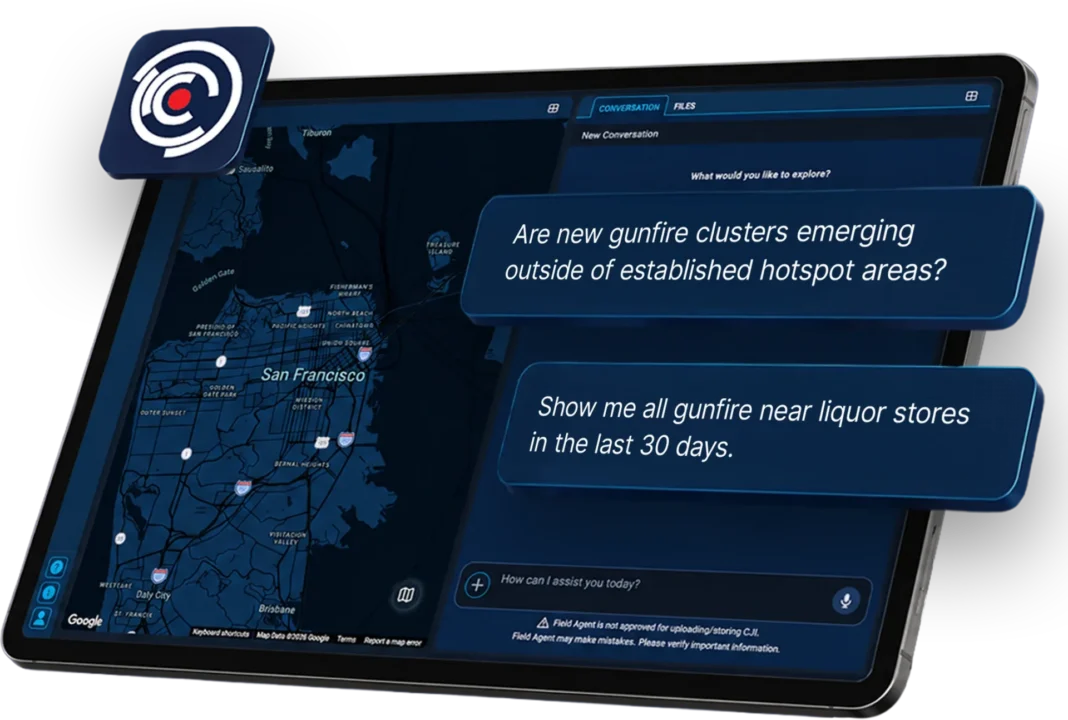
Miami’s RTCC did not start with a big budget or a big room. In 2017, the department launched a proof of concept with 17 cameras. By 2019, the program was operational. Today, it runs more than 1,500 cameras, staffs 12 officers across a 21-hour daily schedule, and serves as a hub for ShotSpotter alerts, license plate reads, body-worn camera feeds, and facial recognition lookups, all integrated through a single platform.
Lieutenant Gutierrez’s advice for agencies without that kind of infrastructure was direct: you do not need it to start. A laptop, a connectivity feed, and one dedicated employee who will monitor, advise, and push information to officers in the field is enough to prove the concept. Once commanders see the return, the investment follows.
The RTCC’s value extends well beyond gun violence. Officers use it to determine fault in traffic accidents, track fleeing suspects, and provide real-time situational awareness for any call that unfolds in front of a camera. But its deepest impact, as the webinar made clear, comes from what happens after officers leave a scene.
Watch the How Miami PD Integration RTCC and CGIC Workflows on Demand
How the CGIC Turns Shell Casings into Suspects
The Crime Gun Intelligence Center is Miami PD’s investigative arm for firearm crime, and it sits under the same intelligence support umbrella as the RTCC. Every firearm recovered in the City of Miami passes through the CGIC first. Every recovered casing from a ShotSpotter-detected shooting goes through their National Integrated Ballistic Information Network (NIBIN) machine.
That process used to take six months to a year. By the time intelligence reached investigators, it was outdated. The CGIC changed that by bringing NIBIN in-house through a Federal ATF grant, training its own technicians, and partnering with the National NIBIN Training and Correlation Center (NNCTC) for rapid lead generation. Today, priority acquisitions, homicides, and gang-related contact shootings generate a NIBIN lead within an hour. Everything else turns around within 72 hours.
The unit started with two detectives and now is up to 15, each trained by Detective Thompson personally. Multiple detectives focus on NIBIN leads and felon-in-possession cases. Another detective is dedicated entirely to ATF E-Trace entries for the approximately 3,800 firearms recovered in Miami each year, building intelligence on straw purchasers who feed the gang supply chain. Another assigned detective manages inspections, test fires, and E-Trace input. Another, working alongside a CSI tech, keeps the NIBIN machine fed with casings from scenes and test fires.
The unit does not wait for investigators to bring them a case. When a shooting occurs, their first call is to the RTCC to confirm video coverage. Their second is to the NIBIN technician to confirm casings are in hand. The pattern-matching begins before the scene clears.
The Case: A Single ShotSpotter Alert Opens a Multi-Homicide Investigation
On June 3, 2025, ShotSpotter detected a six-round discharge in the City of Miami. No one called 911. Officers responded to the ShotSpotter alert, recovered all six casings, identified a homeowner with a Ring camera, and wrote a detailed report. That quality of first-response work, Thompson noted, is what determines the ceiling on any investigation that follows.
The shooting did not initially flag as full auto in ShotSpotter. But the NIBIN tech, reviewing the casings under a microscope, spotted a misaligned firing pin strike at 12 o’clock, which is a signature of Glock-pattern firearms fitted with a machine gun conversion device (MCD). Thompson confirmed it when he pulled the ShotSpotter audio: two semi-auto rounds followed by a rapid four-round burst. The case was immediately elevated.
Within an hour, the NIBIN lead came back. The 42-page report from the NNCTC was translated from technical exhibit data into a readable chart showing case numbers, crime types, MCD involvement, dates, and locations. What that chart revealed was significant: the same firearm had been fired in four separate homicide incidents going back to 2021, accounting for six total victims, including two double homicides.
Historical ShotSpotter audio, saved as evidence from those earlier incidents, confirmed the gun had been operating as a machine gun since at least 2021. The closest prior incident, a single-round ShotSpotter detection directly across the street from the June 3rd location, occurred in December 2022. That left a gap of nearly three years.
Detectives ran the address associated with the 2022 incident through their driver’s license database. One resident was a convicted felon with a history of armed robbery, narcotics trafficking, and firearm possession. RTCC footage from the June 3rd shooting showed a tall, slender individual wearing distinctive white sandals. The gap in activity was explained almost immediately. The suspect had been in custody between December 2022 and early 2025, released just two months before the June 3rd discharge.
36 Hours to Build a Case, Then Secure a Warrant
The CGIC completed its NIBIN workup in about two hours. Within five hours, they had briefed homicide units from both Miami PD and the Miami-Dade County Sheriff’s Office, whose investigators confirmed the suspect matched the person they had been looking at years earlier for their own homicides. He was also on active felony probation.
By the 36-hour mark, detectives had built a full pattern and case. They knew where the suspect went, who he talked to, and what he wore, including the white sandals, which appeared in footage from every camera canvas in the neighborhood. A contact at the state attorney’s office, briefed on the case as it developed, agreed to assist with warrants.
The search warrant was executed in the early morning hours of June 18th. RTCC cameras in front of the address showed the suspect leaving with his belongings at 4:30 a.m., two hours before the warrant was served. He was not home. But the search did turn up a large quantity of narcotics in his mother’s room. She was arrested.
The Suspect Walks in Wearing the Sandals
The arrest of the suspect’s mother triggered a family response. Relatives reached out, upset that law enforcement had come to the house, and eventually persuaded the suspect to come in and talk. He arrived at the station wearing the same white sandals.
Detectives took the sandals. Then they sat him down. He confirmed he had possessed and fired the gun on June 3rd. He acknowledged the December 2022 shooting as well. When detectives asked if anything was unusual about the firearm, he said it worked fine — and that it didn’t have “that box on the back,” meaning he understood what an MCD was, even if he believed his weapon didn’t have one.
He told investigators he had thrown the gun away. Thinking the missing firearm meant no case, he was unaware that his admissions alone were sufficient for felony possession charges.
During a break in the interview, detectives learned through their arrest database that a woman had been arrested in a neighboring jurisdiction early that same morning — the night the suspect had fled. She had been stopped for a traffic issue, but the actual charge was grand theft of a firearm. The suspect was listed in the arrest narrative as a passenger. Body-worn camera footage showed him sitting in the vehicle, visibly surprised when the gun was found in her purse. A loaded magazine was recovered next to where he had been sitting. The woman claimed the magazine was hers, and police released him, which was how he ended up stranded and, eventually, at Miami PD’s front door.
Thompson drove to the neighboring jurisdiction himself to retrieve the firearm. It was a Glock with an MCD on the rear. He rushed it back for NIBIN test fire. Within an hour, the ballistic loop was closed: the gun matched the June 3rd casings, the December 2022 casings, and all four homicide incidents. DNA later confirmed the suspect’s profile on both the MCD and the trigger.
The Outcome of Strong Cases
The suspect was charged with destruction of a machine gun, felon in possession, and unlawful discharge. He has been held without bond since his arrest. The state did not offer a plea agreement, citing the weight of the NIBIN evidence and the proximity of homicide investigators to closing their cases. His counteroffer of 10 years with credit for time served was declined by the court.
About an hour before the webinar, Thompson had testified at the suspect’s probation violation hearing. As the webinar Q&A segment wrapped up, Thompson received a text message. The suspect had just been sentenced – life in prison.
“Miami’s just a little safer today,” Bash said.
What Drives Outcomes: Integration, Not Individual Tools
The webinar closed with research from a local South Florida university that was embedded with Miami’s RTCC. When the center deployed any combination of technology — ShotSpotter alerts, LPR reads, facial recognition, or camera footage — case clearance rates improved by 66 to 71 percent. Cases also moved faster, and evidence-driven prosecution produced stronger courtroom outcomes.
The panelists were consistent on what made the difference. It was not a single tool. It was the workflow built around the tools in place. Mandatory next-day follow-up on every ShotSpotter alert, in-house NIBIN processing as an investigative tool rather than a lab function, a single-request process for RTCC camera access, inter-agency relationships maintained before they are needed, and a unit structure that gives investigators the time and standing to pursue suspects other units cannot close.
Scaling the Model for Smaller Agencies
Attendees asked whether Miami’s approach was replicable for resource-constrained departments. The answer from both sides of the RTCC-CGIC partnership was yes, with a few key conditions.
On the RTCC side, minimal camera access and one dedicated person are enough to start. Once value is demonstrated, command buy-in for expansion follows. On the CGIC side, the critical factor is how NIBIN leads are generated. Agencies whose ballistic data sits with a county lab operating under accredited protocols will always be slow — through no fault of the lab. The recommendation: identify a neighboring agency or local ATF office using NIBIN as an investigative tool, not a lab resource. The ATF has its own test fire capability and can process casings and generate presumptive leads for any agency that brings their evidence over.
The core principle scales down the same way it scales up: build the relationships with surrounding agencies before you need them, structure the unit to function as a resource first and investigative arm second, and do not step on other units’ investigations. Show your value, and the funding and staffing will follow.
Integrated RTCC and CGIC Workflows
Whether you are building an RTCC from scratch, looking to accelerate your ballistic intelligence pipeline, or simply trying to understand how integrated technology workflows produce better case outcomes, hearing from Miami PD not only provides some guidance and ideas on how these integrations can work. Watch the webinar on demand to hear Miami’s experience and enjoy first-hand the sentencing outcome of the story they shared.