











Captain Nelson Bowling and the Lancaster Police Department talk about what it looks like when an agency goes all-in on ShotSpotter gunshot detection.
It was eleven hours after Lancaster, South Carolina, went live with ShotSpotter. Captain Nelson Bowling was home for the evening, radio turned low, half-listening. Then the first ShotSpotter alert came in.
He watched the dot appear on his screen. Officers responded. They found a woman standing outside, a spent casing on the ground, and a man who had fired a handgun into the air during a domestic dispute before retreating into the house.
No 911 call had come in. The woman had a phone. She just hadn’t called. The man was arrested. He was charged with domestic violence, illegally discharging a firearm within city limits, and possession of a stolen handgun.
That first-night outcome was not a fluke. It was a preview.
Why Gunshot Detection Technology?
Lancaster is not a large, urban city. But it has community. Communities with parks, neighborhoods, and the kind of community where people show up to city council meetings and report hearing gunshots. But knowing a more precise location where residents heard shots being fired and being able to find the actual location were two very different things.
Before ShotSpotter®, when a shots fired call came in, officers had a larger area to check. Callers reported what they heard, but sound is unreliable. Echoes off buildings, low cloud cover, weather conditions, all of it could throw off a caller’s perception by hundreds of yards. Officers would ride around searching. Sometimes, even they would hear the shots and head to the wrong block.
Community members were hearing gunfire regularly. They talked about it at meetings. But many were not calling 911, either because they couldn’t pinpoint a location or because they didn’t see themselves as witnesses. The department knew it was dealing with a significant volume of underreported gunfire. They just had no way to measure it, track it, or act on it.
Lancaster’s City Council recognized the problem and made the call. They authorized ShotSpotter with a specific mandate: reduce indiscriminate gunfire within city limits.
Location Improves Response
The difference was immediate and structural. Officers stopped responding to a general area. They started navigating to a precise dot provided by ShotSpotter and searching the small halo around it. That shift sounds simple. In practice, it changes everything about how an officer approaches a scene.
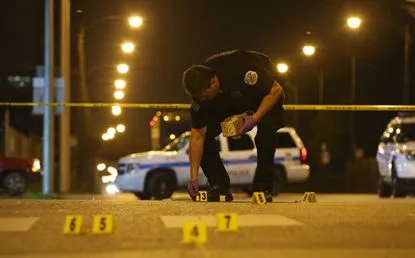
Captain Bowling describes watching body camera footage after the system went live. Every officer arriving at a ShotSpotter alert had their phone out, navigating to the precise point and scanning the halo area around it for casings, blood, or other evidence. They were already looking before they arrived, because they knew where they were going.
They stopped driving past, or even over evidence.
The Park No Car Could Reach
One of Lancaster’s parks is not accessible by vehicle. To reach the interior, you have to park and walk more than 100 yards.
A ShotSpotter alert was issued for the area, placing the dot in the middle of that park. Officers parked, walked in, and recovered gunfire evidence. There had been no 911 call, no witnesses, no report. With the recovery of ballistic evidence, the case moved to detectives and became an ongoing investigation.
Without the alert, no one would have ever known it happened. And the evidence that could connect future cases would not have been found.
The Nuisance House That Finally Got Shut Down
For a while, a particular address in Lancaster was a persistent problem. Neighbors complained. The department was aware. But awareness and action are different things in criminal justice, and action requires evidence.
ShotSpotter captured two separate firing incidents at this location, months apart. Based on those alerts and additional evidence, detectives were able to build probable cause for search warrants. The warrants were executed. Officers recovered drugs, evidence of illegal sales, and multiple firearms.
Captain Bowling then took something unusual to the property owner: the ShotSpotter data itself. He showed the homeowner the alert map, the audio evidence, and photographs from the search warrant execution. The homeowner, who had not been cooperative in the past, immediately initiated eviction proceedings.
"The residents on that street are strongly happy, just because we’re going there. It's just amazing to see the turnaround."- Captain Nelson Bowling
The Homicide Where Sound Was Evidence
When a homicide occurred in a Lancaster neighborhood, officers were responding to a ShotSpotter alert that had five rounds fired in rapid succession.
That information did not just help responders. It helped the prosecutor’s office build its case. The audio from the ShotSpotter alert, capturing the actual sound of the gunshots, was turned over as forensic evidence. Prosecutors heard the rapid-fire sequence. They could contrast it against the defense’s account. They could play it for a jury.
Captain Bowling put it plainly: a video would always be better, but having the actual audio of gunshots in a homicide case is something that moves people.
ShotSpotter Best Practices from Lancaster PD
Captain Bowling does not hesitate when asked what other agencies should do to get the most out of ShotSpotter. Stressing the need for command staff to fully adopt ShotSpotter before expecting results from the ranks, Captain Bowling says the technology only works as well as the culture behind it.
What Lancaster built in five months is not just a deployment. It is a set of habits, policies, and expectations that any agency can replicate.
- Get Command Buy-In Before You Go Live – Lancaster’s chief responds to ShotSpotter alerts personally during daytime hours, Monday through Friday. That is not a symbolic gesture. It signals to every officer in the department that this technology is taken seriously at the highest level. When officers see command staff responding to alerts, they understand the priority.
- Train Everyone on the Full Platform, Not Just the Alert – The alert is the easy part. The InSight data, the historical intelligence, the Investigative Lead Summary (ILS), the forensic reporting, the ability to search prior activity in a location, and other data are where the real value lives. Captain Bowling emphasizes that agencies need someone who can access and work with that deeper data layer on a routine basis. He reviews ShotSpotter InSight data weekly and sends a Monday morning summary to his officers.
- Treat Every Alert Like a Crime Scene – Lancaster’s policy sends two officers to every ShotSpotter alert, regardless of whether there is a corresponding 911 call. The dispatch goes out and officers respond. Even if they arrive and find nothing visible, they document the response and log it against the ground truth checklist. Over time, that data tells a story.
- Use the Forensic Report – When ShotSpotter is asked to generate a detailed forensic report (DFR) on a significant incident, use it. Lancaster embedded the technical language from ShotSpotter’s forensic documentation directly into a search warrant application for a judge who was not familiar with the technology. The solicitors who reviewed it were, in Captain Bowling’s words, blown away. That report is a legal asset. Treat it like one.
- Make the Data Public-Facing – Lancaster’s City Council authorized the expenditure and expects accountability. The department reports on ShotSpotter activity data and uses it to demonstrate return on investment. When the community knows the technology is deployed and active, behavior changes. Captain Bowling noted the criminals know officers are responding to the exact location where shots were fired. That awareness has a deterrent effect.
- Integrate With Your Other Tools – When Lancaster had a shooting incident and no vehicle description, Captain Bowling immediately pulled LPR camera data to cross-reference vehicles in the area. ShotSpotter narrows the location and the time window. License plate reader cameras, doorbell footage, and business cameras all become more useful when you know precisely where and when to look.
The Community Dimension
Something quieter has happened in Lancaster alongside the arrests and the cases. Community conversations have changed.
People who used to mention gunfire at city council meetings but never called 911 are now calling. Some call because the technology made them more comfortable. Some call because they know the department is already aware. And some, Captain Bowling says, just want to confirm what the officers already know.
For a department that always suspected gunfire was dramatically underreported, having that community shift is significant. The data is now more accurate. The numbers reflect reality. And that transparency matters both to residents and to the city council members who approved the investment.
The ShotSpotter Difference
Lancaster has been live with ShotSpotter for five months at the time of this writing. Captain Bowling’s team is already planning to go back and compare shots-fired call volume during the same period in prior years to quantify the impact formally. But the informal evidence is already compelling. Cases are being made on evidence that would never have existed. A nuisance property is being shut down. A domestic violence victim is safer because officers arrived before she found the courage to call. A homicide prosecution has forensic audio. Five months in, Lancaster is not finished. The data is accumulating, the community trust is building, and the criminals are adjusting to a reality they did not expect – that someone is always listening, and Lancaster PD is always responding to shots fired. That is the ShotSpotter difference.