











In our recent webinar, “Beyond Enforcement: How Community Partnerships Turn Gunfire Data into Trauma Prevention and Healing,” SoundThinking’s VP of Trauma Response and Community Engagement Alfred Lewers Jr., MPA, and Directors of Community Engagement Tahirah A. Moore and Dr. Taniko King-Jordan discussed how technology-driven insights—like gunfire detection—can be paired with grassroots partnerships to break cycles of violence, support survivors, and build stronger, safer neighborhoods.
Meet the Panelists
- Alfred Lewers Jr., MPA – Former Assistant Chief of Police, Miami Gardens PD; leads trauma-informed partnerships and community engagement strategies at SoundThinking.
- Tahirah A. Moore – 15 years of community engagement and government-relations leadership; helped launch NYC’s first Mayor’s Office to Prevent Gun Violence.
- Dr. Taniko King-Jordan – Social-work practitioner-scholar dedicated to trauma-informed care, equity, and youth engagement
Understanding Types of Trauma
Communities exposed to chronic violence face layered and long-term effects. The panelists outlined three significant types of traumas:
- Acute trauma: Response to a single violent event (e.g., a student witnessing a drive-by shooting). Even without physical harm, exposure can trigger anxiety or PTSD.
- Chronic trauma: Repeated exposure to violence or abuse that erodes a person’s sense of safety, often linked to substance abuse, depression, or other hidden struggles.
- Complex trauma: Multiple, overlapping traumas (e.g., childhood abuse compounded by living in a high-violence neighborhood), which can affect emotional regulation and relationships into adulthood.
Dr. King-Jordan stressed that recognizing these forms of trauma is essential for designing meaningful community responses.
Why it Matters for Law Enforcement
Research shows that children and families exposed to gun violence are at higher risk of future exposure. That’s why addressing violence requires a holistic approach: combining gunfire data with partnerships among law enforcement, public health, and community-based organizations to target root causes.
Pre-EMS Care and Officer Preparedness
Gunfire detection technology closes critical gaps in awareness:
- Without ShotSpotter, communities report less than 20% of gunfire incidents.
- With ShotSpotter, coverage jumps to nearly 90%, with alerts delivered in 60 seconds or less—including details on shooter movement, weapon type, and number of rounds.
Officers are often first on scene—sometimes before EMS. Trauma-informed policing and pre-EMS training help stabilize victims, improve outcomes, and rebuild public trust. “Every minute between a shooting and medical care can change the story from tragedy to recovery,” Alfred Lewers noted.
Data for Good

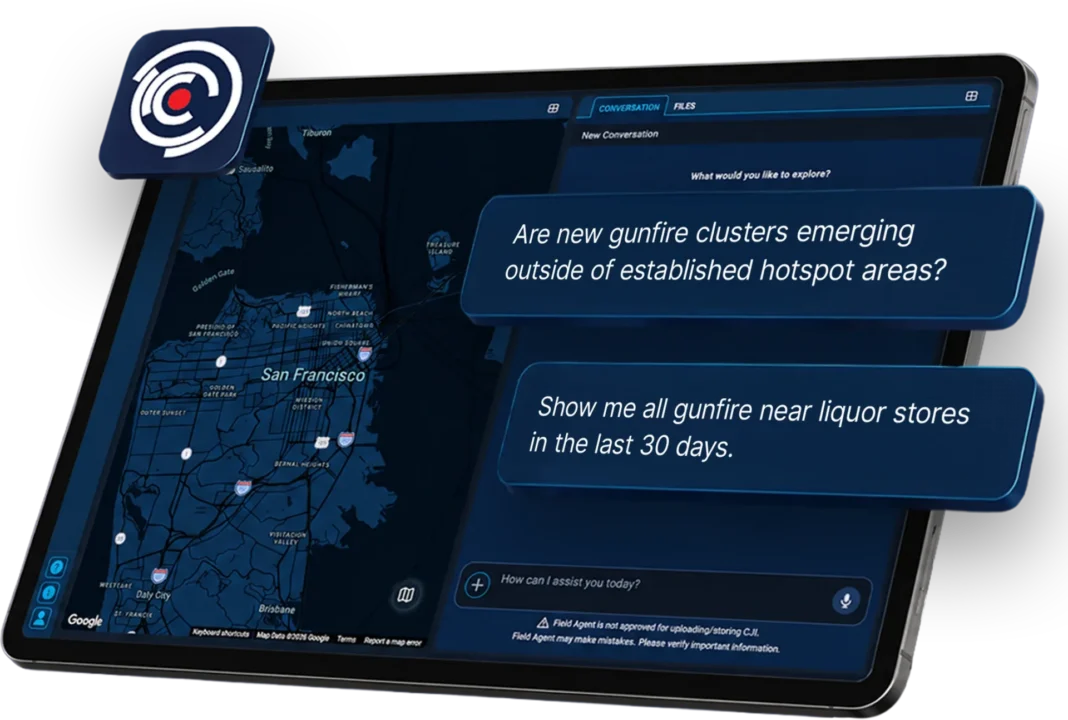
SoundThinking’s Data for Good initiative leverages the world’s largest repository of gunfire data to support not just policing, but also public health and community programs.
The data itself tells a story:
- Frequency and timing of gunfire by day and week
- Repeat locations where incidents cluster
- Proximity to schools and sensitive community spaces
Community partners use these insights to focus outreach, strengthen coordination, and measure impact. Among those benefiting from Data for Good include:
- Community Violence Intervention (CVI) programs
- Hospital-Based Violence Intervention (HVIPs)
- Youth mentorship groups
- Victim advocacy organizations
- Trauma recovery centers and mental health providers
- Faith-based and neighborhood watch groups
- Academic researchers and public health advocates
- Reentry and rehabilitation programs
- Domestic violence and housing support services
Each of these partners brings the data to life, turning information into connection and connection into care.
Data for Good in Action
SoundThinking’s Data for Good initiative translates gunfire data into practical insights for public-health, education, and community-safety partners. Four cities showcased during the webinar highlight how data and collaboration intersect.
San Francisco, CA – Partnering for Transparency and Trust
SoundThinking’s Data for Good program helped the San Francisco Police Department and its civic partners convene community roundtables, share dashboard insights, and organize neighborhood ride-alongs. Through monthly meetings with clergy, violence intervention groups, and local businesses, the team utilizes real gunfire data to inform outreach and prevention efforts.
Springfield, IL — Community Connection Through Data
In Springfield, the city applied Data for Good insights to identify high-risk zones and guide outreach through its Community Connections event and the mayor’s BUILD Springfield initiative.
- The effort mobilized more than 100 city employees and partner organizations, cleaned 55 blocks, reached 85 residents door-to-door, and united 35 organizations in coordinated service delivery.
- Chief Ken Scarlette described the goal as “revitalizing this area and showing our most vulnerable residents that we truly care about them.”
Together, these examples show how turning gunfire data into shared intelligence can transform community outreach from reactive to restorative.
Miami-Dade, FL and Bladensburg, MD – Making an Impact
Online Resources & Information
Director of Community Engagement Dr. Taniko King-Jordan emphasized that SoundThinking has multiple online resources designed to provide additional information regarding our program and its impact. This includes:
- The Data for Good page
- The Community Safety page
- Blog: Improve Community Relations with Information Sharing
- Blog: Bolster Police-Community Engagement with ShotSpotter
Final Word
“By embracing the Data for Good program, we can now pivot to a holistic community-based approach to violence prevention, outreach, and community engagement. By bridging the gap between law enforcement and the community, we can co-create effective solutions that deter crime and nurture an environment where individuals can thrive and reach their full potential.”
Fmr. Chief Patrick Lynn
Fort Lauderdale Police Department