











What does leadership look like in the first 30 seconds of a campus critical incident? During a recent SoundThinking webinar, three university police chiefs with decades of experience took that question head-on. Chief David Mitchell of the University of Maryland College Park, Chief Clarence Hunter Jr. of Virginia Commonwealth University, and Dr. Daryl Green, AVP of Public Safety and Chief of Police at the University of Alabama Birmingham, joined SoundThinking Customer Success Director and former campus chief, Cindy Guerra, for a candid, hour-long conversation on the realities of campus command.
What emerged was far more than a technology discussion. It was a frank look at how campus public safety leaders filter noise, commit resources, coordinate with outside agencies, and keep their communities informed, all while operating under conditions that traditional policing almost never replicates.
Campus Policing Is Not Traditional Policing
Each campus on the panel operates like a small city. Chief Mitchell oversees public safety for a campus spanning more than 1,000 acres, 40,000 students, and approximately 20,000 staff, just five miles from Washington, D.C. Chief Hunter manages two campuses in the middle of Richmond, Virginia, including a Level 1 trauma center that serves patients from across the region. Dr. Green’s public safety responsibilities extend across 640 acres, 23,000 students, 38,000 employees, and the fifth-largest health system in the country, drawing roughly 2 million patients annually.
All three campuses are open environments. There are no defined perimeters. Students, patients, city residents, and regional law enforcement all move through the same space on any given day. Dr. Green was direct about the distinction the institution draws between on-campus activity and the surrounding urban environment, noting that crime spillover from the area is an ongoing daily concern.
Chief Mitchell raised a challenge familiar to many campus law enforcement leaders: community turnover. With roughly a quarter of the student population cycling out annually, campus policing demands a continuous investment in education. For Mitchell, sustained partnerships with technology providers and peer agencies are what make that cycle manageable and yield long-term returns.
“
You’re looking for actionable intelligence. You want to get through the noise. What is true? What can you validate? What can you confirm?”
AVP of Public Safety and Chief of Police at the University of Alabama Birmingham
Dr. Daryl Green,
The First 30 Seconds: What Actually Matters
The first 30 seconds of a critical incident are crucial for public safety. Decisions are being made before clarity exists. By the three-minute mark, those decisions have already shaped the entire response.
Chief Mitchell said his department starts with the basics: who, what, where, when, why, and how. The problem is that information rarely arrives in a clean, complete package. On active shooter calls, he noted that students typically wait 2.5 to 3 minutes before calling 911, often calling parents or friends first. That delay has consequences.
Chief Mitchell emphasized the operational cost of that delay, framing it in concrete terms: two and a half to three minutes that could have been spent on response and life-saving action. ShotSpotter® has changed that equation at the University of Maryland. When a gunshot occurs, the system pinpoints the incident to a longitude and latitude within 30 seconds before a single 911 call comes in.
On a campus with numerous high-rise buildings and significant echo effects, that precision matters. A caller may report shots fired at one location when the actual source is elsewhere. Acoustic detection technology that can cut through that distortion and pinpoint both the nature of an incident and its exact location is central to how Chief Mitchell’s department closes that gap.
Chief Hunter described how those signals start to stack. Multiple 911 calls on the same incident, a ShotSpotter alert, and reports from officers already near the scene. Together, they build what he called the “picture” that moves a commander from uncertainty to action.
The 3Cs: Clarity, Confidence, and Coordination
The discussion honed in on the 3Cs of early response: clarity, confidence, and coordination. Each one surfaced naturally in the chiefs’ answers.
Clarity is about knowing what actually happened, where, and when:
For Chief Hunter, clarity also carries a legal dimension unique to campus policing. Unlike municipal agencies, campus departments operate under the Clery Act, which requires timely notifications to the campus community when a threat exists. That means the push to confirm information is not just operational. It carries a federal obligation. Determining whether a Clery Act notification goes out, and what it says, depends on quickly answering three questions: what the acoustic detection data shows, how many 911 calls have come in, and what officers on scene are reporting firsthand.
Confidence to commit resources often comes from a single trusted source in the earliest moments:
Dr. Green described a 2024 shooting that occurred just outside UAB’s jurisdiction, right on their coverage boundary. ShotSpotter picked up more than 100 rounds. UAB officers were first on scene and immediately relayed information to watch commanders and the hospital system. Four people were killed. Seventeen were shot. The early alert gave the hospital enough warning to prepare for the incoming volume of trauma patients, call in additional ambulances, and position helicopters for critical transfers.
For Dr. Green, that outcome made the case plain. When a mass casualty event is unfolding in real time, the ability to receive accurate data early and trust it completely is the difference between a hospital that is ready and one that is not.
Dr. Green also described a second incident involving a shooting in a remote area of campus late at night. ShotSpotter directed officers to within 82 feet of where the shots occurred. They found a homeless person who had been shot in the dark, in an isolated location, with no witnesses and no 911 call.
“
Had we not received that [ShotSpotter] alert, we know that transient person would have died.”
AVP of Public Safety and Chief of Police at the University of Alabama Birmingham
Dr. Daryl Green,
Coordination is where campus operations get complicated:
When a critical incident occurs, mutual aid arrives fast. Multiple jurisdictions, hospital security, emergency managers, and sometimes state police may all converge on the same scene. Chief Mitchell described how the University of Maryland’s Security Operations Center monitors more than 1,000 cameras around the clock and can flip to interior feeds in buildings like the library with a single command. His department maintains MOUs with Prince George’s County Police, the Maryland State Police, and surrounding municipalities, and they share radio communications. For Chief Mitchell, none of that infrastructure delivers its full value without cross-agency coordination built on a common communications platform.
Dr. Green added that his team at UAB shares ShotSpotter alerts with the Birmingham Police Department, effectively filling a coverage gap that the city did not have. When a large shooting happens in the city, ShotSpotter alerts flow both ways. UAB officers tune in to Birmingham radio channels to prepare for what may arrive at their hospital. That information sharing has a direct operational effect: when incidents escalate in the surrounding city, UAB adjusts its security posture in response.
Chief Hunter’s approach to coordination includes monthly tabletop exercises that his emergency manager runs with supervisors and first responders. Nothing elaborate – just a consistent rehearsal of scenarios that test whether policy, training, and communication are actually aligned. After-action reviews follow every significant incident, with explicit attention to whether the written policy matches what the team did. Chief Hunter’s broader point was that preparation does not have to be complicated to be effective. The first few seconds of a critical incident are demanding by nature, but consistent, straightforward training can close the gap between policy and practice.
Technology Supports Judgment. Leaders Decide.
Each chief reinforced that technology supports judgment from a different angle. Dr. Green described how UAB’s Security Operations Center staffs what he calls “virtual first responders,” operators whose sole mission is to locate a surveillance camera nearest to any active incident within 10 seconds. They have trained to do it in three.
The camera image goes out to responding officers via radios that can display photos in the field. Building that workflow took months of cultural reinforcement. Watch commanders had to learn to ask for it. Now it is routine. For Dr. Green, that kind of deliberate culture-building is ultimately what determines whether a department gets full value from its technology investments. Agencies that build habits around coordination and efficiency, he argues, are the ones that come out ahead.
Chief Hunter shared a specific example from VCU that illustrated both the prevention and detection value of integrated technology. In January, an AI-based weapons detection alert came through with no accompanying 911 calls. An individual was walking on campus carrying a firearm. Officers responded immediately, armed with a still image of what they were looking for. They located the individual and found not one firearm but two. For Chief Hunter, the outcome illustrated something that does not show up in statistics: the arrest was made because the technology made it possible, and what was prevented by removing those weapons from campus that day remains an open question.
For Chief Mitchell, a ShotSpotter alert along the University Boulevard corridor led to a ballistic evidence discovery that ultimately connected to a crime gun linked to MS-13 activity less than a mile from campus. Officers recovered shell casings, submitted them through NIBIN and IBIS with Prince George’s County and ATF, and got a hit on a weapon used in a prior crime, leading to arrests.
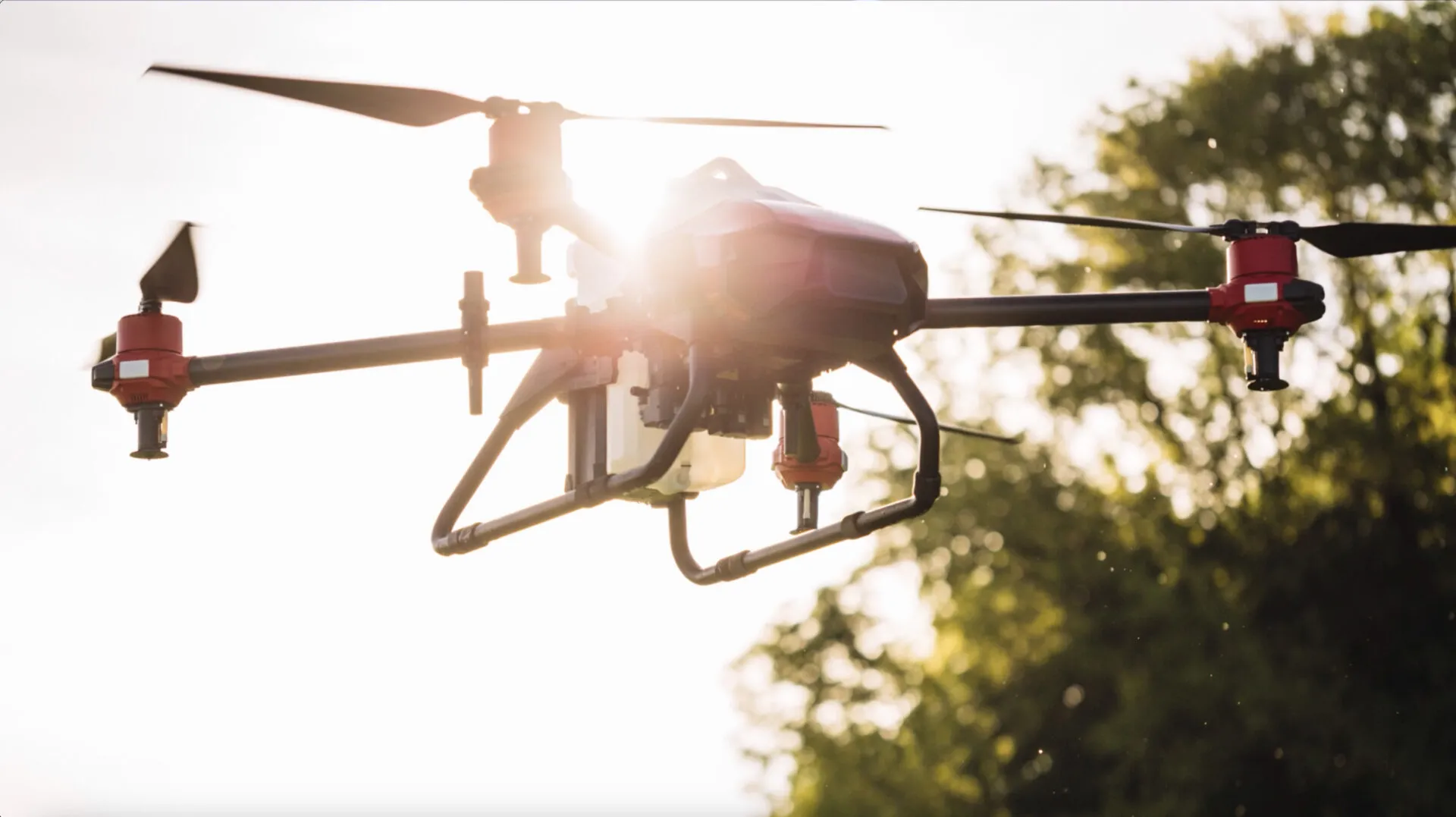
Chief Mitchell is also working with the university’s engineering school on a drone response capability tied directly to ShotSpotter activations, a project staffed in part by students. When an alert fires, the system would automatically launch a drone to provide on-scene visibility before officers arrive.
The Harder Questions: Alerts, Accountability, and Trust
The webinar closed with a question the audience had been asking throughout: how do you balance speed with getting it right? The chiefs each acknowledged that there is no clean answer.
Chief Mitchell described operating under the Clery Act’s standard, which requires timely notification “upon confirmation.” That word gives a campus chief a degree of judgment but little room for error. With a campus population of 60,000 receiving every alert, the consequences of a premature or inaccurate notification are immediate and visible. For Chief Mitchell, getting it wrong is not an abstract risk.
Dr. Green offered a different perspective from a 24-hour academic medical center. At two in the morning, a notification going to faculty, staff, and patients will generate complaints, whether the threat was real or not. For Dr. Green, that reality does not change the standard. Decisions get made on the best available information in the moment, and that is the only defensible position a campus leader can take.
Beyond the mechanics of notification, Chief Mitchell raised a point about community trust that does not show up in annual crime reports. Statistics can show a campus is safe, but that does not mean students feel safe. University of Maryland’s response is practical: safety walks with the Student Government Association, routine meetings with student leaders, and a department policy requiring patrol officers to drive with their lower wigwag lights on so students can see them in the field. Survey feedback had made the problem clear: students knew officers were out there but rarely saw them. The visible presence of patrol vehicles, Chief Mitchell found, did more to shift that perception than any statistic could.
What Campus Chiefs Would Tell Their Peers
Dr. Green’s advice for any campus department investing in technology was direct: build culture first. Technology sitting unused in a critical incident is worse than no technology at all. Get your staff trained, keep them updated, and create feedback loops between your vendors and your operators.
Chief Hunter encouraged other leaders to stay close to their students. At VCU, he runs a monthly student voice committee where 20 student volunteers meet directly with him and two of his sergeants, no intermediaries. For Chief Hunter, that direct connection is not just a community relations strategy. It is a source of motivation that sustains him through the demands of the role.
Chief Mitchell, with more than five decades in law enforcement, returned to the phrase his officers developed: “We protect Maryland’s future.” That framing, he said, captures everything.