Officer-directed patrols: Officers self-deploy based on experience and intuition. While flexible, this approach leads to inconsistent coverage and makes outcomes difficult to explain or defend.
Police Patrol Strategies: Tips for Improving Outcomes

Police Patrol Strategies: What Works, What Doesn’t, and How is Effectiveness Measured?
Police patrol remains the foundation of public safety. Yet many agencies struggle to determine whether patrol strategies are actually reducing crime, improving safety, or merely maintaining existing conditions without measurable impact.
Across departments, the same concerns surface: patrol activity is high, outcomes are difficult to explain, and proactive effort is hard to see.
This guide focuses on patrol strategy as an operational system—what limits impact, what improves outcomes, and how effectiveness can be measured.
1. Why Isn’t Our Current Patrol Model Producing Measurable Impact?
Officers feel busy, not effective.
Reactive patrol keeps officers moving from call to call—often to the same locations—without reducing demand. The result is high activity, recurring problems, and declining morale.
Staffing levels no longer match patrol plans.
Many patrol strategies were designed for staffing levels that no longer exist. As a result, coverage gaps occur routinely but often go unseen or unmeasured.
Leadership is asked to prove impact without visibility into patrol activity.
Crime statistics show results after incidents occur. They do not show where patrol was present, where it wasn’t, or whether proactive effort aligned with risk.
2. What Traditional Patrol Methods Still Exist — and What Are Their Limitations?
- Predictive or historical analysis: Past crime data can highlight risk trends, but it often lags behind current conditions, can unintentionally include bias, and does not show whether patrol presence actually addressed those risks.
- Hot spot policing: Focused patrol in high-crime areas can be effective when timely and consistent. In practice, hot spot plans often become static and are rarely measured to determine whether patrol presence was enough to matter.
All three methods struggle with accountability, measurable outcomes, and maximizing efficiency.
3. How Do We Reduce Repeat Calls and Get Ahead of Crime?
Proactive policing is not about doing more—it is about being deliberate.
Effective proactive patrol includes:
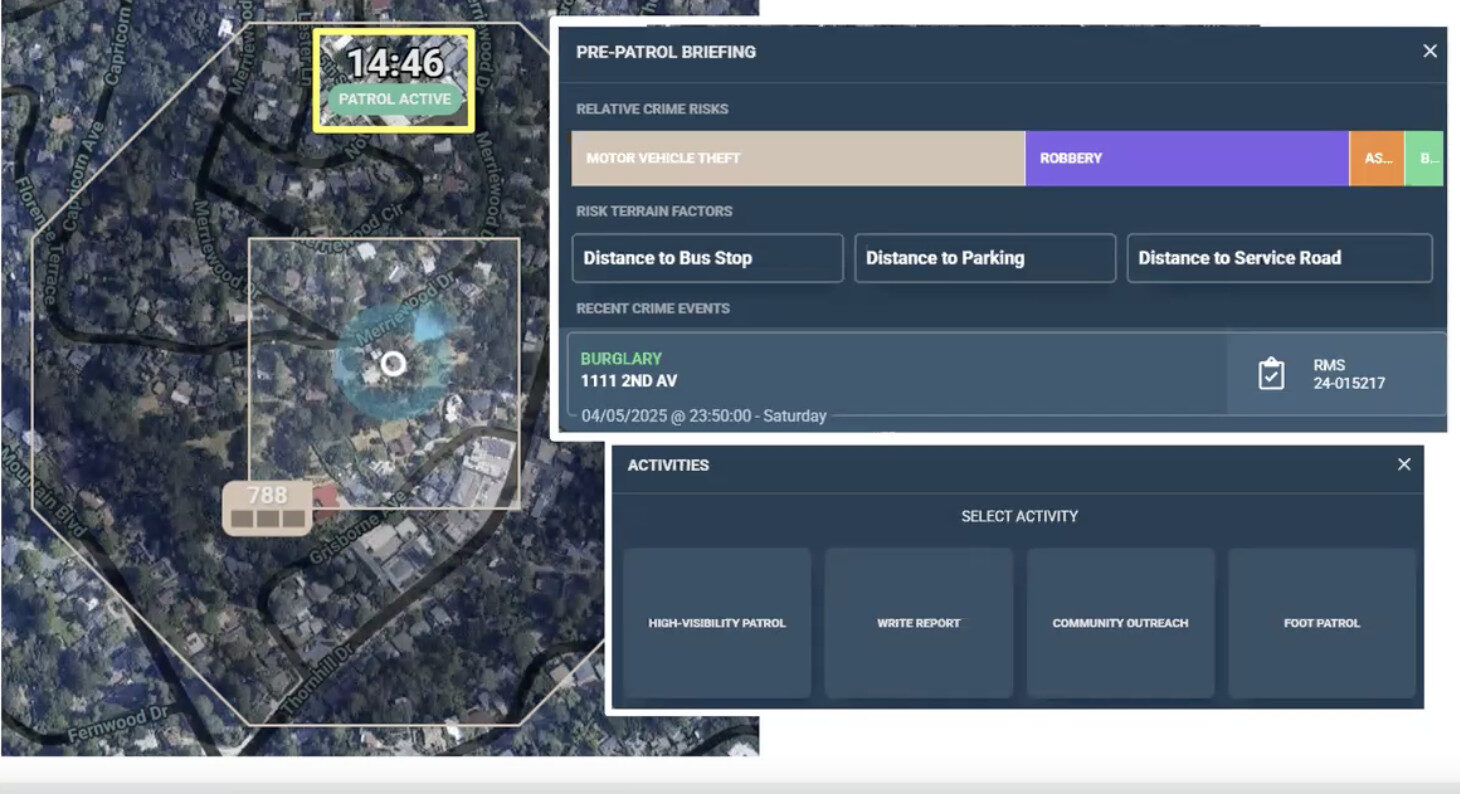
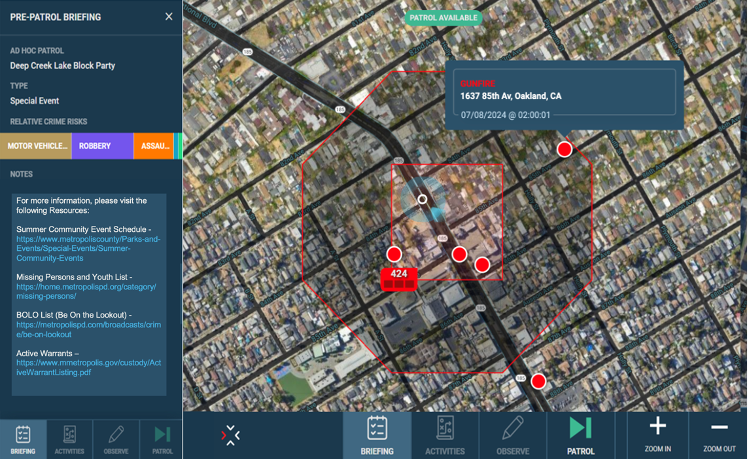
Using recent reports and risk terrain modeling alongside historical crime data.
Defining patrol focus areas based on overall risk, not habit
Treating presence, visibility, and community engagement as intentional deterrence tools
When patrol is focused and repeated in the right places, it can measurably reduce opportunity and disrupt recurring problems.
4. What Evidence-Based, Data-Driven Tactics Improve Patrol Outcomes on the Street?
Effective patrol emphasizes consistency and intent over unfocused activity.
- Non-enforcement presence: Foot patrols, business checks, and community interaction deter crime without increasing arrests or complaints.
- Focused time in high-risk areas: Short, repeated visits to specific locations create a consistent presence that discourages opportunistic crime.
- Clear patrol purpose: Officers should know why they are assigned to an area. Guesswork produces uneven coverage and missed opportunities.
- Measure proactive effort: Tracking time, locations, and activities allows supervisors to adjust strategy rather than assume effectiveness.
5. Will Patrol Management Tools Actually Improve Accountability and Results?
Technology should support patrol—not complicate it.
Effective patrol tools help agencies:
Reduce manual planning and supervisory workload
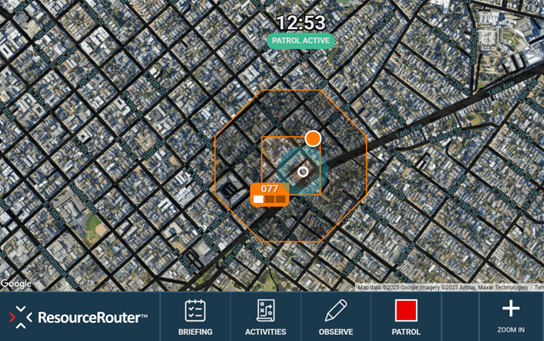
See where proactive patrol actually occurred
Compare patrol effort to risk and crime incidents
Balance workload across shifts and beats
When patrol effort is visible and measurable, it becomes easier to manage and explain.
6. How Can Agencies Address Burnout and Retention Through Better Patrol Strategy?
Burnout is often caused by undefined work rather than workload alone. Clear patrol objectives help by:
Giving officers purpose during each shift
Reducing reactive demand through better coverage
Preventing chronic overload in the same areas or units
Better patrol design supports performance, wellness, and retention.
7. What Should Chiefs Ask When Evaluating Patrol Strategies?
When reviewing patrol plans and tools, leaders should ask:
Where is patrol being deployed and why?
Is proactive patrol coverage consistent enough to deter crime?
How are proactive activities and impact being measured?
Is this strategy sustainable for officers and the department?
Agencies that can see and manage proactive patrol—not just react to crime—are better positioned to align operational goals and community expectations.
Modern Patrol is Strategic, Measurable, Transparent, and Sustainable
Traditional, reactive-only patrol models no longer meet the demands of today’s policing environment. Agencies are expected not only to respond to crime, but to demonstrate how patrol strategy is preventing it.
By combining data-driven patrol planning, objective measures of patrol activity, and workload designs that support officers in the field, agencies can move beyond reaction and toward prevention. Crime statistics show outcomes after incidents occur. Strong patrol strategy shows where patrol was deployed, how consistently areas were covered, and whether proactive presence produced measurable impact
Explore how ResourceRouter can positively impact your agency’s patrol management strategy
Was this article helpful?


Search for More Insights
Here are some other topics you might be interested in: