











When I began my career in law enforcement, technology was a far cry from what we see today. My first agency didn’t even have mobile computers in patrol vehicles—everything ran through the radio or handwritten notes. My second agency introduced mobile data terminals, and that felt revolutionary: live interaction with dispatch, direct access to calls for service, and faster situational awareness. At the time, that kind of digital connection was groundbreaking.
Today, the pace of change is exponential. What was once cutting-edge now feels like muscle memory. The tools, data, and analytics available to officers are reshaping how we protect communities—and how we think about policing itself.
A Shift from Badge to Backend
After years in the field, I realized my interest wasn’t just in responding to incidents — it was in improving how we respond. That led me into the GovTech space, where I could help agencies adopt technologies that make policing safer, smarter, and more effective.
When I started in the private sector, cloud adoption in public safety was still in its infancy. Most agencies were working from on-premise, legacy systems and paper workflows. Even the idea of storing CAD or records data offsite was controversial. But change was inevitable.

The author in his law enforcement days.
Working with smaller technology providers in Washington, D.C., I saw firsthand how computer-aided dispatch systems could transform operations. Later, with global firms like Hexagon, I witnessed agencies around the world—many still using paper and pencil—begin adopting data-driven tools to track gang activity, weapons trafficking, and narcotics networks. What connected all of them wasn’t just technology—it was the shared goal of doing more with limited resources.
That’s where SoundThinking comes in. Our mission is to help agencies take proven innovations like ShotSpotter, ResourceRouter, and CrimeTracer, and use them in concert to drive meaningful outcomes: faster response times, smarter resource allocation, and safer communities.
Seeing What We Couldn’t Before
One of the most sobering truths about gun violence is how much of it goes unseen. Roughly 80% of gunfire incidents in major U.S. cities are never reported to 9-1-1. In Portland, Oregon, for example, only 9.3% of surveyed residents said they would call the police after hearing gunfire.
That means most shootings — particularly those that don’t result in a victim—never generate a call for service. For officers trying to reduce violent crime, it’s almost impossible to strategize when the data itself is incomplete.
That’s why ShotSpotter was such a breakthrough. The system detects and triangulates gunfire within 90 feet, instantly sending alerts to CAD systems, real-time crime centers, and mobile devices. Officers can self-dispatch to the exact location, often arriving with valuable context: the number of shots fired, the direction, and the confidence level of the detection.
When you’re racing toward a gunfire incident, that information saves lives. Officers feel safer knowing what they’re heading into, and EMS can respond faster to victims who may need immediate care. Overall, agencies will see a decrease in response times and an opportunity to save lives.
The technology is only part of the equation, though. The other part is knowing how to interpret and act on that data in the moment. That’s where our dedicated Customer Success team partners with agencies to develop customized business processes and strategic deployment plans—ensuring technology isn’t just deployed but embedded into daily operations.
Building an Ecosystem of Response
Gunshot detection is just one component of a much larger, comprehensive public safety ecosystem. Through our broader SoundThinking platform, agencies are connecting dots that were once scattered across siloed systems and data.
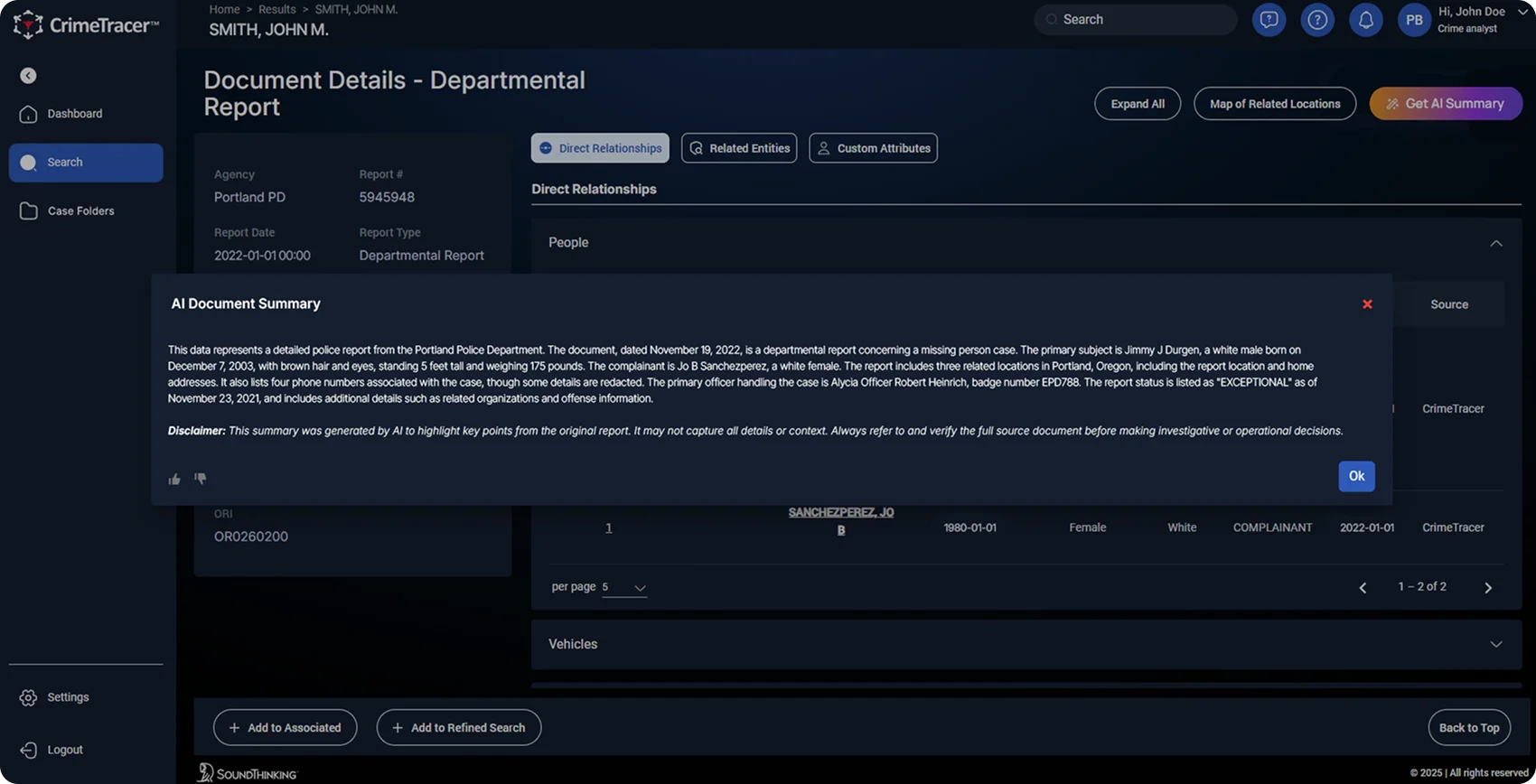
ResourceRouter helps departments proactively deploy officers based on data-driven forecasts of where and when crime is most likely to occur. CrimeTracer (formerly COPLINK) empowers investigators to identify suspects and associates through advanced search and link analysis, revealing hidden relationships across cases and jurisdictions.
Together, these tools help agencies move from reactive response to proactive prevention. But technology is only effective when it’s implemented with purpose. Our approach focuses on cultural competency, training, and measurable outcomes. We work alongside law enforcement leaders, trainers, and even mental health professionals to build true partnerships.
In some cases, ShotSpotter may not be the right tool for a community — but another part of the SoundThinking suite might be. The key is prescriptive guidance: helping agencies choose the right technologies, build the right response protocols, and maximize the impact of every deployment.
Doing More with Less
Every agency faces a similar challenge today: limited staffing, limited funding, and growing public expectations. The question isn’t whether to adopt new technologies—it’s how to make them work together, efficiently and effectively.
With machine learning and human analysis working side by side, departments can now synthesize thousands of data points into actionable intelligence. Real Time Crime Centers (RTCCs), for instance, can pair ShotSpotter alerts with video analytics, license plate reader data, or drone footage to provide real-time situational awareness and increase officer safety and effectiveness.
And as drones-as-first-responders (DFR) programs expand, the ability to deploy aerial units directly over the scene—often within minutes—gives commanders a live operational view that was unthinkable just a decade ago. The future of policing is not about more data; it’s about more insight. ShotSpotter can provide more precise use of DFR technology, while optimizing limitations such as flight time and distance.
Better technology also improves retention. When officers have reliable, intuitive tools, they’re more effective and less likely to burn out. That matters in an era when recruiting and retention are a national challenge. The right systems make the job safer, the work more efficient, and the mission more fulfilling.
The Next Chapter: Cloud, AI, and the Human Element
Today, nearly every public safety technology company is leveraging cloud infrastructure—and for good reason. Cloud platforms deliver the speed, scalability, and interoperability that agencies need to operate in real time.
The next frontier is artificial intelligence—but not the kind that replaces human judgment. At SoundThinking, we see AI as an assistive force: helping officers and analysts surface critical information faster.
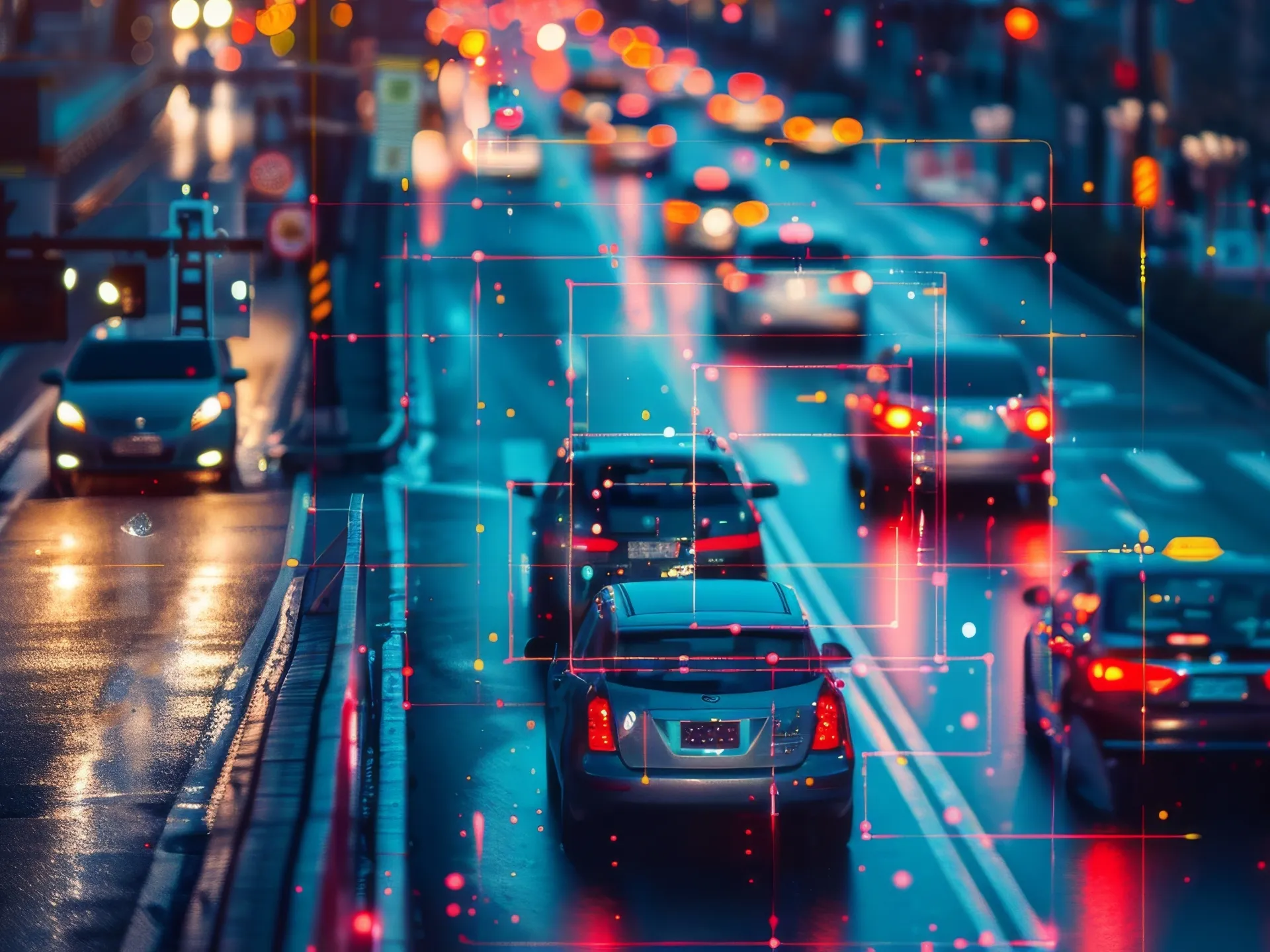
Imagine an analyst searching for a vehicle involved in a shooting. Instead of combing through hours of LPR license plate reads, such as SoundThinking’s PlateRanger, an AI-powered system can identify the make, model, color, and even license plate number within seconds. Or consider an investigator running a query in CrimeTracer: the AI helps refine the search parameters and returns the most relevant leads — freeing up valuable time to focus on strategy and community engagement. Coupling technologies such as PlateRanger LPR and CrimeTracer CJIS data for leads can quickly and efficiently narrow a target suspect vehicle and quickly determine previous criminal activities.
The promise of AI in policing isn’t prediction — it’s precision. It’s about giving officers confidence in their data and clarity in their decisions.
The Bottom Line
Public safety will always be a people-first mission. But when we empower those people with the right technology — connected, data-driven, and purpose-built — we create safer outcomes for everyone involved.
From my early days on patrol to my current work helping agencies modernize, one thing has never changed: the drive to serve better. The difference today is that we finally have the tools to match that drive — with insight, intelligence, and impact at scale. That’s the future we’re building at SoundThinking.
Learn More About How SoundThinking Supports Technical Innovation