Identify hot spots before violence spikes
Why Gunshot Detection is Critical to Modern Policing
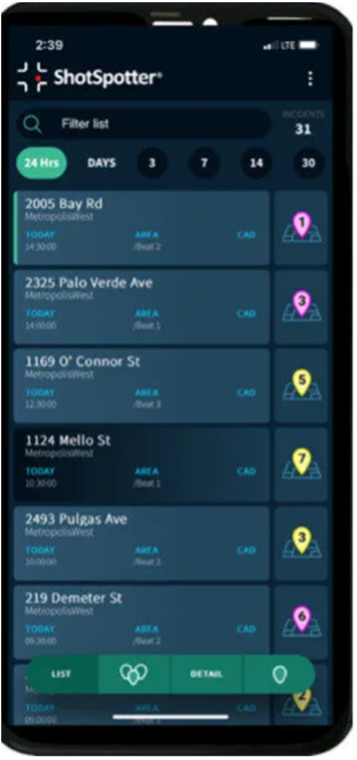

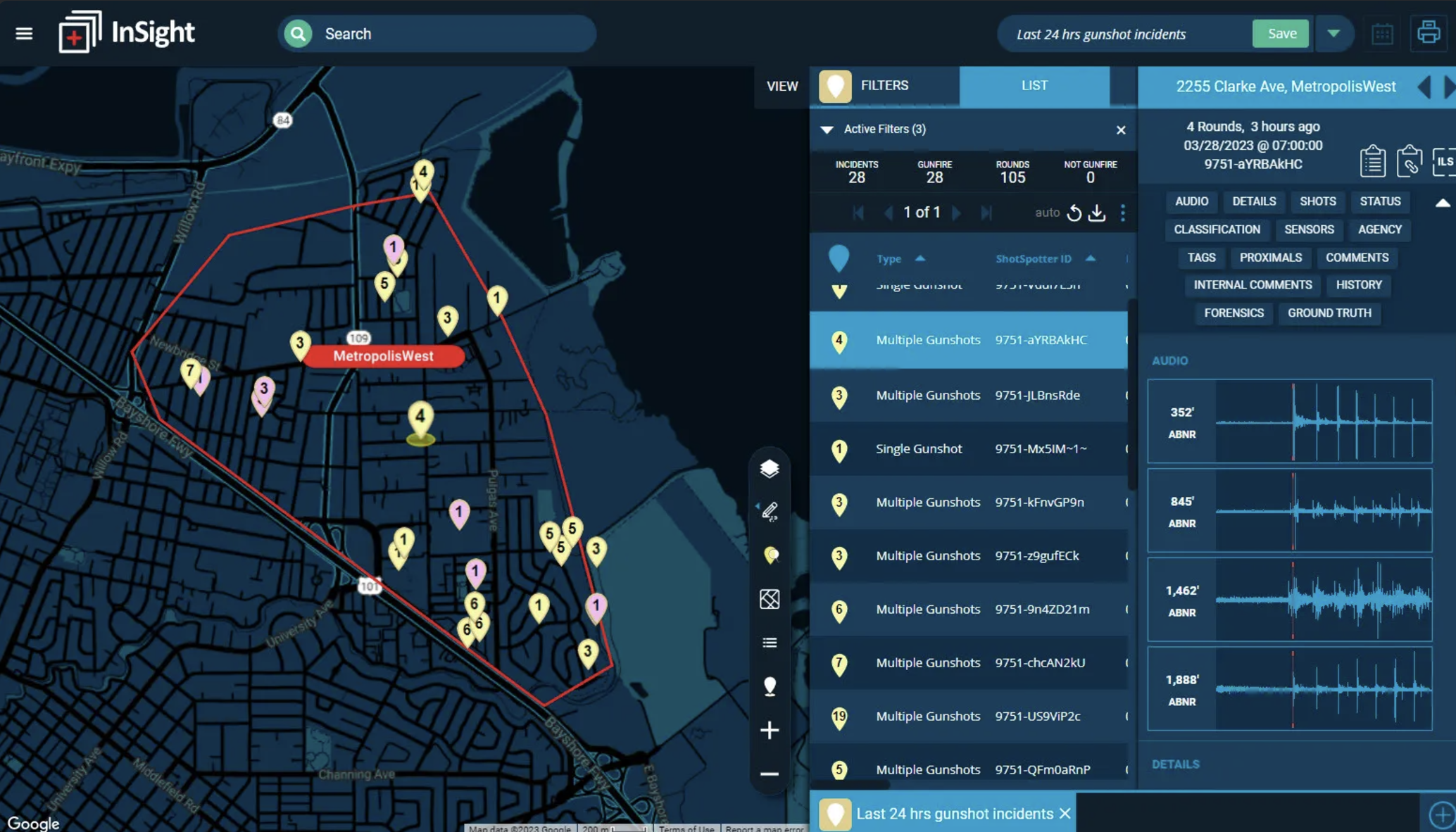
When most people hear gunshot detection, they picture sensors listening for gunfire. That explanation isn’t wrong — but it’s incomplete. And focusing only on the technology misses the full impact. In modern policing and public safety, acoustic gunshot detection like ShotSpotter are not standalone tools. They are the entry point to a much larger Crime Gun Intelligence ecosystem — one that helps cities reduce violence and solve cases.
1. Most Gunfire is Never Reported
Nationally, 80–90% of gunfire never reaches 9-1-1. No call means no response and no evidence. And without evidence, there is no investigation — only unresolved violence that fuels fear and retaliation.
Gunshot detection changes the equation by identifying the shootings that would otherwise go unnoticed. This single step changes the math for public safety.
2. Detection Leads to Evidence — and Evidence is Everything
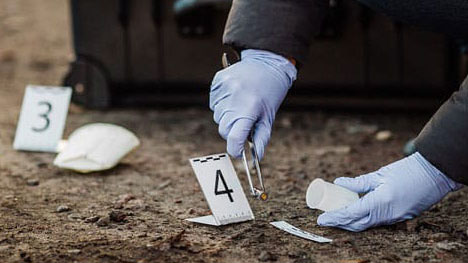
Immediate alerts allow officers to recover cartridge cases — the fingerprints of gun crime. These brass casings link shootings to guns, guns to people, and people to patterns. Without detection, evidence is lost. Without evidence, intelligence collapses. Gunshot detection ensures those first, critical links are not missed.
3. Evidence Feeds NIBIN
NIBIN, the National Integrated Ballistic Information Network, connects the dots between shootings and is one of the most powerful tools in violent crime investigation — but only when it’s consistently fed evidence.
Gunshot detection ensures that every shooting, including the ones no one reports, enters the system. That consistency is what allows NIBIN to function as intended: connecting cases that would otherwise remain isolated.
4. NIBIN Produces Identifications
Once evidence enters NIBIN, matches begin to surface: repeat shooters, crime guns used across multiple incidents, retaliation cycles, and movement across jurisdictions. This is how agencies identify the small group of individuals responsible for a disproportionate share of gun violence — and move from reactive policing to informed intervention.
5. Specialized Units Use This Intelligence to Target and Preempt Violence
This is where the debate often goes wrong. Gunshot detection is not just reactive. When paired with NIBIN and Crime Gun Intelligence Centers (CGICs), it becomes proactive intelligence.
Specialized units — including Gun Violence Units, Violent Crime Impact Teams, CGIC squads, and Bureau of Alcohol, Tobacco, Firearms, and Explosives (ATF) task forces use this intelligence to:
Detect retaliation cycles early
Track shooter movement and behavior
Deploy resources surgically instead of broadly
Intervene before the next shooting occurs
This preemptive capability does not exist without the ShotSpotter + NIBIN + CGIC workflow.
6. Identifications Lead to Prosecutions — and Accountability
When investigators can connect a shooter to a specific firearm across multiple incidents, prosecutors can build stronger, more focused cases—leading to targeted prosecutions that remove the individuals driving violence, not broad or indiscriminate enforcement.
The Big Misunderstanding
Gunshot detection is often debated as if it were a standalone gadget. It isn’t. It is critical infrastructure that supports the entire Crime Gun Intelligence ecosystem:
ShotSpotter detects the shooting
Officers recover the evidence
NIBIN connects the gun
Investigators identify the shooter
Specialized units disrupt retaliation
Prosecutors deliver accountability
The Simplest Way to Say It
Gunshot detection doesn’t just respond to gunfire — it helps prevent the next shooting.
By giving cities faster awareness, stronger evidence, and clearer intelligence, it enables law enforcement to focus resources where they matter most, intervene sooner, and stop cycles of violence before they escalate.
Learn More About ShotSpotter
Was this article helpful?



Search for More Insights
Here are some other topics you might be interested in: