On October 29, 2024, a 9-year-old girl was hurt after someone fired shots into her home as she was getting ready for school. Police said the victim was inside the home on Kentfield between Fenkell and Grand River when she was grazed by a bullet around 7:10 am. Police received a ShotSpotter alert before a 911 call was made. (Fox 2 Detroit)
The Real Math Behind Detroit’s Gunshot Detection Debate: SoundThinking Response to MI Advance Article


Public safety debates should start with facts. Unfortunately, recent commentary about Detroit’s gunshot detection system in the Michigan Advance relies on several statistics that obscure rather than illuminate the technology’s real impact.
Michigan Advance is an online news outlet that focuses on government and political news coverage in Michigan as well as left-of-center commentary. It is part of States Newsroom (formerly called The Newsroom Network), a network of left-of-center media organizations in Arizona, Colorado, Florida, Georgia, Maine, Maryland, Michigan, Nevada, North Carolina, Pennsylvania, Virginia, and Wisconsin.
Now, back to the article and some of its specious and misleading assertions and conflations.
Start with the cost.
This article references “$7 million spent” on the system, creating the impression of a large annual expense. That figure covers three years of service, meaning Detroit’s annual investment is approximately $2.3 million / year.
For perspective, Detroit spends about $425 million annually on policing. Gunshot detection represents less than 0.01% of Detroit’s total city budget and about 0.5% of the police budget.
More important than cost, however, is how the system functions and the value it provides to the city, its residents, and patrol officers.
Critics often compare police response times to gunshot detection alerts with response times to 911 calls. But that comparison overlooks the most important statistic in this entire debate: the vast majority of gunfire incidents are never reported to 911.
Independent studies across multiple cities consistently show that 60 to 90 percent of gunfire generates no emergency 911 call. In Detroit, that figure is about 90%.
In those situations, the response time without gunshot detection is not seven minutes. It is never.
Gunshot detection technology solves that problem by identifying gunfire and immediately alerting dispatchers, allowing officers to respond within minutes to incidents that would otherwise go completely unreported, 24x7x365.
Another commonly cited statistic involves percentages of alerts that produce certain outcomes. Yet percentages alone can be misleading.
Detroit’s system generated more than 24,000 alerts over three years and led to 373 arrests in 2024 alone. Even relatively small percentages translate into substantial operational outcomes.
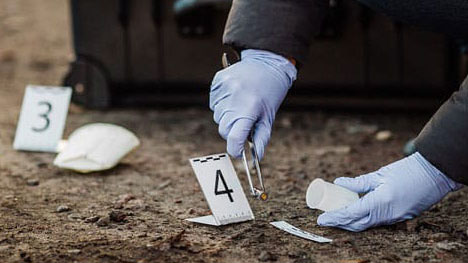
A shell casing recovery rate of roughly 12% means thousands of pieces of ballistic evidence are recovered from shooting scenes. Those casings are then entered into the National Integrated Ballistic Information Network (NIBIN), linking shootings and helping investigators identify repeat offenders.
Likewise, even a small percentage of alerts leading officers to victims represents hundreds of individuals located and assisted following shootings. How much is a life worth?
Here are a few examples:
On May 6, 2025, gunshot victims were found by officers responding to a ShotSpotter alert. (Fox 2 Detroit)
“I’m in 100% support of ShotSpotter.. even if no one calls (911), at least the police will be notified,” a Detroit block club resident said.
Gunshot detection technology is often misunderstood because it is evaluated using the wrong standard.
It is not a crime-solving tool by itself, nor is it a gun violence reduction tool. Please show us one tool or technology that can meet this standard. ShotSpotter is an alert and dispatch system, comparable to 911 or fire alarms. Its purpose is to monitor 24x7x365 and ensure that police know when gunfire occurs and can respond immediately.
By way of comparison, Detroit spends roughly $30 million a year operating its 911 system, while ShotSpotter costs about $2.3 million — about 8% of the cost of the emergency call system that dispatches police.
Further, how about officer safety? This is another critically important but often omitted value that ShotSpotter provides.
When shots are fired, ShotSpotter gives responding officers a crucial head start. Before anyone arrives on scene, officers already know how many rounds were fired, what type of firearm was used, which direction the shots traveled, and the precise location of the incident. That advanced intelligence builds critical situational awareness, allowing patrol officers to size up the situation and prepare for a safer, more informed response.
How about community trust?
When 80-90% of gunfire does not get called in, police, of course, cannot respond and get to the scene. Gunfire gets normalized, and community residents can reasonably conclude that their safety and their neighborhoods are not a priority for law enforcement. Through fast and consistent response to gunfire, a shared bond and trust are reinforced, ultimately leading to better public safety outcomes.
When viewed through these prisms, the relevant question becomes straightforward: Should Detroit maintain the infrastructure that allows officers to respond to gunfire incidents that would otherwise remain unknown?
With access to tools like ShotSpotter and live surveillance from Project Green Light Detroit, all integrated in a Real-Time Crime Center, Detroit Police Department is leveraging technologies holistically to support law enforcement and keep Detroiters and Detroit neighborhoods safe.
For many residents living in neighborhoods affected by gun violence, the answer is both loud and clear (see what I did there?): communities are safer when police are aware and equipped to respond to criminal gunfire.
Was this article helpful?


Search for More Insights
Here are some other topics you might be interested in: