Schedule a Call
Dr. Eric Piza Research on ShotSpotter: An Honest Assessment
On February 22, 2024, Vital City published an article by Professor Eric Piza, “Learning about ShotSpotter — and Gun Violence — from Chicago.” Professor Piza’s conclusion in the article that the decision to discontinue ShotSpotter in Chicago “makes sense” is not supported by his own research and suffers from a lack of important context.
We have long followed Dr. Piza’s research, which confirms the ‘procedural benefit’ of GDT (Gunshot Detection Technology): “The procedural benefits of GDT including accuracy in gunfire detection, spatial precision for gunfire event locations, improved response times to gunfire events and increased evidence collection are noteworthy.” (Staggered deployment of gunshot detection technology in Chicago, IL: a matched quasi‐experiment of gun violence outcomes, March 2024)
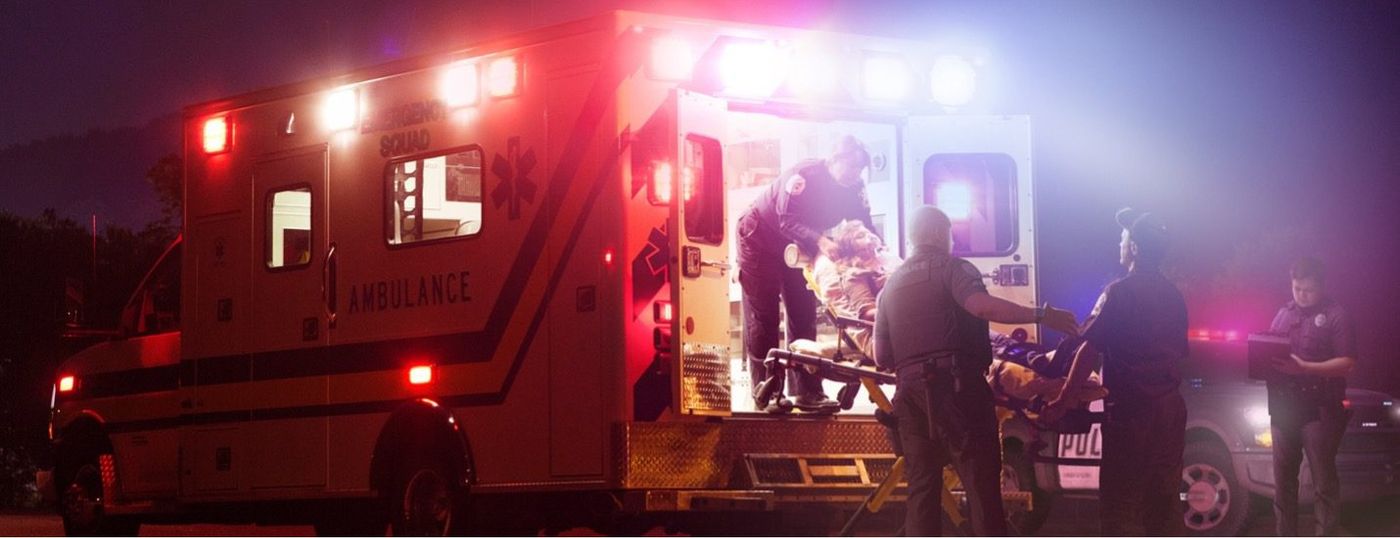
We would add a further ‘procedural benefit’: saving lives. Faster response times and more precise locations of gunfire incidents enable officers and first responders to reach the scene more quickly, rendering aid to victims as needed.
CLAIM #1
“Research shows the technology doesn’t reduce shootings or increase clearance rates, but it may have other benefits.”
Professor Piza writes that his research has repeatedly proven that ShotSpotter makes police response to shootings more comprehensive, faster, and more precise. It also makes police activities at crime scenes more productive and thorough, resulting in greater recovery of evidence—like fired cartridge casings and seized crime guns—at the scene of murders.
Unfortunately, he essentially ignores the system’s greatest benefit: saving lives. Though he acknowledges that ShotSpotter can lead to faster medical aid for victims, his research omits any attempt to measure this value. But saving lives is the reason police prioritize gunfire alerts. As Professor Piza and other academics have acknowledged, most (80%+) shooting incidents are never reported to the police through 911. ShotSpotter fills that gap. Not all shootings result in wounded victims, but when they do, speed and precision matter. ShotSpotter’s ultimate value can be measured in the stories of those lives saved.
Still, he is incredulous that ShotSpotter does not single-handedly reduce crime. SoundThinking does not claim that ShotSpotter can singularly reduce shootings or increase clearance rates. Because nothing by itself can make that claim. Violent crime is a complex issue and ShotSpotter is simply one useful tool for helping respond to it (and as Dr. Piza’s research shows, respond faster, closer, and more effectively).
CLAIM #2
“Regardless of political motivations, an honest review of the research evidence suggests the decision to cancel ShotSpotter makes sense.”
Despite all the benefits that his research proves ShotSpotter provides, Professor Piza believes the decision to discontinue its use “makes sense.” This is his opinion, of course, but unless one singularly prioritizes crime rates over other goals, like saving lives, responding to virtually all gunfire (as opposed to 10-20%), or collecting evidence that can be used to seek justice for victims of gun crime, his opinion is not supported by his own research.
If reducing crime is the sole determining factor in keeping a tool, by this measure it would also ‘make sense’ to get rid of 911 (which, as his research shows, is slower, less accurate, and less reliable than ShotSpotter).
As an example, SoundThinking’s analysis of ShotSpotter and publicly available OEMC data for a similar period in 2020 and 2021 reveals that ShotSpotter alerted the Chicago Police Department to hundreds of gunshot wound victims that were not reported to 911.
Would one conclude that 911 be cancelled because it does not reduce shootings? Of course not.
The fact is, ShotSpotter provides intelligence that allows police to coordinate safe, efficient, and equitable responses that require fewer resources in a way that builds community trust.
CLAIM #3
“Any arguments that the cancellation of the Chicago ShotSpotter contract occurred within a low-research environment are misguided.”
As Dr. Piza himself notes, his research in Chicago suffered from a lack of ‘data availability.’ Despite that lack of data, he still willingly speculates about possible explanations that are critical of ShotSpotter, while ignoring other obvious explanations.
This unsupported speculation reveals a less than objective bias.
It is the reason he believes it ‘makes sense’ for Chicago to instead adopt undefined and untested “various tools, data and programs that build upon increased safety and trust,” rather than gather the data that would actually allow evaluation of the potentially life-saving benefits of ShotSpotter.
While it’s true that research on investigative evaluations and crime reduction has been conducted, these studies by and large are simply misaligned with the expectations and goals of ShotSpotter as an extension to 911 and an effective response tool.
Further, as Dr. Piza acknowledges, however, his research suffered from a lack of insight into the investigative processes that benefit from increased evidence recovery, resulting in subsequent arrests, more seized firearms, and justice for victims. Other research has shown that those results can be considerable, which is why providing law enforcement with adequate resources is critical.
While no technology, tool, or modality can single-handedly reduce violent crime, the experience of our customers illustrates how important ShotSpotter is to a comprehensive strategy to address gun crime.
Even Piza notes that, “the technology can increase the number of gunshots that receive a police response, which is important given the long-acknowledged problem of unreported crime. It can also facilitate faster deployment of emergency medical services to shooting scenes.”
While the main objective of ShotSpotter is to alert law enforcement and first responders to virtually all gunfire in a coverage area – the vast majority of which is not reported to 911 – a ShotSpotter alert is, itself, digital evidence that gunfire occurred — with the specific location, a precise timestamp, an audio recording, and other forensic elements as part of the digital evidence.
Though physical evidence collection is challenging, in fact, research shows that ShotSpotter improves the rate of evidence collection up to three times higher due to the precise location provided by ShotSpotter alerts, according to Urban Institute.
Was this article helpful?




Search for More Insights
Here are some other topics you might be interested in: