Watch the CrimeTracer Gen3 Webinar on Demand
Too Much Data, Not Enough Time: CrimeTracer Gen3 Can Help
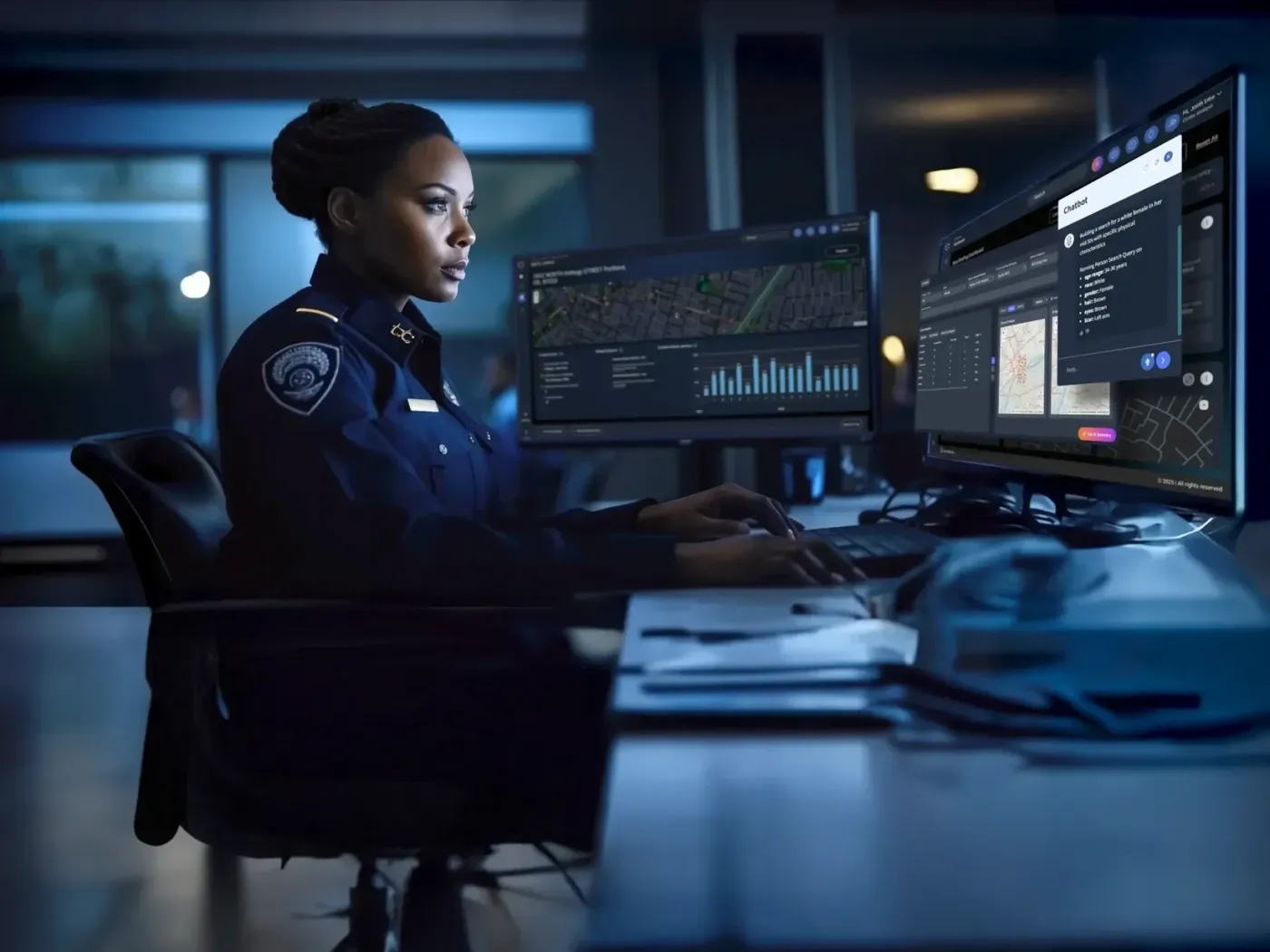

Agencies continue to handle large volumes of information scattered across CAD/RMS systems, narratives, partner agencies, and national databases. Even with modern tools, identifying who is involved in an incident or how different pieces connect can take far longer than it should.
The issue isn’t a lack of data. The problem is that the information is fragmented. Officers still spend most of their time gathering information, often from multiple systems, instead of analyzing it. The goal of CrimeTracer™ Gen3 is to reverse that pattern by consolidating all relevant pieces into a single environment so officers can focus on decision-making rather than searching.
Consolidation Scattered Data
Simply aggregating information isn’t enough. When a single individual appears in dozens of reports across agencies and over many years, investigators need a single consolidated record. CrimeTracer merges these into unified entities for people, vehicles, and locations.
This consolidation creates clearer linkages across cases and reduces the chances of missing critical associations buried in separate systems. It also reduces errors caused by inconsistent names, incomplete identifiers, or data scattered across multiple platforms.
CrimeTracer’s National Footprint
Over the past 25 years, CrimeTracer has grown into a national investigative resource. The platform includes statewide deployments, regional warehouses, and hundreds of direct CAD/RMS integrations, giving agencies access to over a billion data records well beyond their jurisdiction.
The strength of this network often provides leads that would otherwise stay hidden. One example shared during the session involved a homicide investigation in Georgia that was solved when a phone number from the case appeared in a Los Angeles crash report—an insight made possible only through nationwide data sharing.
What’s New in CrimeTracer Gen3
CrimeTracer Gen3 introduces new tools that expand the platform beyond its traditional use by analysts and investigators. The redesign focuses on making agency data easier for patrol, command staff, and support personnel to use in real time.
The update emphasizes accessibility, clarity, and the ability to quickly find what matters. Gen3 also incorporates AI capabilities that help users read, search, organize, and understand information faster and with less manual effort.
Patrol Briefing Dashboard
The patrol dashboard provides a fast view of recent activity in an officer’s assigned area. Officers can see notable crime changes, spot patterns on a map, and review activity through line charts or bar charts that highlight emerging trends.
AI-generated summaries give officers a concise overview of incidents without needing to open every report. This helps improve shift-to-shift awareness and allows officers to start each shift with better context about what happened overnight or during previous rotations.
Crime Trends Dashboard
The trends dashboard brings CompStat-style reporting directly into the platform. Agencies can compare current activity to prior periods, highlight increases or decreases, and adjust views by week, month, or year.
Users can also generate draft summaries based on the displayed trends, speeding up preparations for command briefings or report writing. The map view supports several visualization modes, allowing for deeper analysis of neighborhoods, beats, or specific crime clusters.
Natural-Language Search Chatbot
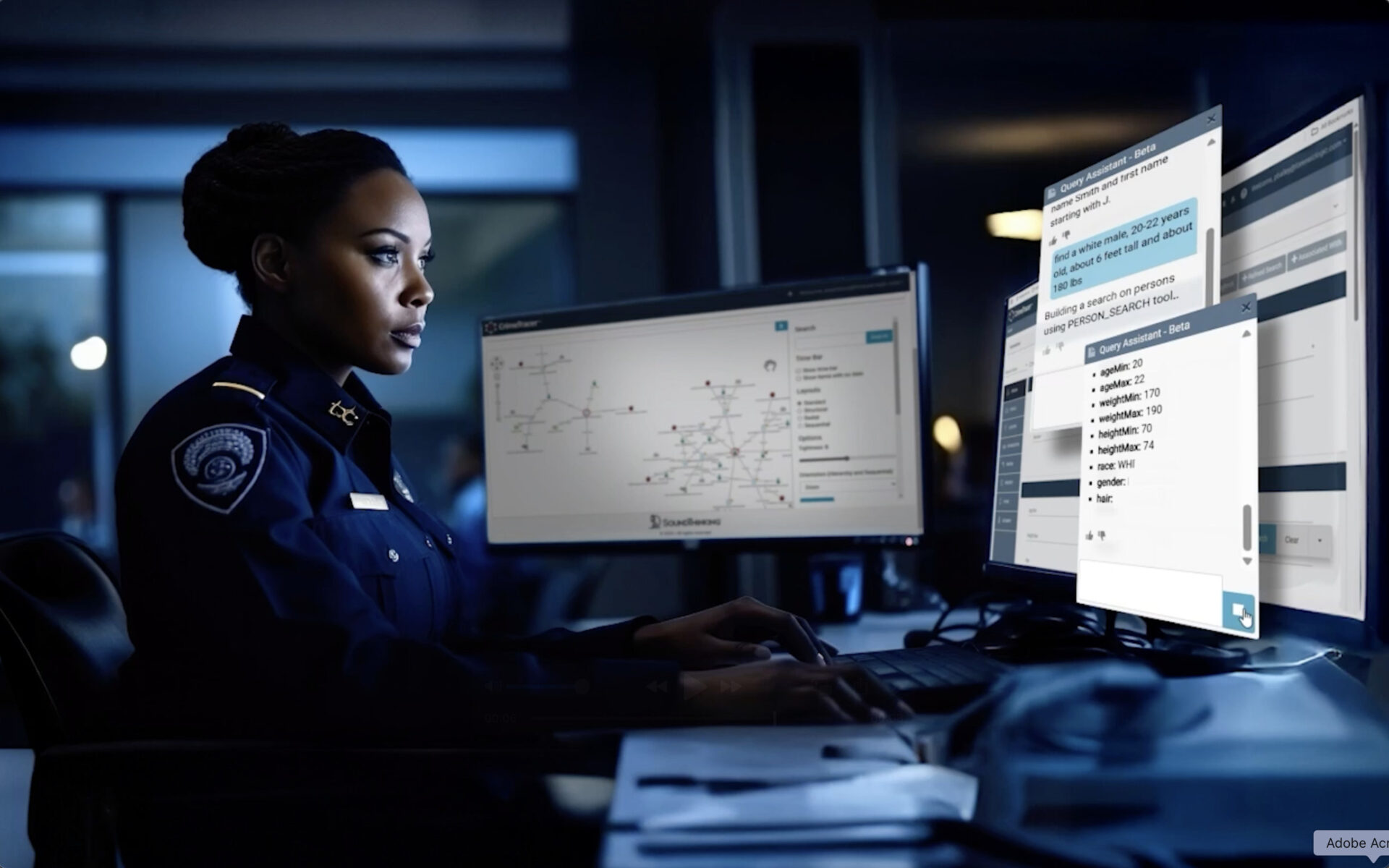
The new chatbot allows officers to ask questions using normal speech or typed queries. The system converts the request into a structured search across CAD/RMS data, narratives, and other shared sources, helping reduce the time spent building complex queries.
Because it shows how it interpreted the question, officers can quickly correct or refine the request. Voice-based searching stays within CJIS-compliant environments, and activation requires a privacy acknowledgment to protect users and agencies.
AI Summaries
AI-generated summaries help users understand the essence of long or multi-part reports. The summary appears at the top of each document and includes references to the original text for verification. This saves valuable time during active investigations or when reviewing long narratives.
These summaries will also be available inside case folders, allowing officers to see potential links or themes across groups of saved documents, people, vehicles, or locations.
Case Folders
Case folders return in Gen3 as a simple way to collect and organize leads. Users can store entities such as people, vehicles, documents, and locations, and then view them in a clean list or card layouts.
Breaking items into categories helps investigators keep track of related leads. Over time, AI summarization will further enhance case folders by highlighting connections across the collected materials.
Watch the CrimeTracer Gen3 Webinar on Demand
Entity Extraction
A future enhancement previewed during the session is automated entity extraction from unstructured narratives. CrimeTracer will pull out key details—such as names, plates, or locations—and link them across documents.
This capability will reveal additional investigative leads that previously required manual reading. It combines narrative search with structured data consolidation, helping investigators identify patterns that weren’t visible before.
Data Sharing, Security, and Integration
Agencies have full control over what they share, including the option to restrict narratives or limit visibility by role or region. Many agencies choose to share narratives once they see the investigative detail they contain, especially regarding officer safety and situational awareness.
CrimeTracer integrates with nearly every major CAD/RMS system. After mapping and validation, data updates are automatically pulled at intervals set by each agency’s needs. Redactions, purges, and supplementals are reflected in CrimeTracer, so the platform always mirrors the source system.
Dashboard Refresh Rates and AI Reliability
Patrol and trends dashboards refresh on a schedule that can be adjusted by the agency. Most default to eight hours, but shorter intervals are available. Early testing of the AI features shows high accuracy, with feedback tools planned to help agencies strengthen performance over time.
Schedule a call to learn more about turning scattered data into agency-wide intelligence with CrimeTracer Gen3
Was this article helpful?


Search for More Insights
Here are some other topics you might be interested in: