Information scattered across multiple systems
Officers often need to look in several different databases or platforms to get a basic understanding of recent activity.
Patrol Dashboard in CrimeTracer Gen3 Is Changing the Narrative for Patrol Officers

Patrol officers start their shift wanting to know what happened overnight, who they should be looking for, and what areas may need extra attention. Yet in many agencies, that information arrives in bits and pieces: a verbal roll-call mention here, a BOLO email there, or a note passed along from the previous shift.
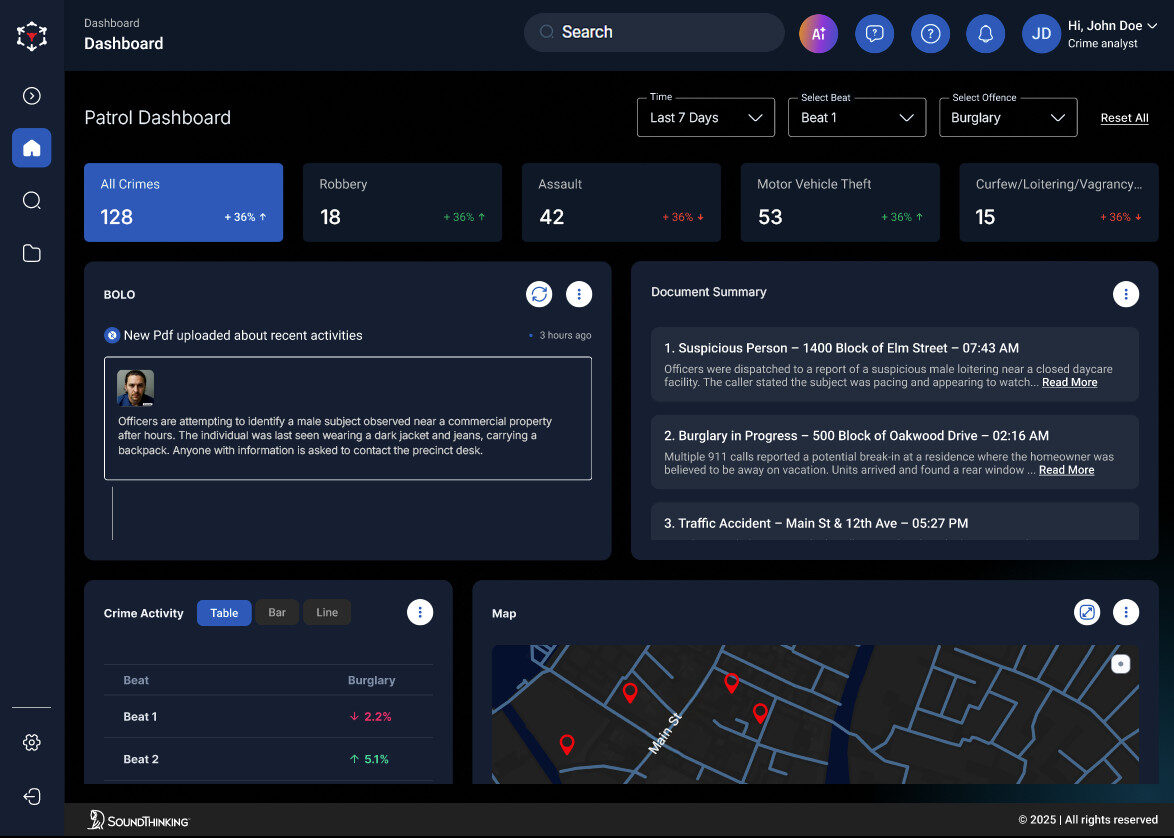
The Patrol Dashboard in CrimeTracer™ Gen3 is designed to close that gap. It brings together recent incidents, trends, persons or vehicles of interest, and active leads into a straightforward view that’s tailored to each officer’s patrol area. The idea isn’t to overwhelm the user with data. It’s to provide a focused situational snapshot so patrol can begin and continue their shift, informed and prepared.
The Challenges Facing Patrol Officers
Patrol officers are often expected to make quick decisions with only fragments of information. While they are the first to respond and the most present in the community, the flow of intelligence to the patrol level is not always consistent or complete. The result is that officers may start their shift without a full understanding of recent incidents, emerging patterns, or individuals of interest in their assigned area.
Several common challenges contribute to the information gap:
- Briefings that are too general to support specific patrol areas
Roll-call discussions may provide high-level updates, but they don’t always address what’s happening in the specific neighborhoods or geographic areas. - Manual effort to connect people, vehicles, and incidents
Officers and analysts must spend time cross-checking reports or notes by hand to find patterns or links that could be relevant to today’s shift. And with record processes and other systems, the information most helpful to patrol units may not reach them promptly. - Delays in receiving new information
If updates only come through daily summaries or end-of-shift reports, patrol may begin their assignment without the most up-to-date insight.
How the Patrol Dashboard Helps
The patrol dashboard provides a clear, current briefing tailored to their assigned area and shift. Officers can view recent crimes, notable incidents, active BOLOs, and developing patterns within their patrol area. Because this information is drawn from data already available in the agency’s systems, officers don’t need to search multiple places. The patrol dashboard gives them essential context at the start of their shift.
Some of the capabilities of the patrol dashboard include:
Patrol-Specific Briefings
The patrol dashboard delivers a briefing that reflects the area an officer is assigned. Instead of broad citywide updates, the dashboard focuses on what is happening in that officer’s designated area, including recent calls, relevant reports, outstanding warrants or persons of interest, and ongoing issues that may require closer attention.Up-to-Date Information Feed
The dashboard updates more frequently, rather than relying on summaries generated days earlier. Officers can review the latest information, reducing the chance that important developments are missed simply because they occurred after the previous day’s briefing materials were compiled.Direct Link to Agency-Wide Data
Because the patrol dashboard is part of CrimeTracer Gen3, officers aren’t limited to what appears on the dashboard. If something catches their attention — a license plate, a name, a home address, or a recurring location — they can quickly search related incidents or summaries. CrimeTracer’s natural-language search and entity summaries make it easier to understand who is connected to what, without needing to switch between multiple systems.Integration Between Patrol, Analysts, and Investigations
When analysts spot trends in CrimeTracer’s trends dashboard, those insights can be shared with patrol. If patrol officers uncover information in the field that may support an active case, they can easily route it to centralized case folders for investigative follow-up. This creates a smoother flow of information between units and helps the agency operate more quickly and cohesively.
Connect with is to learn more about how CrimeTracer Gen3 can support your agency
CrimeTracer Patrol Dashboard in Practice: A Use Case
Consider a patrol shift assigned to a specific geographic area that has recently seen several vehicle break-ins clustered around apartment complexes near a main roadway. Before CrimeTracer Gen3, an officer heading into this shift might only know something was “going on over there” based on a quick mention during roll call.
On the patrol dashboard, the officer can see where the break-ins have occurred, the timeframe, and that a dark sedan has been mentioned more than once. The system also surfaces a BOLO for a similar vehicle connected to a nearby jurisdiction. That officer now begins their shift with a clearer picture, including a vehicle type to watch for and how new activity may link back to existing cases.
Benefits for Patrol Officers
Organizing key information in a way that’s easy to review and act on, the patrol dashboard supports patrol officers’ daily work, improves investigative outcomes, and supports situational awareness. It helps ensure that officers begin their shift aligned on priorities, aware of current risks, and prepared to respond effectively.
These advantages show up not only in how officers deploy throughout their patrol area, but also in how they communicate, coordinate, and stay safe throughout the day:
- Stronger situational awareness before leaving the station
Officers begin their shift with a clearer picture of emerging crime patterns, active suspects, recent incidents, and community concerns in their assigned area. - More informed and purposeful patrol strategies
When officers know where issues are developing, they can adjust how they spend their time. This can improve coverage, visibility, and response effectiveness. - Faster recognition of connections across incidents
Officers do not need to remember every detail from prior briefings or reports. And the dashboard highlights links between people, vehicles, and locations, helping officers see patterns that matter. - Improved communication across shifts
When vital information is acknowledged, documented, and tracked, there is less risk of it being lost between the day, swing, and night shifts. - Support for officer safety
Awareness of recent violent incidents, BOLOs, and high-risk individuals helps officers make safer and more informed decisions in the field.
The Bigger Picture
Patrol is the foundation of law enforcement. It is where officers interact with the public, observe changes in neighborhood conditions, and often encounter the first clues that lead to larger investigations. Yet patrol can only act as effectively as the information they have at their fingertips.
The patrol dashboard in CrimeTracer Gen3 doesn’t try to change how officers work. Instead, it supports the way they already operate by making essential information easier to access, search for connections, and act on. When patrol walks out the door knowing what matters, the entire agency benefits, along with the communities they serve.
Ready to see how CrimeTracer Gen3 can help your agency? Connect with us to learn more about all the features and to see the patrol dashboard in action.
Was this article helpful?



Search for More Insights
Here are some other topics you might be interested in: