











California’s AB2975 requires Cal/OSHA to adopt hospital weapons detection standards by March 1, 2027, followed by a 90-day compliance window. That window is not the planning timeline. For hospitals with multiple entrances, complex stakeholder structures, or capital budgets that move in quarters, preparation needs to start now.
Enough is already known to start. Security leaders, facilities teams, operations leaders, and hospital executives can evaluate entrances, align stakeholders, and plan workflows now, ahead of Cal/OSHA’s final rulemaking.
Why Hospitals Need to Start AB2975 Planning Now
The webinar, Getting Ready Now: Hospital Security Planning Ahead of Cal/OSHA’s Final Regulations, made that point plainly: the 90-day compliance window that follows the March 2027 adoption deadline is not the planning window. It is the finish line.
For many organizations, especially those with multiple entrances, several campuses, or complex stakeholder structures, planning and deployment can take far longer than 90 days. Security, facilities, IT, procurement, leadership, and clinical operations all need to work together, and that coordination may not happen quickly.
AB2975 is a Hospital-Wide Planning Issue
Meeting the mandate of AB2975 involves more than just the security department. Hospital security leaders will likely be central to the process, but the webinar speakers repeatedly emphasized that weapons detection planning will touch facilities, IT, executive leadership, capital planning, procurement, and clinical operations. That matters because hospitals do not operate like standalone office buildings or controlled campuses. They have varied entrances, different patient populations, emergency access requirements, visitor surges, and operational realities that can change by the hour.
That means compliance planning is not simply about selecting a screening device. It is about deciding how security screening will fit.
Download the Whitepaper: Understanding California Assembly Bill 2975
How the Screening Model Shapes the Arrival Experience
The presentation walked through three broad approaches to weapons detection: handheld tools, traditional checkpoint screening, and free-flow screening. Rather than focusing on a single solution for everything, the webinar emphasized trade-offs.
For hospitals, the front entrance is not just an access point. It is also part of the care environment. Patients may arrive in pain, under stress, emotionally overwhelmed, or trying to help a loved one. Visitors may be anxious. Staff may be entering during busy shift changes. In that setting, the screening approach affects more than threat detection. It also affects dignity, clarity, flow, and overall first impressions.
- Traditional checkpoints may provide a stronger visible sense of control, but they can also create queues, increase labor needs, and introduce an airport-style feel that many hospitals would rather avoid.
- Handheld tools remain useful, especially for secondary screening, but they are labor-intensive and difficult to scale as the main approach at a busy entrance.
- Free-flow weapons detection screening systems allow visitors and staff to pass through without stopping, reducing entrance friction while maintaining screening capability. But the presenters were clear that this does not eliminate the need for adequate staffing, sound procedures, or strong follow-up responses.
Screening Efficiency Is Only Part of the Equation
Another consideration is the difference between raw screening speed and total entrance performance. Hospitals often hear vendor claims about throughput. The presenters cautioned viewers to think more broadly. What matters is total entrance performance during peak periods, not screening speed alone. It is also whether the entrance continues to function smoothly during peak periods, including shift changes, clinic rushes, visiting hours, and emergency department surges.
That requires hospitals to think beyond the first point of detection. They also need to consider what happens when a person needs secondary screening, where it occurs, who handles it, and whether the process slows everyone else down. This is where security planning becomes operational planning. A lane may look efficient in a product demo. It may be less efficient if the alert response process creates confusion, crowding, or delay at the front door.
Weapons Detection Should Fit in a Layered Security Strategy
Weapons detection is one element of a broader hospital security posture, not a stand-alone answer. That larger posture may include security presence, visitor management, badge access, cameras, policies, escalation protocols, and emergency procedures. Screening is part of the security strategy, and should be evaluated in that context.
No technology will solve every security problem at the entrance. But a good screening system, paired with trained staff and clear procedures, can strengthen the overall posture and improve readiness.
It also helps hospitals think more realistically about investment. Instead of asking one system to do everything, leaders can ask how it supports the kind of access, security, and patient experience they want to create.
Internal Coordination Often Determines the Real Timeline
The presenters explained that the installation itself is usually the shortest part of the process. The longer timeline often comes from internal coordination: budget approval, IT review, facilities planning, design decisions, procurement, and stakeholder alignment.
That is important for hospitals to understand now. A weapons detection deployment at entrances may require site walkthroughs, entrance assessments, infrastructure planning, network review, construction or wiring considerations, and coordination across multiple teams. Facilities may need to evaluate ingress and egress issues, aesthetics, and fire code and ADA compliance. IT may need to review network architecture or security controls. Leadership will need to set the budget and project priority. Clinical teams may need to weigh in on flow and patient impact.
Every Entrance is Different
A hospital main entrance, emergency department entrance, labor and delivery entrance, interior vestibule, or lower-volume access point may each present different constraints. Door layout, traffic patterns, road proximity, automatic doors, entry spacing, and surrounding architecture all affect what will work.
Technical considerations should also account for cabling, equipment placement, IDF room access, weather-rated infrastructure for outdoor installations, and other readiness issues. Successful deployment depends on early real-world assessment, not assumptions made from a floor plan alone.
For hospital teams, that means site-specific planning must happen before procurement is too far along.
Hospitals Should Not Delay Preparation for AB2975
The presenters urged hospitals to assign an internal owner for compliance planning now. That person should drive the process, coordinate stakeholders, track timelines, and keep the organization moving.
Then hospitals should begin site walkthroughs, identify required and high-priority entrances, bring IT and facilities into the conversation early, and begin thinking through budget, procurement, and operational planning. The presenters also encouraged organizations to work backward from the compliance deadline rather than assuming there will be time later. It is much easier to manage a project like this when it is treated as a structured planning effort rather than a late-stage scramble.
Readiness Will Depend on Early Action
Hospitals do not yet have all the final details from Cal/OSHA. But they already know the compliance deadline is approaching and the likely types of entrances that will be affected. AB 2975 planning is not just about buying technology. It is about preparing the organization to implement the right approach for safety, access, and operations before time runs out.
The deadline may still be ahead, but the window for thoughtful planning is already open.
If Free-Flow Detection Is the Right Fit, Here Is What Your Timeline Looks Like
The webinar closed with a concrete question: for hospitals that have worked through the trade-offs and determined that free-flow weapons detection is the right approach, what does the path forward actually look like?
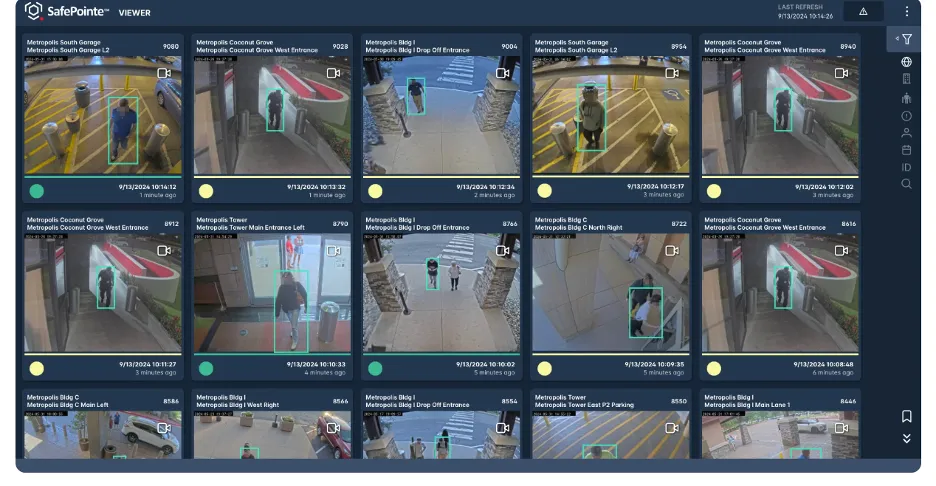
The answer is built around early site engagement. SafePointe® is designed for this kind of deployment, built to integrate with existing hospital security infrastructure rather than replace it. The deployment process begins with site assessment support, enabling hospitals to evaluate entrance-specific requirements before making procurement commitments. From there, the process moves through stakeholder alignment, infrastructure planning, and installation, which is typically the shortest phase of the project.
For hospitals working toward the March 1, 2027, compliance deadline, a rough planning sequence looks like this: begin stakeholder alignment and entrance assessment now, move into procurement and infrastructure planning by mid-2026, target installation and staff training by late 2026, and use the 90-day window before the compliance date for operational refinement. That leaves room for the unexpected. Treating it as a structured project from the start is what makes that margin possible.