Reduced staffing needs: SafePointe enables internal security teams to respond only when verified threats occur, freeing personnel for higher-priority tasks. Flexible three- and five-year subscription models further enhance cost efficiency.
Choosing the Best Weapons Detection System with AB 2975

As California hospitals prepare to meet AB 2975’s weapons detection mandate by March 1, 2027, one question stands out for every facilities and security leader: Which technology will deliver safety, efficiency, and patient trust—all at once?
The new law requires automated screening at main public, emergency, and labor & delivery entrances — but it leaves technology selection to hospitals. That flexibility is an opportunity to align compliance with smarter, future-ready security design.
To receive updates and information on regulations related to AB 2975, be sure to subscribe to the Cal/OSHA Research and Standards mailing list.
Understanding the Options: Traditional, Advanced, and AI-Based Systems
1. Traditional Metal Detectors
Walk-through metal detectors have been used in airports and courthouses for decades. They’re reliable, familiar, and relatively affordable. However, their linear “stop-and-scan” design creates bottlenecks during visiting hours and shift changes, often requiring multiple lanes and more staff to maintain throughput.
Pros: Proven technology, simple maintenance.
Cons: Slower processing, visible checkpoints that may heighten anxiety, divestment of personal items (e.g., keys, laptops), and less adaptability for hospitals serving vulnerable populations.
2. Advanced Multi-Lane Systems
Modern intelligent checkpoint systems incorporate analytics and multiple entry lanes to expedite the flow while minimizing the need for the divestment of personal items. They remain high-profile systems, though, and still require staffed oversight.
Pros: Faster throughput and fewer secondary checks; less intrusive than legacy walk-throughs.
Cons: Higher infrastructure and staffing costs; still creates a “security gateway” feel that may clash with hospital design aesthetics.
3. AI-Based Free Flow Screening
A new generation of AI-powered passive detection systems is transforming hospital safety. SafePointe uses discreet low-frequency sensors and a 3D camera that captures motion data to quietly and unobtrusively detect potential weapons through subtle magnetic disturbances. With no stopping, wanding, or visible checkpoints, this free-flow technology aligns with AB 2975’s focus on dignified, accessible, and patient-centered screening, particularly for pregnant patients and those with medical devices.
Unlike traditional metal detectors which can require multiple staff per lane, SafePointe’s unmanned, AI-driven system stands out for its low total cost of ownership (TCO). Here’s how it works:
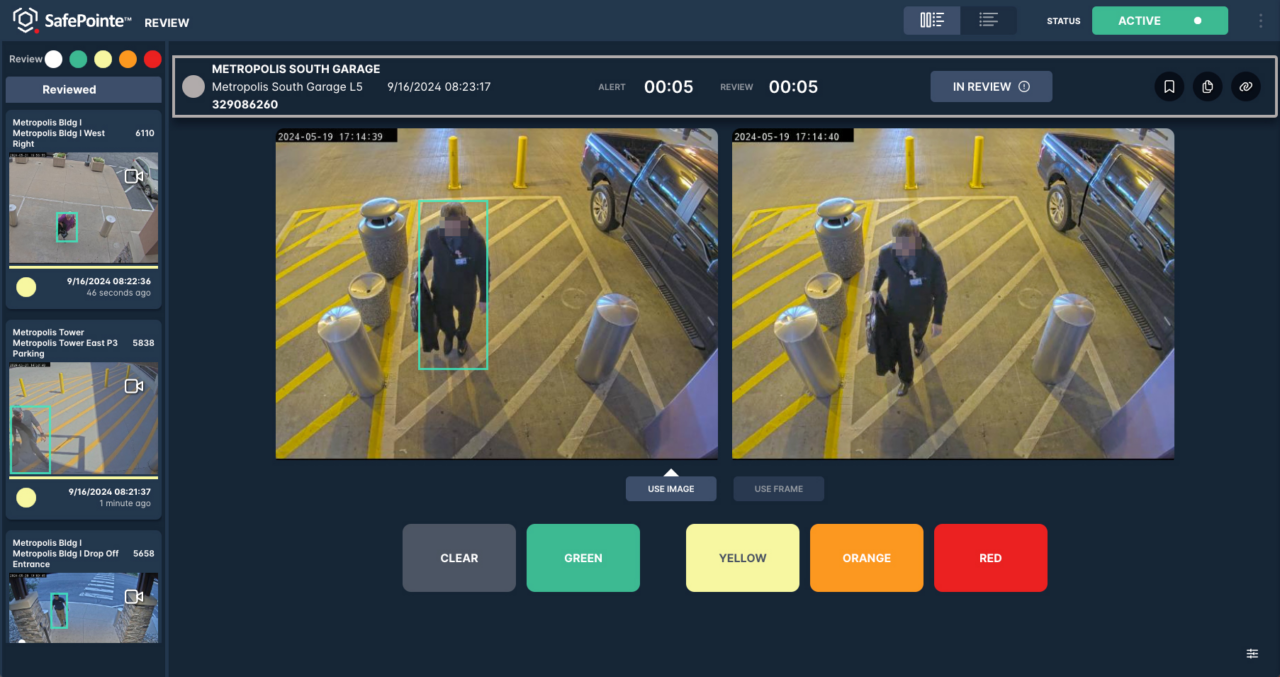
Human analysts review and classify the alert within seconds.
As the 3D camera collects real-time motion data — direction, speed, and movement — SafePointe’s AI simultaneously analyzes magnetic signatures of carried metal objects to determine whether a person may be carrying a weapon. If a potential threat is detected, the data is sent to human analysts who review and classify the alert within seconds, filtering out non-threats such as armed security personnel. Confirmed threats automatically trigger a digital alert sent to the facility’s security team via the SafePointe app or text, complete with a short video clip and image of the individual.
This continuous, automated process delivers significant advantages:
- 24/7 protection: Traditional manned systems are often limited to peak hours. SafePointe ensures uninterrupted, around-the-clock coverage—closing critical security gaps during off-peak times.
- Seamless integration: Installation is quick and non-disruptive. The system operates independently of existing IT and security networks, with all alerts transmitted securely through the cloud to a web portal or smartphone interface.
The result is a smarter, safer, and more sustainable approach to hospital security—one that balances protection, privacy, and peace of mind.
Pros: Seamless patient experience, minimal staffing, scalable across entrances, and high throughput without sacrificing sensitivity.
Cons: Requires network connectivity and data coordination with security and IT teams.
Understanding Throughput and the Importance of Safety for Vulnerable Populations
Under AB 2975, hospitals must uphold security standards without sacrificing compassion or accessibility. Screening processes cannot delay care, cause congestion, or impede ADA compliance. Systems that minimize false alarms and maintain steady patient flow directly support compliance by reducing operational friction and preserving patient dignity.
HIPAA-compliant, AI-powered weapons detection solutions like SafePointe achieve this balance through discreet, passive technology. The system is typically integrated into non-descript bollards or decorative planters spaced 8 feet apart — wide enough to maintain a natural, high-throughput flow without creating bottlenecks common to traditional metal detectors.

Furthermore, unlike active magnetic systems, which generate fields that can interfere with pacemakers and other medical devices, SafePointe’s Magnetic Moment sensors operate passively. This makes them a safer, more inclusive choice for sensitive hospital environments—providing protection that’s both effective and empathetic.
As Cal/OSHA finalizes performance metrics, hospitals should anticipate benchmarks around:
- Peak-hour throughput — Can your system handle staff and visitor volume without queues?
- False alarm rates — Excessive alarms erode trust and slow response.
- Safety certifications — Verify electromagnetic safety for medical devices and expectant mothers.
Hospitals selecting their systems now can shape future regulations by sharing data and field results through Cal/OSHA’s advisory process.
Blending Security with Care
Hospitals are unique among critical infrastructure — they must protect without creating fear. This need for balance is driving the adoption of discreet, AI-powered systems like SafePointe, which strengthen security while preserving a calm, patient-friendly environment. By combining advanced analytics with Ground Truth verification, SafePointe not only detects threats but also generates objective data that helps security teams refine their response strategies and document compliance with evolving standards.
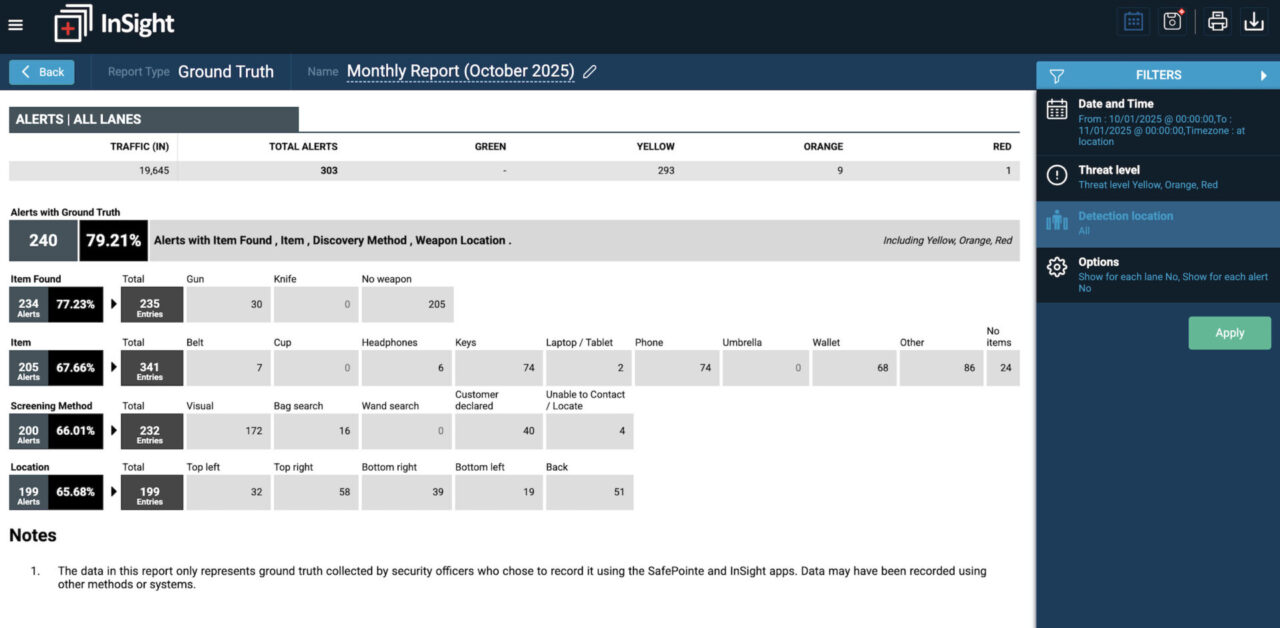
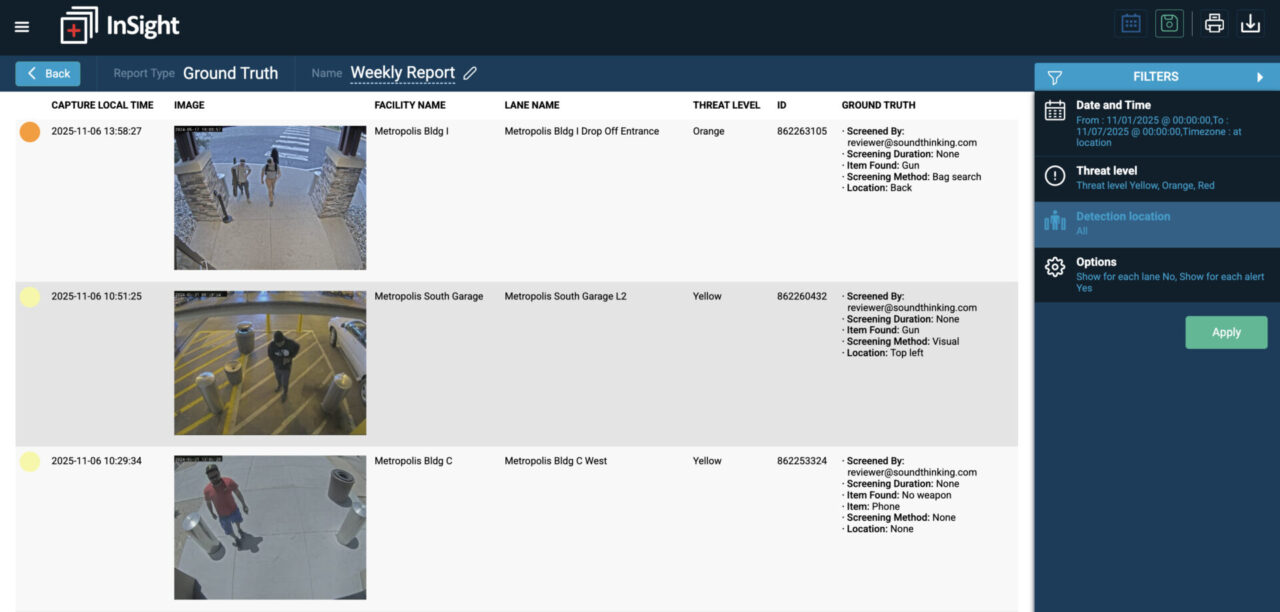
The InSight platform, accessible via a secure web interface, makes it easy to review, analyze, and share SafePointe data across multiple lanes, entrances, and facilities. Each incident can be compiled into a clear, visual report that supports investigations and facilitates internal and external information sharing.
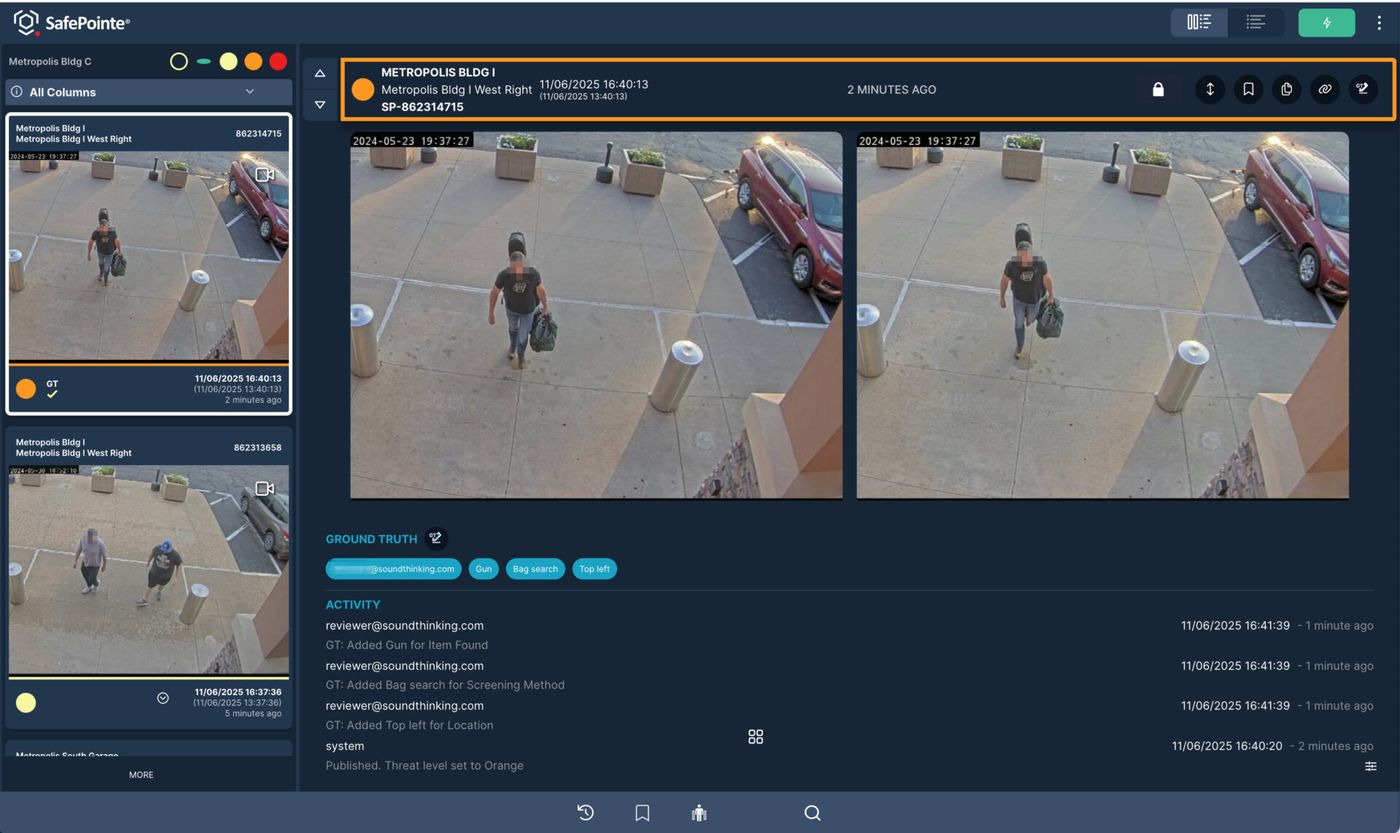
Unlike traditional metal detectors that provide only a simple alarm, SafePointe delivers actionable intelligence in near real time. Within ten seconds of detection, the system alerts security personnel with both the threat level, image, and accompanying video footage. Each alert is reviewed and classified by trained human analysts (“human in the loop”), giving teams critical context to prioritize their response.
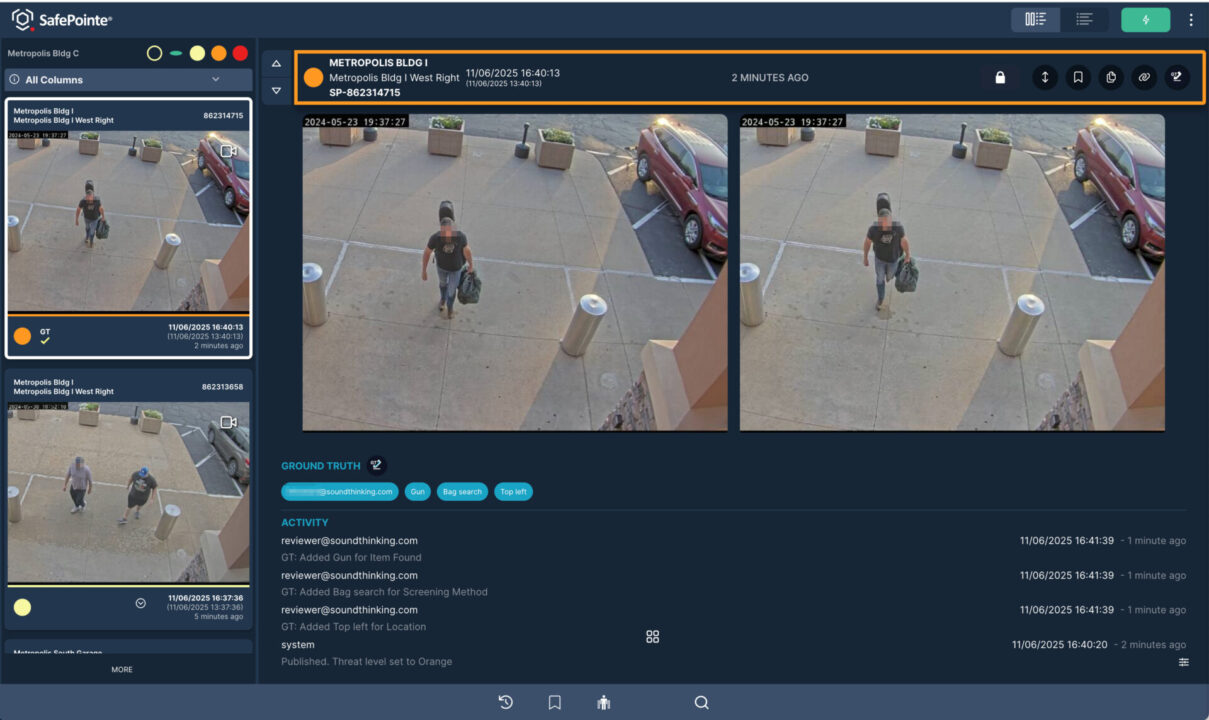
Video capture of individual entering facility.
Video capture of the individual entering the facility further empowers staff to assess the situation, respond appropriately, and preserve evidence for subsequent investigations or legal review. In high-stakes moments, these insights can mean the difference between a rapid, effective response and potential disruption.
As hospitals implement systems to meet AB 2975 requirements, it is essential to determine whether the California Department of Health Care Access and Information (HCAI) must review or approve the project to ensure alignment with all state healthcare facility regulations.
Preparing for AB 2975 Compliance
California’s compliance deadline may seem distant, but every facility should already be:
- Mapping entrances and assessing power, network, and space needs.
- Comparing technologies to understand performance, safety, and total cost.
- Piloting passive systems to evaluate flow and user experience.
- Designing training programs—eight hours minimum—for non-clinical screeners covering operation, de-escalation, and implicit bias.
Hospitals that plan early will avoid the 2026–27 procurement rush and position themselves as statewide models for balanced, patient-first safety.
AB 2975 transforms hospital security from a voluntary measure into a regulated standard—but it also opens the door to smarter, more human-centered technology. The best systems will protect staff and patients without slowing care or changing the tone of healing spaces.
AI-powered passive weapons detection solutions like SafePointe, which meets both SOC 2 and HIPAA compliance standards, are defining the future of hospital security—combining speed, discretion, and readiness for tomorrow’s regulatory landscape.
Was this article helpful?



Search for More Insights
Here are some other topics you might be interested in: