How Police can use Tech to Work Smarter, not Harder
How AI Helps Turn Data Into Patrol Decisions: Blue Grit Podcast Recap
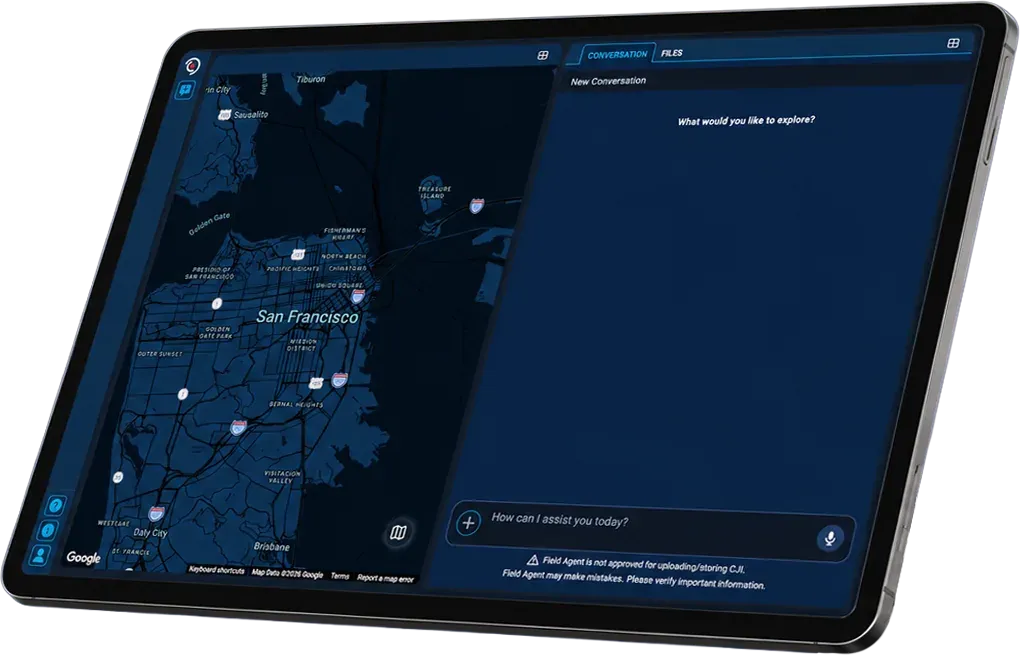
Law enforcement agencies do not have a data shortage. They have a decision-support shortage. That was the central message when SoundThinking’s Jamie Algatt returned to Blue Grit, the Police Performance Podcast, to talk about how AI technologies are changing the way agencies work. Their conversation covered policy, rapid analytics, patrol strategy, technology deployment, and the practical details of SafetySmart® Field Agent.
Here are the key takeaways.
Start With an AI Use Policy
Prior to agencies adopting AI technologies, they should consider having an AI use policy so staff know how not to use the AI technologies the same way they would use an AI chat app on a personal phone. Jamie said an AI use policy is the first thing any agency should put in place, and noted that federal standards cover the basics and that many states offer models local governments can adapt to their own laws and ordinances.
Podcast host Eric Tung compared it to social media. No agency would let employees post without guidance, and AI deserves the same discipline. Prosecutors often have their own guidelines too, so policy work should include partners across the justice system. Describing AI as another tool on the gun belt, much like the first computers in patrol cars, Jamie reminded users that AI does not replace judgment.
Connect All Your Agency’s Data
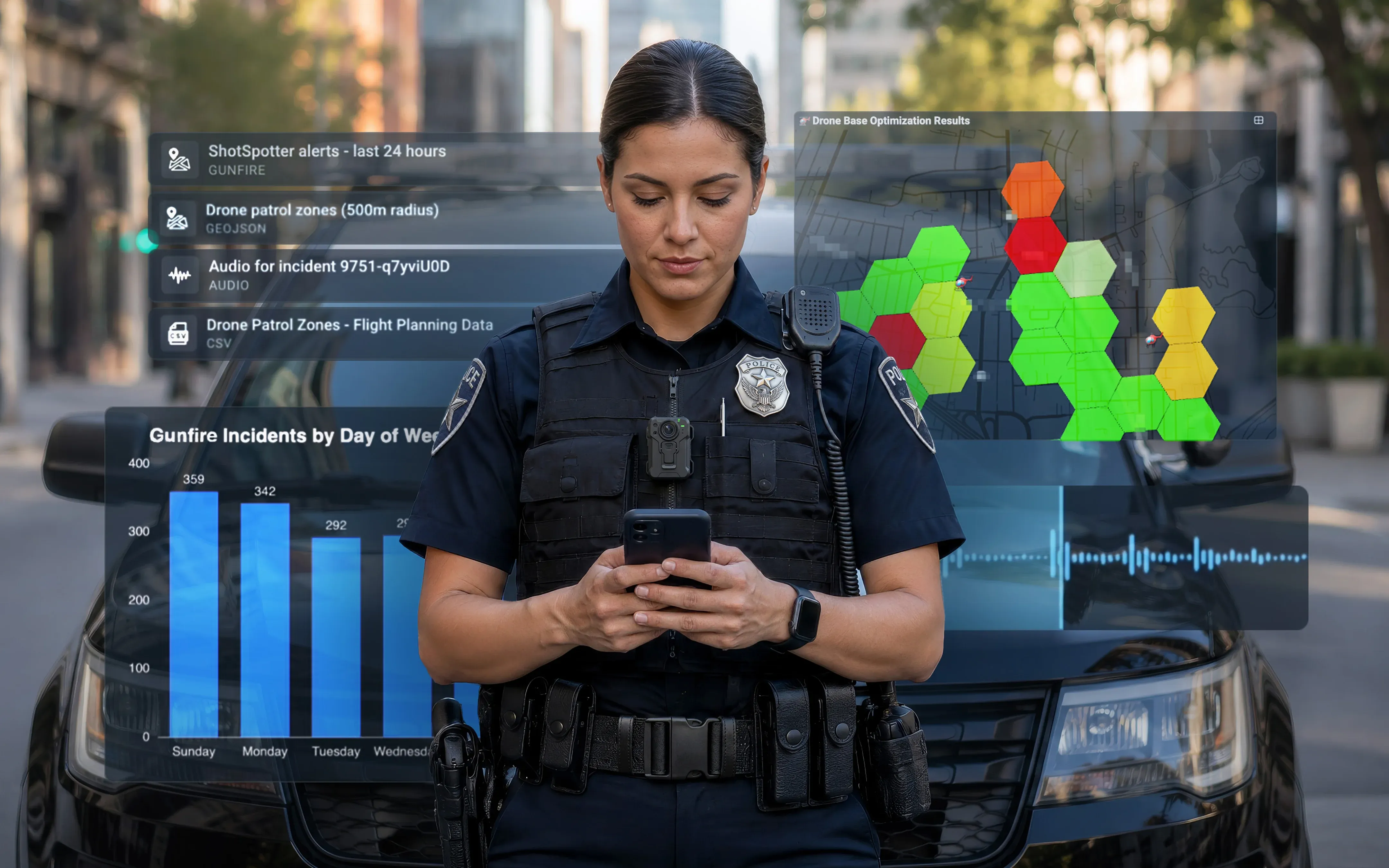
SafetySmart Field Agent merges ShotSpotter data with the data an agency already has, including CAD, RMS incident and offense records, and other agency data you upload. This connected data adds to the analysis Field Agent can perform.
Examples include state-held citation and crash data, LPR reads, pawn tickets, and more. With bring-your-own-data, you can add that material to the same analysis. For example, you could ask Field Agent in ShotSpotter about areas with more automatic gunfire over a specified time. With those results, you could include additional information such as offense records of aggravated assaults with a firearm and LPR data of vehicles in the area at the time of the gunfire to find connections faster.
Want a sample list of Field Agent prompts for patrol, analysts, investigators, and command staff?
Interrogate the Data Like a Conversation
Field Agent works the way people already use modern AI tools. An officer asks a question, and the system suggests what to look at next. Ask for last month’s vehicle break-ins, and Field Agent can offer a time-of-day and day-of-week analysis that shows when visible patrols will be most effective.
The user can also change direction. If suspects are described as transient, ask Field Agent for bus stops near each break-in. Points of interest such as schools, liquor stores, and transit stops can be layered in to look for patterns.
Finding Connections and Patterns – Field Agent Use Cases
Jamie shared a recent analysis with a partner agency. The team filtered ShotSpotter alerts to events with five or more rounds fired, then overlaid aggravated assaults and armed robberies where the offender did not shoot. A pattern surfaced. Monday through Friday, those armed robberies rarely ended in gunfire. From Friday night into Sunday morning, they often did.
That kind of finding can take an analyst days, and analysts do not work every shift. Field Agent shortens the path from raw data to a bulletin, a suspect vehicle profile, or a serial offender pattern.
Jamie also pointed to an LPR example. A vehicle that never hit a hot list may still appear near several shootings or retail thefts. Seeing it hit one camera seven or eight times within three minutes is something an alert would never flag, but AI can find it in the data.
This matters because violent crime is falling in many places while burglaries, vehicle break-ins, vandalism, and organized retail crime are rising. Jamie cited chief-of-police statistics showing that a very small share of people drive most crime. Focused work on those offenders protects communities without blanket enforcement.
Build Data-Driven Patrol Plans
Shift supervisors and precinct commanders can ask Field Agent for a patrol pattern covering the next 24 hours or the next two shifts, including the top ten locations for visible deterrence. The plan names intersections and block ranges, so officers know where to walk, talk, and engage the community.
Both Jamie and Eric stressed that this is not predictive policing. Field Agent works from offense types and incident data, not demographics or descriptors of suspects. It does not tell officers to detain anyone at 3 a.m. It points them to where focused presence can help, and the data-driven approach lets agencies concentrate on a few locations instead of saturating whole neighborhoods. Eric added that an objective tool like this can act as a guardrail against bias-based policing, intended or not.
Validate the Placement of LPR Cameras and DFR Programs Using Data
Technology purchases oftentimes get questioned. Field Agent helps agencies answer with evidence. An agency that is placing 20 LPR cameras can ask for the 30 top intersections ranked by violent crime, hit-and-runs, and crashes. If the data shows 25 strong locations, the extra five become a documented case for next year’s budget.
The same logic applies to drones as first responder (DFR) programs. By combining police, fire, and EMS data, including overdoses, arson events, missing persons, and trespass calls, an agency can find the three launch sites that give the best coverage across all three services. Jamie noted that a drone’s roughly one-mile radius varies by vendor. For a costly program, serving every public safety discipline makes the investment easier to justify.
Planning works the same way. Leaders can model scenarios such as a 10% rise in vehicle break-ins in a growing part of the city, then test whether the answer is two more officers per shift or a new precinct.
Real-Time Answers and Council-Ready Reports
Field Agent exports raw CSV data and GeoJSON map files for use in Tableau, Power BI, or ESRI tools. It also produces a professional PDF summary for city council or the deputy chief’s office.
The what-if capability is where the time savings show up. When a council member asks about their district, or a commander asks about full-auto gunfire, the user can adjust the query on the spot instead of rerunning an entire report. Jamie has sat in CompStat meetings where commanders had no immediate answers. Field Agent gives them those answers without a two-week follow-up on the next agenda.
Learn More About SafetySmart Field Agent
Field Agent gives agencies a faster way to question their own data. The analysis gets better when it has more data to work with. Adding outside sources widens the view, and patterns that stay hidden in a single dataset start to surface. A suspect vehicle, a repeat location, or a trend that crosses jurisdictions is far easier to spot when incident, CAD, citation, crash, and gunshot detection records sit side by side with everything else an agency can reach.
CrimeTracer™ makes that connection easy. Through CrimeTracer, agencies can tap into more than 2 billion records, in addition to the data they contribute. Analysts and investigators ask a question once and work from a larger, more complete picture. The payoff is faster leads, sharper patrol and technology decisions, and reports that leaders can defend.

Was this article helpful?



Search for More Insights
Here are some other topics you might be interested in: