Delayed Awareness
Gunfire incidents that depend on witness reports may not have the specific location, delaying awareness when every second matters.
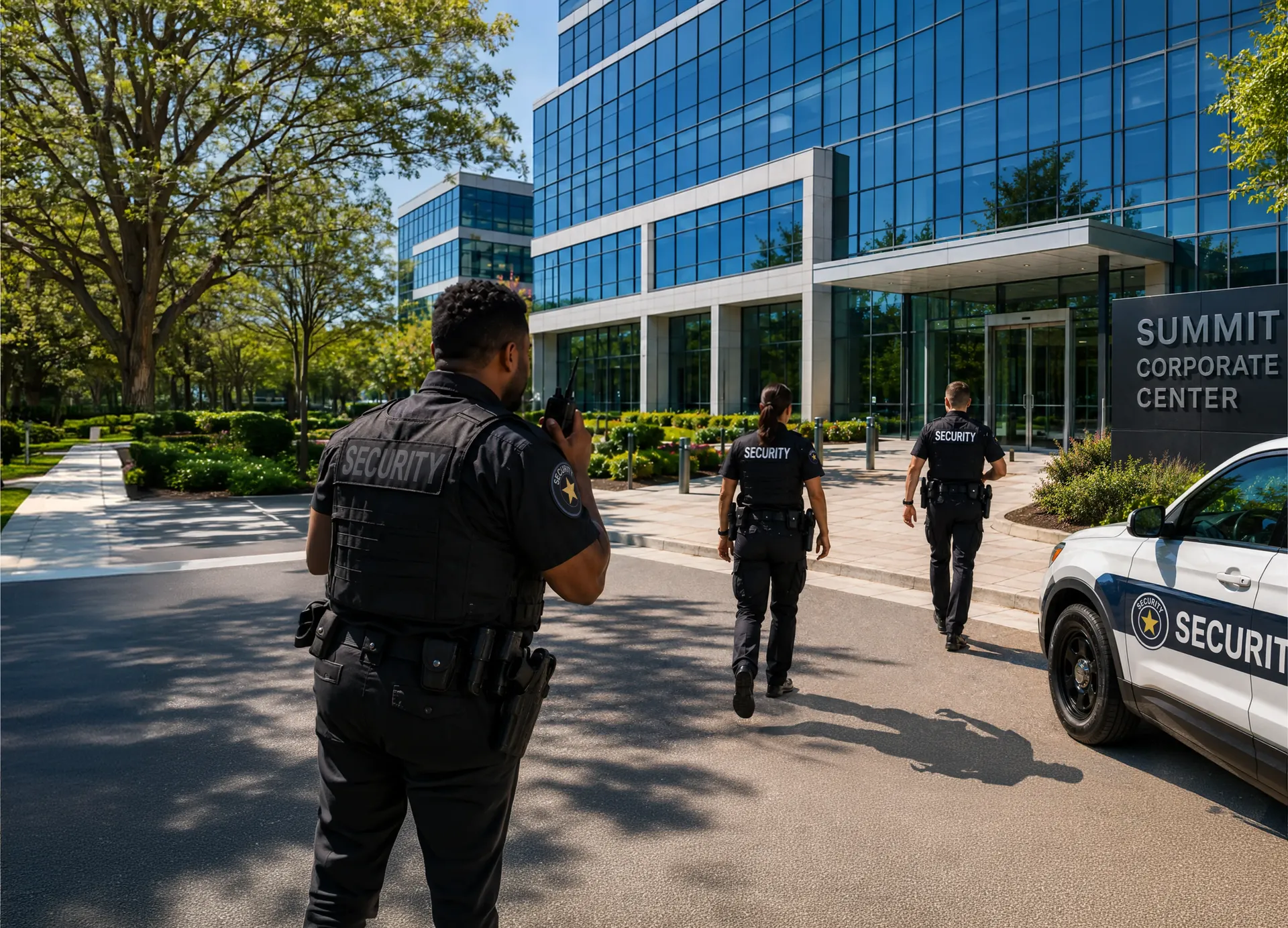

Real-time alerts your team can act on.


Gunfire incidents that depend on witness reports may not have the specific location, delaying awareness when every second matters.

Without accurate location information, security teams and first responders spend valuable time determining where to go.

Conflicting reports make it difficult to understand what happened and how teams should respond.

Every minute without reliable information can increase confusion, delay response, and affect outcomes.


Modern gunshot detection provides immediate awareness, helping security teams move from uncertainty to informed action.


Identify outdoor gunfire as it happens with human-verified alerts and precise incident locations.
Give security teams timely, actionable information to coordinate response with greater speed and confidence.
Help safeguard people, facilities, and everyday operations through earlier awareness of gunfire threats.
BE THE FIRST TO KNOW
The moment outdoor gunfire is detected, ShotSpotter delivers human-verified alerts with precise incident locations. Security teams gain immediate awareness, helping reduce the time between an incident and action.
SEE THE FULL PICTURE
Every alert includes incident context, helping security teams quickly understand where it happened, how many rounds were fired, and what responders may encounter before arriving on scene.
COORDINATE THE RESPONSE
Share timely, actionable information across security teams and first responders to support faster coordination, better-informed decisions, and help protect people and facilities.
Explore the complete capabilities, integrations, and deployment options.














BETTER TOGETHER


SafePointe
Improve security at entrances without disrupting flow.
Explore SafePointe

PlateRanger
View vehicles entering your facility, while scanning and checking hot lists.
Explore PlateRanger

ShotSpotter
Detect, locate, and respond to gunfire in seconds.






Understand
Tell us about your facility's property and perimeter.
Explore
See how ShotSpotter fits in your security plan.
Experience
Get a free consultation and demonstration.
Police rely on the community to call 9-1-1 if gunshots are fired, but only 20% of incidents are ever reported on average. This creates a situation where police departments have a large data gap that makes it difficult to be able to effectively “serve and protect” when it comes to gun violence. SoundThinking’s ShotSpotter acoustic gunshot detection technology fills the gap with a network of acoustic sensors that can detect, locate, and alert police to nearly all gunshot incidents. The system is in operation in more than 180 cities and is used by police to: 1) be able to respond to a higher percentage of gunfire incidents; 2) improve response times to crime scenes to better aid victims and find witnesses; and 3) help police locate key evidence to identify and investigate suspects.
ShotSpotter uses an array of acoustic sensors that are connected wirelessly to ShotSpotter’s centralized, cloud-based application to reliably detect and accurately locate gunshots using triangulation. Each acoustic sensor captures the precise time and audio associated with impulsive sounds that may represent gunfire. This data is used to locate the incident and is then filtered by sophisticated machine algorithms to classify the event as a potential gunshot. Acoustic experts, who are located and staffed in ShotSpotter’s 24×7 Incident Review Center, ensure and confirm that the events are indeed gunfire. They can append the alert with other critical intelligence such as whether a fully automatic weapon was fired or whether there are multiple shooters. This entire process takes less than 60 seconds from the time of the shooting to the digital alert popping onto a screen of a computer in the 911 Call Center or on a patrol officer’s smartphone or mobile laptop.
ShotSpotter is used in more than 180 cities and is highly regarded by law enforcement as a critical component of gun violence prevention and reduction strategies. ShotSpotter protects a wide range of city types and sizes ranging from urban metropolitan cities such as Las Vegas and New York City; to medium-sized cities such as Boston, Denver, and Oakland; and small cities with populations less than 50,000 such as Richmond, CA and Pleasantville, NJ.
Gunshot detection by itself is not a panacea for gun violence, but if used as part of a comprehensive gun crime response strategy, it can contribute to a reduction in response times, help to save the lives of GSWs, and improve evidence collection rates. Please visit ShotSpotter Facts for more details.
The ShotSpotter system is highly accurate at detecting outdoor gunshots. From 2019-2021 the system had a 97% aggregate accuracy rate across all of our customers, including a very small customer-reported false positive rate of less than 0.5%.
No. Strict controls and policies ensure that sensors only trigger on loud explosive or impulsive sounds that are likely gunfire – not human voices, even loud ones. An independent privacy audit conducted by NYU’s Policing Project concluded that the risk of voice surveillance is extremely limited.
ShotSpotter does not and will not listen for the sounds of human voices. No community member’s information is obtained or used during any part of the detection or alerting process. Our technology focuses solely on gunshots, not voices. Learn more about community privacy protections here.
ShotSpotter provides police with a tool to respond to and investigate gunshot incidents in a more precise area compared to the 9-1-1 system to avoid canvassing entire blocks or neighborhoods. There is zero data supporting the claim that ShotSpotter puts police on high alert or creates dangerous situations. Rather, ShotSpotter equips police officers with more information than they might typically have when arriving to the scene of a gunshot incident, and they arrive at the scene more situationally aware. Additionally, ShotSpotter provides intelligence that allows police to coordinate a safe and efficient response, requiring fewer resources, and in a way that can enhance community trust.
Right now, we do not have a solution for individual community members. However, you can write a letter to your local elected officials to request ShotSpotter for your neighborhood.
Regardless of whether your city has deployed ShotSpotter, you should still call 9-11- and notify the police. You may not be in a ShotSpotter coverage area as it typically doesn’t cover an entire city. Over 80% of gun crimes go unreported and your call could help save lives. If you’re in a city that has not deployed ShotSpotter, consider reaching out to your local police department or local city council to express your concerns about public safety and to see if they have any plans to implement gunshot detection technology.
SoundThinking offers:
Police rely on the community to call 9-1-1 if gunshots are fired, but only 20% of incidents are ever reported on average. This creates a situation where police departments have a large data gap that makes it difficult to be able to effectively “serve and protect” when it comes to gun violence. SoundThinking’s ShotSpotter acoustic gunshot detection technology fills the gap with a network of acoustic sensors that can detect, locate, and alert police to nearly all gunshot incidents. The system is in operation in more than 180 cities and is used by police to: 1) be able to respond to a higher percentage of gunfire incidents; 2) improve response times to crime scenes to better aid victims and find witnesses; and 3) help police locate key evidence to identify and investigate suspects.
ShotSpotter uses an array of acoustic sensors that are connected wirelessly to ShotSpotter’s centralized, cloud-based application to reliably detect and accurately locate gunshots using triangulation. Each acoustic sensor captures the precise time and audio associated with impulsive sounds that may represent gunfire. This data is used to locate the incident and is then filtered by sophisticated machine algorithms to classify the event as a potential gunshot. Acoustic experts, who are located and staffed in ShotSpotter’s 24×7 Incident Review Center, ensure and confirm that the events are indeed gunfire. They can append the alert with other critical intelligence such as whether a fully automatic weapon was fired or whether there are multiple shooters. This entire process takes less than 60 seconds from the time of the shooting to the digital alert popping onto a screen of a computer in the 911 Call Center or on a patrol officer’s smartphone or mobile laptop.
ShotSpotter is used in more than 180 cities and is highly regarded by law enforcement as a critical component of gun violence prevention and reduction strategies. ShotSpotter protects a wide range of city types and sizes ranging from urban metropolitan cities such as Las Vegas and New York City; to medium-sized cities such as Boston, Denver, and Oakland; and small cities with populations less than 50,000 such as Richmond, CA and Pleasantville, NJ.
Gunshot detection by itself is not a panacea for gun violence, but if used as part of a comprehensive gun crime response strategy, it can contribute to a reduction in response times, help to save the lives of GSWs, and improve evidence collection rates. Please visit ShotSpotter Facts for more details.
The ShotSpotter system is highly accurate at detecting outdoor gunshots. From 2019-2021 the system had a 97% aggregate accuracy rate across all of our customers, including a very small customer-reported false positive rate of less than 0.5%.
No. Strict controls and policies ensure that sensors only trigger on loud explosive or impulsive sounds that are likely gunfire – not human voices, even loud ones. An independent privacy audit conducted by NYU’s Policing Project concluded that the risk of voice surveillance is extremely limited.
ShotSpotter does not and will not listen for the sounds of human voices. No community member’s information is obtained or used during any part of the detection or alerting process. Our technology focuses solely on gunshots, not voices. Learn more about community privacy protections here.
ShotSpotter provides police with a tool to respond to and investigate gunshot incidents in a more precise area compared to the 9-1-1 system to avoid canvassing entire blocks or neighborhoods. There is zero data supporting the claim that ShotSpotter puts police on high alert or creates dangerous situations. Rather, ShotSpotter equips police officers with more information than they might typically have when arriving to the scene of a gunshot incident, and they arrive at the scene more situationally aware. Additionally, ShotSpotter provides intelligence that allows police to coordinate a safe and efficient response, requiring fewer resources, and in a way that can enhance community trust.
Right now, we do not have a solution for individual community members. However, you can write a letter to your local elected officials to request ShotSpotter for your neighborhood.
Regardless of whether your city has deployed ShotSpotter, you should still call 9-11- and notify the police. You may not be in a ShotSpotter coverage area as it typically doesn’t cover an entire city. Over 80% of gun crimes go unreported and your call could help save lives. If you’re in a city that has not deployed ShotSpotter, consider reaching out to your local police department or local city council to express your concerns about public safety and to see if they have any plans to implement gunshot detection technology.
SoundThinking offers:
There are multiple technology and policy protections in place to protect against audio surveillance:
The technology and privacy policies have evolved over time. Up until approximately 2012, police departments had direct access to extended audio and some agencies used that to get auditory evidence of sounds prior to and after a gunshot. Significant new protections have been added so that police no longer have access to extended audio and only are able to hear the short audio snippets that are produced when the system and human reviews believe a sound is a gunshot.
Data is protected through encryption both at rest (typically AES 256) and in transit (typically via TLS 1.2 with MTLS where appropriate).
These documents are available upon request to validated customers with a current MNDA. Please contact our customer support or sales team to initiate the process.
SoundThinking maintains compliance with standards such as SOC2, HIPAA, CJIS, CIS Baselines, and NIST 800-53.
Includes hardened configurations, asset tracking, monitoring, maintenance, and patching.
No. Sensors do not record or trigger based on speech. Only a 3-second clip may be captured if associated with a gunshot.
Uses SHA-256 hashing, a zero-trust model, and only returns anonymized, aggregated data.
AI is governed by internal policies, bias evaluation, audits, human oversight, and transparency.
Through certified staff, ongoing education, AI-enhanced threat detection, and evolving best practices.
Email: security@soundthinking.com with detailed info and supporting evidence, if available.