ShotSpotter has been detecting outdoor gunfire for over 20 years and is the industry leader, trusted by over 170 jurisdictions domestically and internationally, in some of the most challenging and dangerous conditions.
Introducing ShotSpotter® | Perimeter: Gunshot Detection to Protect Grid Assets
A single rifle round targeting an electrical substation or other infrastructure can cause latent damage that goes undetected until leaks, alarms, or delayed failure occur. For security staff, operations managers, and stakeholders at utilities, substations, and other critical infrastructure sites, this reality presents a serious challenge. While physical attacks on grid assets are rare, if and when they happen, the consequences can be severe and costly in terms of physical damage, fire risk, and neighborhood power outages.
For nearly 30 years, ShotSpotter® gunshot detection technology has been trusted by over 180 communities to quickly detect and alert when and where gunfire occurs. Now, ShotSpotter for Perimeters extends that same proven gunshot detection to electrical substations and other power distribution and generation facilities.
SoundThinking, the creators of ShotSpotter, is now accepting a limited number of candidates to pilot ShotSpotter | Perimeter. Click here to learn more.
Physical Attacks on Critical Infrastructure are Increasing
Physical attacks and threats against power grid infrastructure have risen significantly in recent years. The Electricity Information Sharing and Analysis Center (E-ISAC) documented over 2,800 physical security incidents in 2023 alone, though fewer than 3% had a direct operational impact on the grid. And power grids and electrical substations are not the only type of critical infrastructure facing potential damage from gunfire – either intentional or unintentional.
While most incidents involve minor threats like trespassing or vandalism, gunfire attacks stand apart due to their potential for catastrophic damage and outages. High-profile events have clearly demonstrated this risk. In December 2022, attackers fired on two Duke Energy substations in Moore County, North Carolina, leaving approximately 45,000 customers without power for days.
Incidents like the one in Moore County highlight a critical gap in physical security. Traditional perimeter defenses like fencing and cameras are important to deter or detect intruders, but they offer limited detection against shooters positioned outside the fence line.
How Does ShotSpotter | Perimeter Detect Incoming Gunfire?
ShotSpotter for Perimeters uses acoustic sensors deployed along the perimeter of critical infrastructure facilities. When a supersonic firearm is discharged at a protected site, sensors detect two distinct acoustic signatures: the muzzle blast and the bullet’s shockwave, known as an N-wave, as it passes the sensor.
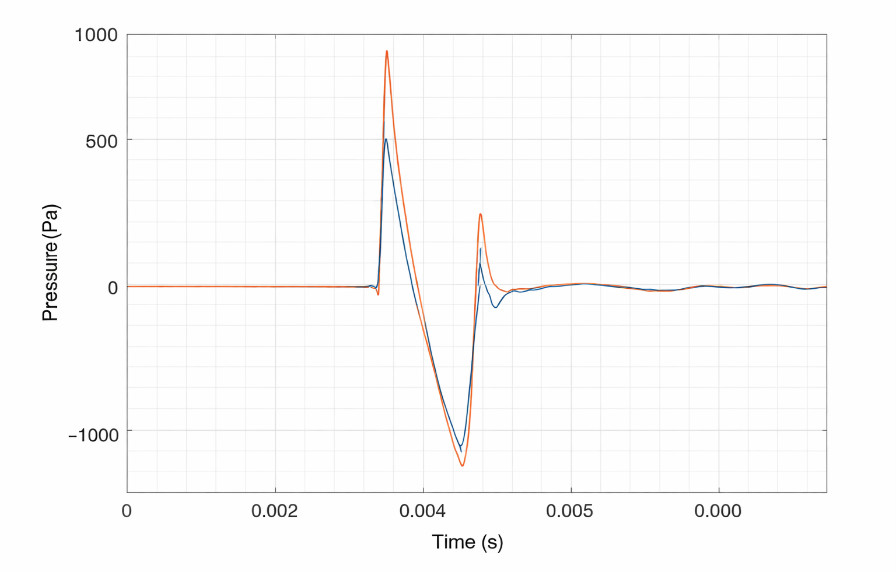
The presence of the N-wave enables the system to identify gunfire directed at the facility. This important and innovative capability distinguishes true inbound gunfire incidents from nearby sounds that likely pose no danger, such as hunters in surrounding rural areas, activity at distant shooting ranges, or unrelated noise from on-premise facility equipment.
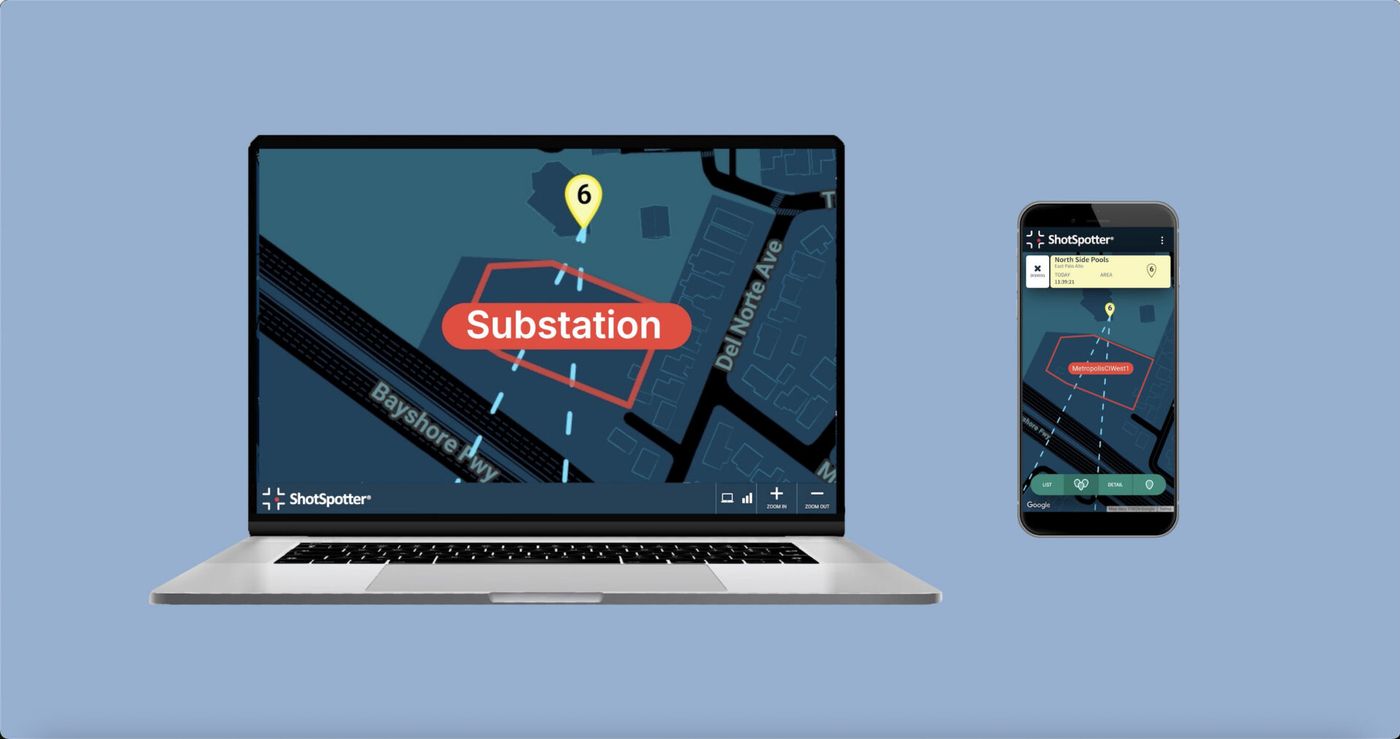
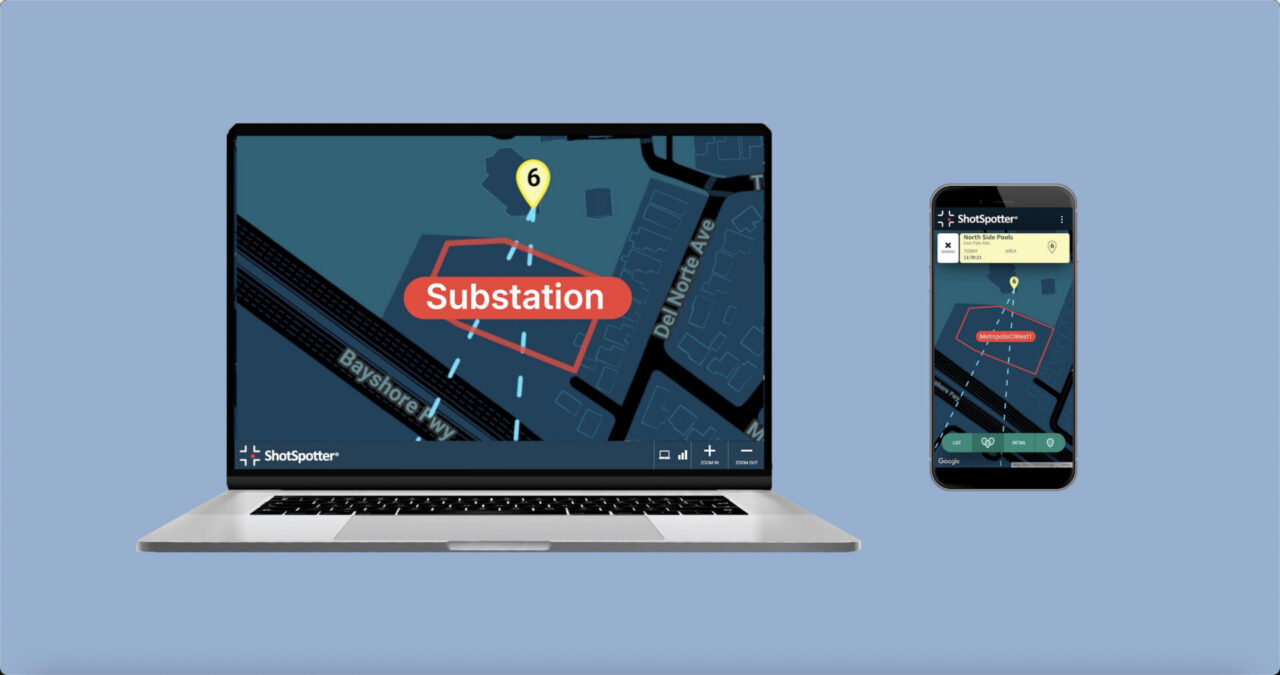
Once ShotSpotter for Perimeters detects a potential threat, it calculates the shooter’s location using angle-of-arrival analysis. The ShotSpotter app then displays a map showing the shooter’s position and a directional cone indicating the bullet’s likely path and entry point. This information guides security personnel, cameras, or drones to quickly inspect the most probable areas of impact.
Why is Fast and Accurate Detection Important to Utility and Power Providers?
Speed matters when gunfire strikes critical electrical substation and other distribution and power generation equipment. ShotSpotter for Perimeters delivers human-verified alerts within 60 seconds of an inbound gunfire incident. When perimeter sensors capture a gunshot signature, the incident is immediately analyzed using computational machine-learning algorithms to eliminate known impulse signatures that are not gunfire. Then, the audio file is reviewed by trained acoustic experts in SoundThinking’s Incident Review Center. These experts review the data within seconds to confirm that gunfire occurred and that it was directed at the protected site. Only verified incidents generate alerts, which are then delivered through the ShotSpotter Insight app on desktop and/or mobile devices to security personnel for follow-up.
Most electrical substations are unmanned and located in remote areas, but even critical infrastructure in the middle of urban areas is not immune to ballistic threats. When gunfire damages critical components, the harm may not become apparent until a failure alarm triggers or a technician discovers the problem during a routine inspection. By then, the damage may have worsened, and the window for a rapid response has closed.
What is the Gunfire Threat Detection Gap?
Put simply, the gunfire threat detection gap is the lack of awareness of gunfire actually occurring at a critical infrastructure site. ShotSpotter for Perimeters addresses this gap by detecting gunfire threats to substation equipment instantly, providing locational information that enables security and facility staff to inspect areas that may have been damaged. Rather than searching an entire facility for bullet impacts, personnel can focus their inspection efforts on the specific zones indicated by the directional cone. This accelerates damage assessment, supports quicker stabilization, and shortens overall recovery time.
For utilities and power providers that have invested in camera systems or drone capabilities, ShotSpotter for Perimeters can integrate with these tools to provide additional visual context. Early detection enables faster response, which can mean the difference between a minor repair and a prolonged outage that may cost millions in liabilities.
Why Choose ShotSpotter | Perimeter?
Several factors distinguish ShotSpotter for Perimeters from alternative approaches to gunfire detection.
SoundThinking has built up the industry’s largest corpus of live field gunfire incidents, with proprietary machine learning processes and algorithms to eliminate non-gunfire noises.
Finally, trained reviewers monitor coverage sites 24x7x365. This entire system has proven highly accurate in the field, with accuracy rates of 97% across all customers.
At the operational level, the Insight app allows ShotSpotter alerts to be received via desktop or mobile device. Every alert includes sound recordings and an incident summary report to support follow-up actions and documentation.
ShotSpotter for Perimeters is designed for continuous reliability. As a service, SoundThinking is responsible for deployment, system monitoring, and maintenance. Sensors use a continuous power supply, eliminating the downtime and maintenance burden associated with battery-powered alternatives. Sensor replacement and maintenance are included in the service, providing predictable costs throughout the deployment.
How to Close the Gap Between Gunfire Attacks, Awareness, and Response
When gunfire threatens your substation, grid, or other critical equipment, every second counts. ShotSpotter for Perimeters delivers the early warning you need to respond faster, assess damage sooner, and minimize operational impact and power outages. With nearly 30 years of proven acoustic gunshot detection technology and 24x7x365 human-verified alerts, you can trust that your facilities are protected around the clock.
SoundThinking is now accepting a limited number of candidates to pilot ShotSpotter | Perimeter.
Learn more about ShotSpotter® | Perimeter pilot opportunities
Was this article helpful?



Search for More Insights
Here are some other topics you might be interested in: