
ShotSpotter uses a network of fixed acoustic sensors, so gunfire is recorded from multiple surrounding locations instead of just one. Within one minute of detecting gunfire, the technology provides police with the latitude and longitude location of the shooting, as well as an associated street address. Every machine-flagged event is assessed by trained reviewers in a 24/7 Incident Review Center before an alert reaches an officer, so there is an additional layer of verification beyond machine detection. Forensic Services expert witnesses testify as Custodians of Records to authenticate gunfire recordings and can provide post-analysis expert opinions regarding shot-by-shot location and classification. Together, these layers of detection, verification, documentation, and expert authentication provide the foundation necessary for ShotSpotter evidence to be admitted at trial.
From Detection to Conviction: Forensic-Grade Gunshot Detection Evidence
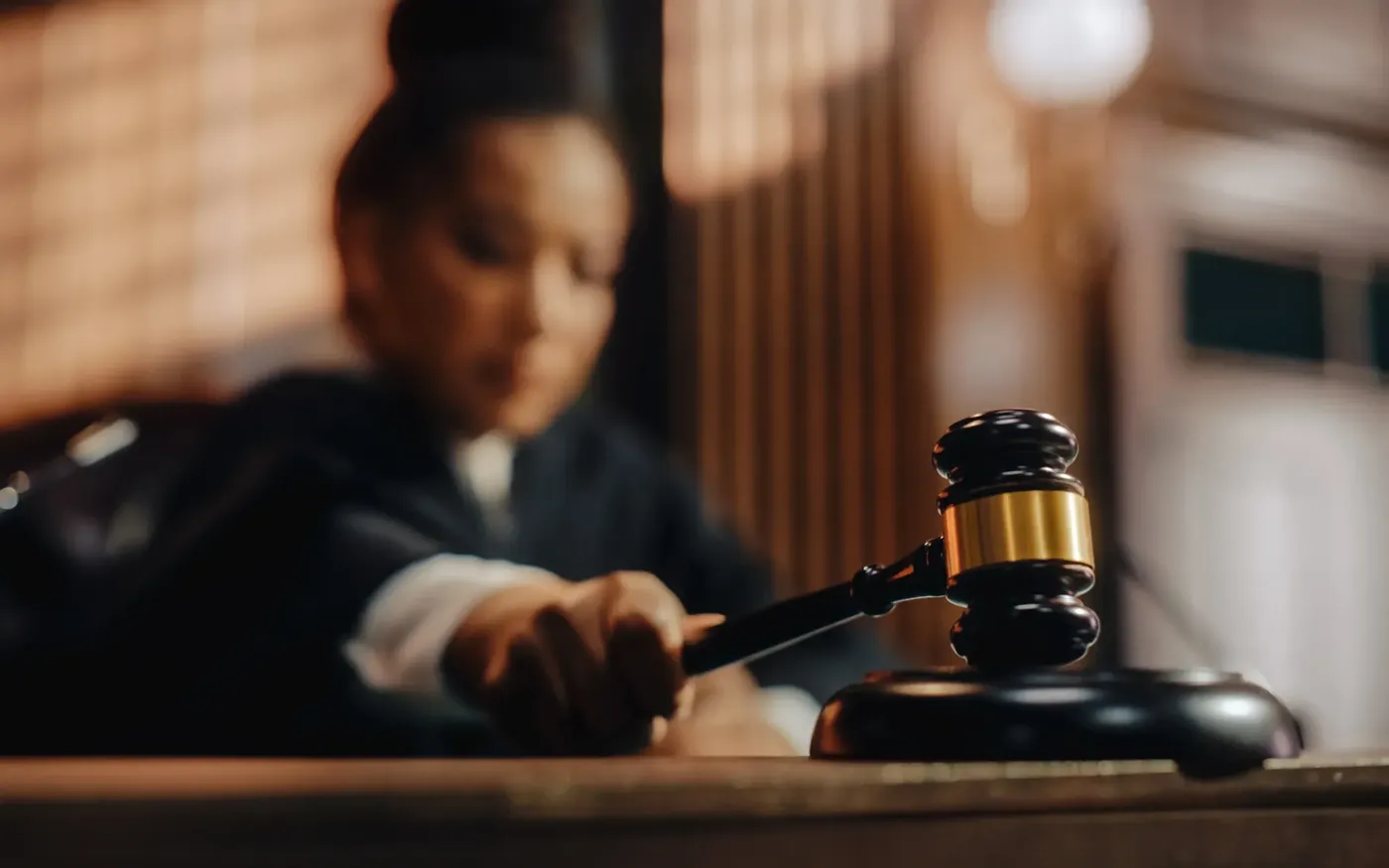

A gunshot lasts just a fraction of a second. The quality of the information recorded in that brief moment, and how well it withstands scrutiny in an interview room or courtroom, hinges entirely on the technology used to capture it.
Forensic-grade acoustic gunshot detection systems, like ShotSpotter®, are specifically engineered for the critical task of identifying, pinpointing, and recording gunfire. Backed by SoundThinking’s forensic services, ShotSpotter evidence has consistently demonstrated its courtroom worthiness.
Available forensic services include expert witness testimony regarding shot-by-shot location analysis, a continuous timeline, and opinions regarding gunfire/non-gunfire classification. Expert testimony is based on a full forensic analysis documented in the Detailed Forensic Report (DFR), provided upon request for trial.
Other evidentiary options include Custodian of Records testimony and Certified Business Records of the already-existing Investigative Lead Summaries (ILS). ILS reports document ShotSpotter incidents as they were captured automatically and relayed in real time. The uncertified versions are retrievable immediately after an incident by the investigating agency.
What Forensic-Grade Acoustic Detection Is Designed to Do
ShotSpotter uses a network of fixed acoustic sensors placed across a coverage area. The sensors are connected wirelessly to a centralized, cloud-based application. Gunfire location is determined by comparing the slight differences in the time it takes for the sound of gunfire to reach multiple sensors. The mathematical method, “multilateration,” is the same technique used to identify earthquake epicenters. Multiple sensors picking up the same event allow the system to calculate location with precision that a lone microphone cannot replicate.
Detection does not stop at the algorithm. Every machine-flagged incident is then examined by trained reviewers inside a 24/7 Incident Review Center. Before any alerts reach officers, the reviewers have already evaluated the likelihood that the detected sound is indeed gunfire. The full process, from detection through published alert, takes less than 60 seconds.
The combination of machine detection and human review produces a documented accuracy rate. From 2019 to 2021, the system posted a 97% aggregate accuracy rate across all customers, with a false positive rate below 0.5% of reported incidents.
Precise Locations Drive Faster Responses and Save Lives
ShotSpotter helps close a critical information gap by detecting and precisely locating gunfire that might otherwise go unreported and unnoticed. Shockingly, approximately 80% of gunfire incidents go unreported to 911. When shootings remain unreported, they can effectively disappear from the public-safety and criminal-justice systems: no police response, no investigation, and no opportunity to identify suspects or address the threat of continued violence.
Even when concerned citizens call 911 after hearing what they believe to be gunfire, they often cannot provide useful location information, and officers reaching the general vicinity of a reported shooting often find no witnesses or victims immediately available to direct them further. Police officers must then undertake the time-consuming and inefficient task of patrolling vast areas, seeking out the source of the gunfire with little to no directional guidance.
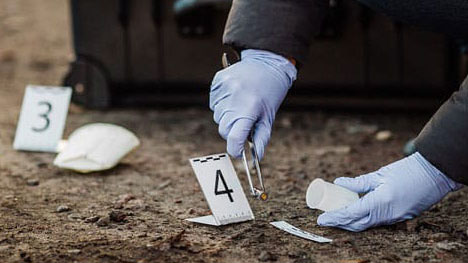
The sub-60-second ShotSpotter alert does more than just guide officers to the right street. By using multiple sensors, ShotSpotter provides a pinpointed geo-location, leading officers to the shooting location, be it a secluded back alley, a parking lot, or a busy roadway. The resulting improved police response time and operational efficiency can mean the difference between life and death for gunshot victims. The more accurate location also helps officers determine the most likely search areas for shell casings and other vital evidence.
ShotSpotter’s Role in Courtroom Success
The distinction that matters most for prosecutors and defense attorneys alike is what happens after detection. ShotSpotter Forensic Services and Litigation Support provides critical examination of the evidentiary data and reports tied to a specific incident. The primary report is the Detailed Forensic Report, which documents the court-admissible analysis conducted by expert witnesses. DFRs document the shot-by-shot details of a shooting rather than a generalized depiction of the shooting automatically captured by the technology. That distinction is important because automatically captured data can be affected by echoes, overlapping or mismatched pulses, and other acoustic conditions that can affect shot counts and location estimates. The DFR includes precise trigger-pull times, locations, evidence that multiple weapons were involved, or direction and speed of travel in a drive-by shooting. Audio files are also included, which can be played for the judge or jury.
Police investigators also have access to the Investigative Lead Summary, a machine-generated report that captures the date, time, and approximate location of detected gunfire with links to multiple associated audio clips. ILS reports are available instantly in the ShotSpotter app for up to 30 days and can be accessed in the historical database InSight thereafter.
The ShotSpotter Forensics team provides comprehensive evidentiary support for officers and detectives, private investigators, and both criminal and civil litigators. The team lends their expertise throughout every stage of the investigative and legal process, bolstering ShotSpotter’s capacity to deliver reliable results.
ShotSpotter data has an excellent track record in court. ShotSpotter witnesses have testified in more than 480 court cases across 28 states, including the District of Columbia.
USE CASE: Little Rock, Arkansas
The situation. On May 28, 2022, 18-year-old Kenjata Daniels Jr. followed a family’s vehicle from Pine Bluff to Little Rock and opened fire near the Little Rock Zoo, discharging thirteen 7.62x39mm rounds. Seven-year-old Chloe was struck and killed as she rode in the car. No eyewitnesses could identify Daniels as the shooter, leaving the Little Rock Police Department and the Pulaski County Prosecuting Attorney’s Office to build a case on circumstantial and digital evidence.
The evidence. Investigators cross-referenced ShotSpotter’s GPS-synchronized timing data with cell site location data, GPS records, communication data pulled from the defendant’s phone, and license plate reader photographs, placing Daniels within meters of the recovered shell casings at the exact moment of the shooting. SoundThinking expert witness Paul Greene provided forensic testimony and a Detailed Forensic Report, letting prosecutors cross-reference the ShotSpotter data against the timing and location evidence from Daniels’ phone and the physical evidence at the scene.
The outcome. On June 12, 2026, a Pulaski County jury returned guilty verdicts on all counts, including capital murder. Daniels was sentenced to life in prison without parole, plus an additional 55 years.
"ShotSpotter was absolutely critical in cross-referencing the time and location data from Daniels’ phone as well as the location of the spent casings at the crime scene. We were able to show the jury Daniels’ exact location at the exact time of the shooting," said Rafael Gallaher, Pulaski County Deputy Prosecuting Attorney.
The Difference Between Camera-Mounted Audio Add-Ons
Camera-mounted microphones on fixed surveillance cameras serve a different function. They capture whatever sound happens to be near the lens at the time the video is being recorded, which makes them valuable for documenting the immediate surroundings.
That design, however, has important limitations when it comes to recording gunfire. A fixed microphone is a single point of audio capture tied only to that camera, so the usefulness of the footage depends entirely upon the camera being close enough to the shooting in question and actually recording at the moment shots are fired. In contrast, ShotSpotter’s networked array captures the same gunfire from multiple locations, with recording triggered by the sound of gunfire itself rather than by motion sensors or timers commonly used by surveillance and doorbell cameras.
Having multiple recordings also provides an important advantage when evaluating the sound of a shooting. While the recording closest to the shooting often provides the clearest representation of the sound and cadence of the gunfire, the surrounding environment can sometimes introduce echoes or other distracting sounds. In those instances, a recording captured from a different location may provide a clearer view of the gunfire itself.
The advantage of a networked system also extends beyond detection and recording to the process of preserving and accessing the evidence. When gunfire is captured on a fixed camera, police must then take affirmative steps to obtain the video – often requiring a search warrant – and also must document the chain of custody for that recording. With ShotSpotter alerts, the ILS and audio are instantly available to the agency via the ShotSpotter app. The report and audio remain available on the app for 30 days and can be accessed through the historical database InSight thereafter. Upon request, SoundThinking can provide the ILS as a court-admissible Certified Business Record, accompanied by an affidavit that authenticates the record.
What This Means for Agencies Building a Case
Gunfire investigations move fast, and the first few hours often set the direction of everything that follows. Agencies using ShotSpotter can use the alert and accompanying information from the ILS to identify the scene and establish an objective timeline immediately. Camera audio collected later can still play a supporting role in the timeline and provide some acoustic evidence.
But when the evidentiary question is where a shot originated, that answer comes from a system engineered to measure exactly that, reviewed by people trained to confirm it, and expert witnesses to testify about their analysis of the shooting.
And when the evidentiary goal is to collect multiple recordings of the shooting incident, from various locations surrounding the shooting, ShotSpotter’s technology provides those recordings.
From crisis response to courtroom verdict, ShotSpotter transforms the landscape of law enforcement. ShotSpotter’s real-time gunshot detection and reliable forensic evidence allow for swift, accurate on-site response, while also providing credible, court-ready proof – literally turning a split-second gunshot into a powerful evidentiary tool.
Was this article helpful?


Search for More Insights
Here are some other topics you might be interested in: