Beyond the Standard: Substation Gunshot Detection Isn’t Just for CIP-014 Sites
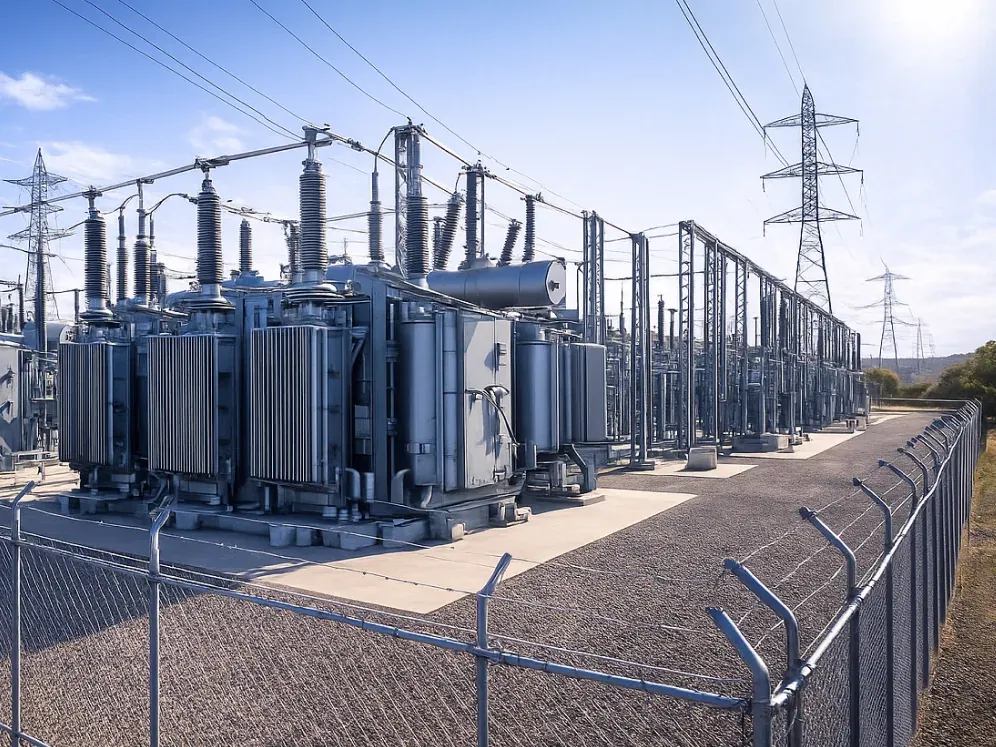

The North American Electric Reliability Corporation (NERC) CIP-014 physical security standard traces back to a 2013 attack. On April 16, 2013, gunfire and cut cables hit PG&E’s Metcalf substation near San Jose. Attackers fired about 100 rounds in roughly 19 minutes and disabled 17 of its 20 transformers. The attack did not cause an outage, but repairs took 27 days. When it drew public attention in early 2014, the Federal Energy Regulatory Commission (FERC) ordered NERC on March 7 to develop a physical security standard, and it approved CIP-014-1 on November 20, 2014.
Nearly a decade later, another attack raised questions about coverage. On December 3, 2022, gunfire at two Duke Energy substations in Moore County, North Carolina, left roughly 45,000 customers without power for days. Twelve days later, FERC directed NERC to study whether CIP-014’s applicability criteria and risk assessment were adequate. In its April 2023 report, NERC found that the Moore County substations would not have been covered by CIP-014-3, and it did not recommend expanding the applicability criteria.
The NERC CIP-014 standard applies to a small set of sites, covering only transmission stations and substations that meet specific criteria, leaving distribution substations and generation sites outside its scope. The standard applies to a small set of sites, but the questions that guide protection of a 500 kV station – what could hit this site and how would we know – apply just as well to a distribution substation.
What CIP-014 Covers, and What It Does Not
NERC CIP-014 is a physical security standard for the electric transmission sector. The current version is CIP-014-3, and CIP-014-4 takes effect on October 1, 2028. The standard applies to registered Transmission Owners and covers transmission stations, transmission substations, and the primary control centers that run them. It does not cover distribution substations or generation sites.
Within transmission, the standard reaches only facilities that meet specific criteria, as listed in the CIP-014-3 standard text:
- Facilities operated at 500 kV or higher
- Certain 200 to 499 kV stations that meet connection and weighted-value thresholds
- Facilities that a Reliability Coordinator, Planning Coordinator, or Transmission Planner identifies as critical to interconnection reliability operating limits
- Facilities essential to nuclear plant interface requirements
The R1 risk assessment decides which stations qualify, and the test is whether losing a station could cause instability, uncontrolled separation, or cascading outages across an interconnection. Many substations do not meet this criterion, but protecting these sites should also be a priority.
NERC’s CIP-014 as Your Benchmark
You do not need to be a covered entity to use CIP-014’s approach. The standard asks owners to evaluate their threats, then build a plan that answers them. Run each substation against these five steps. Where a step has no answer, you have found a gap.
- Evaluate the threat: CIP-014’s evaluation considers the unique characteristics of the facility, the history of attacks on similar facilities, and warnings from law enforcement, the E-ISAC, and government agencies. The substation layout should also be considered, including exposure to a road, a tree line, or open ground.
- Plan across six functions: The standard requires measures designed collectively to “deter, detect, delay, assess, communicate, and respond” to the threats you identified. Check your site against all six. Often, substations are strong on deter and delay and thin on detect and assess.
- Put detection where hardening stops: Fences, barriers, and cameras address who approaches the site. A shooter on a road or a tree line may not approach, yet can cause significant damage from a distance.
- Get an outside review: CIP-014 requires a third party with physical security expertise to review the evaluation and the plan. A voluntary review can catch blind spots before an attacker does.
- Revisit as threats change: The standard requires provisions to evaluate evolving threats and adjust measures. Treat the plan as a document you update, not one you file.
This is a recommendation, not a requirement. NERC has not asked uncovered sites to follow the standard. The case for doing it anyway is that the method was built for the highest-consequence sites in the sector and tested through third-party review.
Where Hardening Stops and Detection Starts
Hardening has no mechanism to tell you shots were fired, where they came from, or which equipment to inspect first. That matters because the damage may not be visible upon visual inspection. A single round can cause latent damage that goes undetected until leaks, alarms, or delayed failure occur. Without detection, the discovery sequence is equipment failure, then fault investigation, then damage assessment.
Gunshot damage to equipment may be rare, but data shows that infrequent threats can still be very costly. NERC reported that 97% of incidents shared with the E-ISAC caused no service disruption. However, NERC’s 2023 report also found that physical incidents causing measurable customer load loss rose 71% from 2021 to 2022, driven in part by ballistic damage.
GridEx VIII ran November 18 to 20, 2025, with more than 370 organizations participating. The scenario included vandalism, drone, and ballistic attacks. The lessons learned from the GridEx VIII report, released March 2, 2026, show the industry is already planning for the possibility of drones with ballistics that can damage grid assets.
How ShotSpotter Perimeter Fits
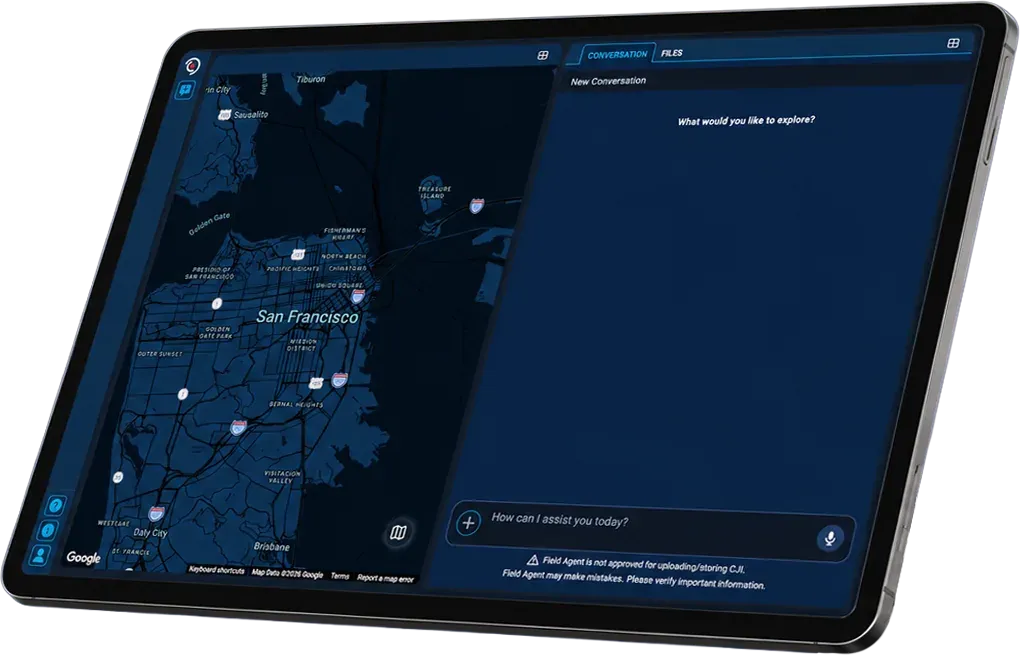
ShotSpotter® | Perimeter extends gunshot detection to electrical substations and other power distribution and generation facilities. Sensors along the perimeter detect the muzzle blast and the bullet’s shockwave, measure arrival time and direction, and calculate the shooter’s location and the likely entry point of the bullet's path.
- Detect: Sensors pick up the muzzle blast from a firearm and the bullet shockwave from supersonic rounds, which covers most centerfire rifle rounds and many handgun calibers. Subsonic rounds produce no shockwave but may still produce a detectable muzzle blast.
- Verify: Machine learning helps distinguish gunfire-related signatures from common non-gunfire sounds. Trained reviewers at SoundThinking’s 24/7 Incident Review Center then confirm the gunfire event and that it was directed at the site. Detecting a bullet’s shockwave provides additional evidence that a bullet passed through a protected perimeter and helps distinguish potential threats to the facility from other near-but-non-threat events, such as hunters, distant ranges, and equipment noise.
- Locate: Each alert shows the shooter’s approximate location, along with estimated bullet trajectories and a directional cone indicating where projectiles may have entered the facility. This information helps security personnel prioritize inspections of potentially impacted areas, accelerating damage assessment and response.
- Alert: Human-verified alerts typically arrive in less than 60 seconds on iOS, Android, and web, with a push API for existing monitoring systems.
With ShotSpotter alerts, monitoring stations can point cameras toward the gunfire direction, and optional drone integration supports visual verification. The system provides alerting and situational awareness based on gunfire, giving security more information to assess threats still in place and, once safe, evaluate grid equipment.
ShotSpotter | Perimeter detects, assesses, and communicates ballistic threats, giving responders a location and a time. That is why ShotSpotter | Perimeter belongs beside your hardening measures, not in place of them.
Close the Gap Before the Next Shot
CIP-014 was built for the sector’s highest-consequence sites, giving the industry a way to decide what certain substations require. But the intent and methodology of CIP-014 should not stop with only a few sites. Every critical infrastructure site can benefit from a site security assessment that evaluates threats, covers all six functions, includes an outside review, and revisits the plan as threats change. Applied to every substation, it turns security from a list of upgrades into a plan you can defend.
For many substation security plans, the weak spot is detection. Hardening slows an attacker who approaches, but it doesn’t cover ballistics from a distance or from drones. ShotSpotter | Perimeter closes that gap with verified, located alerts that work alongside your existing measures.

Was this article helpful?



Search for More Insights
Here are some other topics you might be interested in: