Learn More About Pueblo PD's DFR Program
How Pueblo PD Gets Eyes on Gunfire Scenes Before Officers Arrive
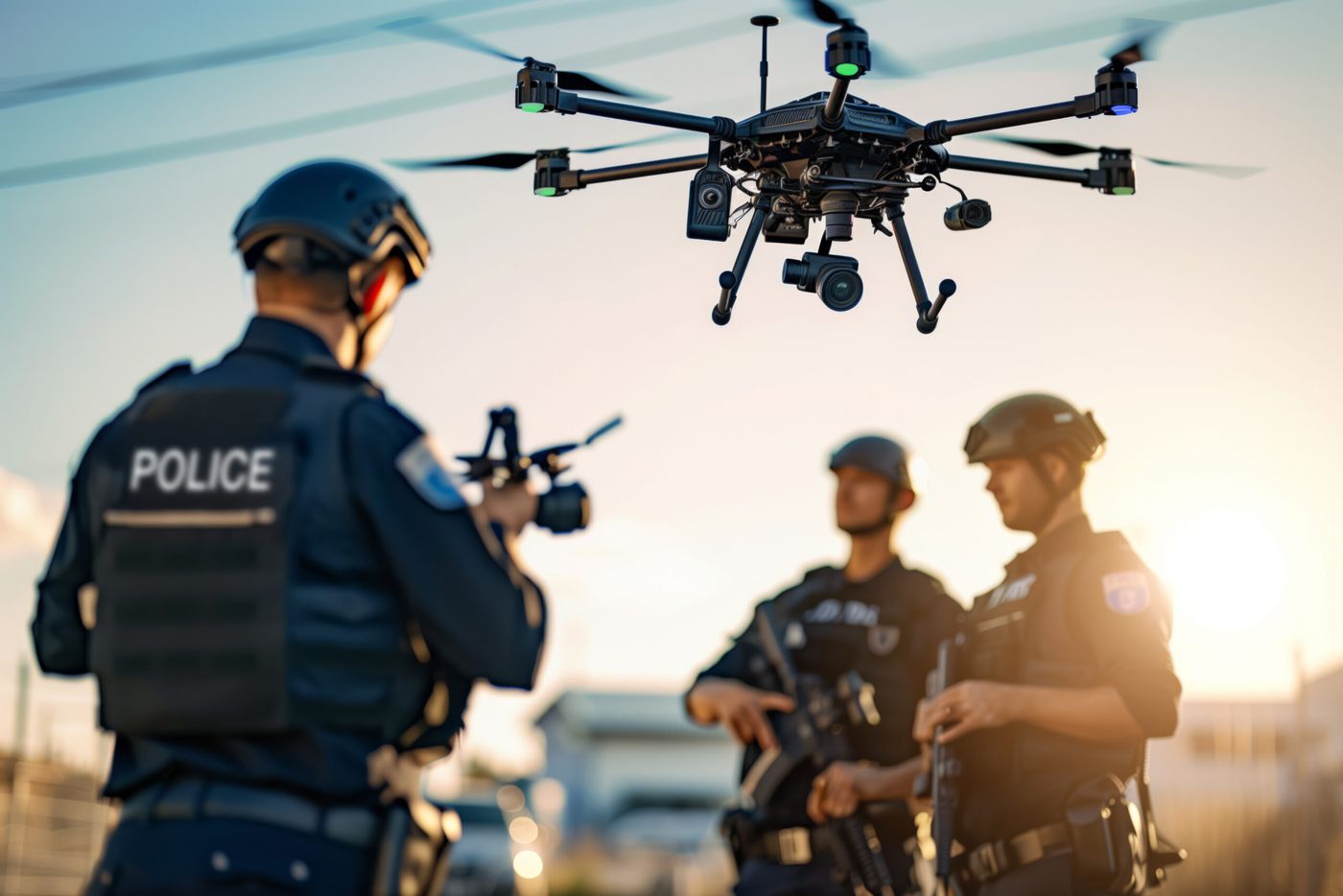

In Pueblo, Colorado, only 17% of more than 3,300 ShotSpotter® alerts over two years came with a 911 call. ShotSpotter closes that gap by detecting and locating gunfire within 30 to 60 seconds. Pueblo PD's Drone as First Responder (DFR) program closes the next gap. A drone launches to the alert location and streams live thermal and visual video, often before the first patrol car arrives.
In a recent SoundThinking webinar, three panelists walked through how the pieces fit together in daily operations: Sgt. Jeremy Mathews of the Pueblo Police Department; Kerry Neumann, Director of Customer Success at SoundThinking and former Deputy Chief of the Omaha Police Department; and Don Redmond, VP of Drone as First Responder at BRINC and a retired captain from the Chula Vista Police Department, where DFR began.
How Pueblo Built Its DFR Program Around ShotSpotter Data
The webinar discussed how Pueblo built its Real-Time Crime Center (RTCC) in layers. Pueblo PD first used hotspot data to determine ShotSpotter placements in the neighborhoods with the most shots fired. License plate readers then went up around the ShotSpotter coverage area. DFR followed, using the same data on shootings, homicides, and drive-by shootings to choose launch locations.
The result is three drone bases: one on top of the police department and two at fire stations. As he said in the webinar, Redmond strongly advocates for fire station sites. Fire stations are already positioned for fast response, staffed around the clock, sit on city-owned property, and offer different optics to the community than a police building.
Each DFR base covers about a two-mile operating radius. Drones can fly farther, but at three miles out, current mid-sized drone batteries allow only 10 to 15 minutes on scene before returning. Pueblo's three coverage circles overlap. That overlap lets one drone take over a scene while another returns to swap batteries, so the RTCC can keep eyes on an incident as long as needed.
When an alert comes in, the dashboard recommends the nearest available drone. If that drone is on another mission, the operator sends the next closest one. For alerts just outside coverage, operators fly to the edge of the boundary and use the zoom camera. Sgt. Mathews described tracking a fleeing car more than a mile away down the highway without leaving the approved area.
What the Drone Tells Officers Before They Arrive
Pueblo flew nearly 200 missions in its first partial year and more than 1,300 so far in 2026. Redmond made the point that a DFR program earns its value by flying all the time, and gunfire calls are among the most dangerous calls officers take.
Every ShotSpotter alert reaches dispatch, the RTCC, and every logged-in officer on the mobile app or in the car at the same moment. When a drone launches on a gunfire call and arrives on scene, the operator works through four questions:
· Is there a victim who needs help?
· Is a suspect still on scene?
· Is there a vehicle to track, or has it already left? Which way did it go?
· Is the scene still active, with a fight or an argument in progress?
The answers go straight to responding officers and into the call notes. The operator later writes a supplemental report on what the drone observed, the same way an officer in a helicopter would.
The drone also tells dispatch when a call can wait. If the drone confirms a victim or suspect on scene, the call moves up. If it shows an empty street, shell casings, and no threat, officers still respond, but the urgency changes. Redmond said agencies nationally clear about 25% of DFR calls without sending ground units. Sgt. Mathews added that the drone sometimes reveals kids playing with airsoft or pellet guns, which changes how officers approach.
DFR is Part of the Public Safety Toolkit
Even with a DFR program in place, the drone does not work alone in Pueblo. If it tracks a vehicle past a bridge or intersection but cannot read the plate, the RTCC pulls the time and location into its license plate reader system and finds the plate there. That plate goes on a hot list, so the RTCC gets alerted wherever the vehicle travels next. Building, trailer, and shared community cameras fill in the rest. Sometimes a fixed camera already covers the scene and the drone stays home.
All of it feeds the supplemental report that supports the arrest affidavit. Sgt. Mathews said the combined record makes a much stronger case for prosecutors. Redmond added that district attorneys across the country value drone video because it captures crimes in progress before officers arrive.
Pueblo Example #1: An Armed Man in the Yard
ShotSpotter detected gunfire at a residence. No one called 911. When the drone arrived, it found a man still standing in his yard behind a fence, holding a gun in the air and trying to fire it again. The RTCC told responding officers he was still outside and still armed, then updated them when he walked back into the house. Officers planned their approach based on the information they had and resolved the call safely. The drone video also documented everything officers saw and heard before body-worn cameras took over.
DFR Lessons Learned
Pueblo sits at the base of several mountain ranges that generate their own weather. Snow, rain, and 100-degree days have not been a problem. Strong wind gusts are. Redmond explained that drones can fly in gusts of about 30 to 35 mph. Landing them in a base station in those conditions is the hard part. On high-wind days, Pueblo leans on fixed cameras.
Not every mission starts the instant a call comes in. For planned operations like search warrants, the team holds the drone until the moment it adds the most value, so the battery lasts through the critical window. For long incidents, an operator can drive toward the scene with spare batteries and a controller. The drone lands nearby, gets a fresh battery in about a minute, and goes right back up.
Hear Pueblo PD's DFR Story
DFR Policy in Place Before Flight
Pueblo built guardrails designed to protect residents’ constitutional rights. In transit, the camera faces forward. It does not scan neighborhoods on the way to a call. Once on scene, operators watch only what the call requires. Live video goes only to people with a need and right to know, which also shields staff from traumatic footage they do not need to see. Internal affairs reviews all of Pueblo's systems, and the policy is updated as capabilities change.
Pueblo prioritizes calls the same way an officer on patrol would. Human safety first, including weapons calls and injury crashes. Property crimes in progress come next, then calls that are no longer in progress, then cold calls. Clearing lower-priority calls with the drone frees officers for the calls that need them.
Redmond called Pueblo a model rollout. At Chula Vista, his agency ran its drone program for about a year before launching a single drone, spending that time on policy and stakeholder outreach. He also recommends a public transparency dashboard that shows when and why drones fly.
Pueblo Example #2: Thermal Camera on Casings, Hot Engines, and a Fleeing Suspect
Thermal imaging can pick up fresh shell casings on pavement before they cool. That takes a fast alert, a quick launch, and a scene close to a base, but it works. In daylight, the zoom camera catches the shine of brass. Thermal also shows which parked cars have warm engines, which can help officers identify vehicles that may have recently arrived. In one case, the drone showed that a suspect had run across the street instead of into the house where the shooting happened, which sent officers and investigators in the right direction.
Practical Considerations for Agencies Evaluating DFR
The webinar covered some basics of starting a DFR program, stating installation is mostly an IT task with power and Ethernet at each launch site. Agencies also need to consider who will fly the drones. Redmond started Chula Vista's program with light-duty officers before moving to full-time pilots. Some agencies use sworn officers, dispatchers, RTCC analysts, and retired officers on an hourly basis. In Pueblo, RTCC technicians fly from the dispatch room, usually in pairs: one flies while the other relays information.
DFR can run from a standalone room, an RTCC, or a dispatch center. A DFR program can also scale as needed. Redmond pointed to regional dispatch centers in Ohio that will fly DFR for several agencies, with launch sites in each participating city. Redmond’s main caution is that the FAA requires a dedicated pilot. A dispatcher flying a drone cannot also answer 911 calls at the same time.
The Future of Drones as First Responders
Redmond explained how DFR started as a manual process in 2019 and 2020, when pilots typed in addresses and coordinated with visual observers on rooftops, and how it has evolved to today's model. Beginning in late 2024, new FAA waiver pathways made it easier for qualifying public safety agencies to conduct certain drone operations beyond visual line of sight without the extensive visual-observer infrastructure previously required. That change is why DFR has grown so quickly over the past 18 to 24 months. Today, an operator can click a ShotSpotter alert and the drone flies there autonomously, using geofencing to keep drones clear of high-rises and temporary obstacles like cranes.
Redmond added that BRINC expects to add automatic battery swapping at base stations by the end of the year, and he anticipates FAA rules under Part 108 will open the door to broader autonomy. A future where a verified ShotSpotter alert launches a drone on its own, with the aircraft overhead in about 30 seconds, is within reach. For now, the FAA requires a pilot to monitor every flight.
ShotSpotter Multiplies the Value of DFR
A DFR program that only responds to 911 calls misses most of the gunfire in its city. Neumann put it plainly: agencies are investing in RTCCs, license plate readers, and drones, and ShotSpotter puts all those tools to work on the 80% of gunfire no one reports.
The community response in Pueblo backs that up. When the department began sharing ShotSpotter responses on social media, residents said they finally saw police responding to the gunfire they had been hearing for years. Many had assumed someone else was calling it in. According to Sgt. Mathews, the most common complaint about ShotSpotter in Pueblo now is simple: why isn't my neighborhood covered yet?
Discover How ShotSpotter Complements Your DFR Program
See how ShotSpotter integrates with your existing and future public safety technology.
Was this article helpful?


Search for More Insights
Here are some other topics you might be interested in: