ShotSpotter Finds the Scene, NIBIN Finds the Story: Lancaster PD's Playbook, Part Two

ShotSpotter is a Critical Component of Lancaster’s Hybrid Policing Model

Lancaster Police Department's ShotSpotter program has proven successful from the start. An arrest eleven hours after go-live. A domestic violence victim protected before she found the words to call 911. A homicide case built on audio evidence a jury could hear for themselves.

In addition to the initial successes and learnings from the ShotSpotter® implementation in Lancaster, South Carolina, Captain Bowling had more of them. Seven months into the program, he sat down to talk through what’s happening with Lancaster’s ShotSpotter program, and one case stood out above the rest.

Learn More About How Lancaster PD Built a Culture of Gunfire Response and Accountability.

Watch the Webinar on Demand

Same Area, Different Emergency

The 82-Foot Radius

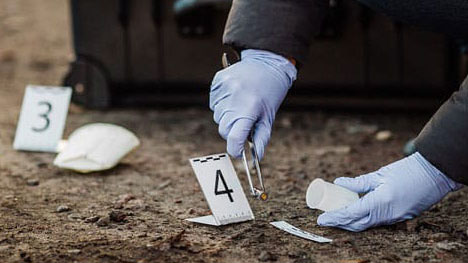
Ask Bowling what changed operationally, and he doesn't talk about arrest numbers first. He talks about the search area. Before ShotSpotter, a shots-fired call meant checking a wide, uncertain area, often an entire apartment complex or a several-block radius. Now, officers work an 82-foot radius around a precise alert point. That difference determines whether evidence gets found at all, and whether it gets found before someone else picks it up or the weather washes it away.

That precision showed up again in an apartment complex shooting where 60 to 70 rounds were fired from multiple locations in a single incident. Officers couldn't clear the scene that night. Video canvassing across the surrounding cameras took time. But the alert data gave detectives a starting point precise enough to work from, and the following day they executed three search warrants –- all three recovered illegal firearms.

Using NIBIN to Build a Case Beyond the Scene

An important aspect of Lancaster’s ShotSpotter implementation is its use of NIBIN, the National Integrated Ballistic Information Network, to connect cases that would otherwise look unrelated. Shell casings recovered at ShotSpotter alert sites get sent to the South Carolina Law Enforcement Division for ballistic comparison.

Already, those comparisons have linked recovered firearms to a homicide more than 35 miles outside Lancaster city limits, from a case that was two years old before the connection was made. And as Bowling explained, guns change hands within a group, but they tend to stay within that group. Cross-referencing ballistic evidence across jurisdictions is how Lancaster is starting to map out which groups are driving gunfire in the region, not just within city limits.

That regional visibility matters because Lancaster's problem was never contained to Lancaster. It's the kind of connective tissue that detailed evidence documentation and NIBIN make possible, and it's exactly the workflow smaller agencies without dedicated crime gun units often assume is out of reach.

Want to know more about how Lancaster, SC is rewriting the playbook on gunfire response?

What Other Agencies Are Asking

When Lancaster's program comes up in conversations with other departments, the questions tend to repeat. How do you staff two officers per call without falling behind on other priorities? What do you do when an alert doesn't produce an arrest? Does any of this actually scale to a bigger city?

Josh Judah, a former assistant chief who brought ShotSpotter to his own department in Louisville before joining SoundThinking, has heard all three more times than he can count. His answer starts with a different question: is there a higher priority for a police department than responding to and preventing violent crime? For most agencies, the honest answer is no.

That reframing, more than any single tactic, is what separates departments that see results from ShotSpotter and departments that treat it as one more alert in the queue.

The Bigger Picture

Bowling is careful not to overclaim. He can't say with certainty that ShotSpotter alone is responsible for the drop in gunshots Lancaster has tracked since summer 2025. But he doesn't hesitate to say what he believes. Offenders in Lancaster now know that if they fire a weapon, officers are coming and the response is fast. That awareness, built alert by alert over seven months, is its own kind of deterrence.

Nearly a year into the ShotSpotter program in Lancaster, the results are noticeable. The nuisance house stayed quiet. The homicide case moved forward with forensic audio a jury could hear. And in Lancaster, a man who was shot seven times is alive because two officers had an exact address and no time to lose.

Listen to Captain Bowling share Lancaster PD's ShotSpotter Playbook

Watch the Webinar on Demand

Ready to See How ShotSpotter Can Work in Your Community?

Reach Out to Learn More

Contact Us

Was this article helpful?

Search for More Insights