Agencies Control the Data and Authorize Access: PlateRanger data is always owned by the agency. Authorized access is determined by the agency. Sharing is always controlled by the agency. Retention periods, sharing rules, and access permissions are decisions the agency makes and documents, not terms set by a vendor.
Not Every Plate Read Is the Same: A Responsible Approach to ALPR


License plate recognition delivers real investigative value. It helps agencies locate stolen vehicles, link crimes, and generate leads. As with all public safety technology, agencies and communities now expect transparency and stronger privacy safeguards. They want to know what data is retained, how long it is kept, who can access it, and whether the agency can show how the technology is used and what benefits it brings to the community.
The debate usually gets framed as a binary choice. Retain large volumes of vehicle data in case it becomes useful, or restrict the technology so heavily that valuable investigative information is lost. PlateRanger™, powered by Rekor®, takes a different approach. Collect what matters. Clear what doesn’t. Not every plate read should be treated the same.
Retain Vehicle Data by Investigative Relevance
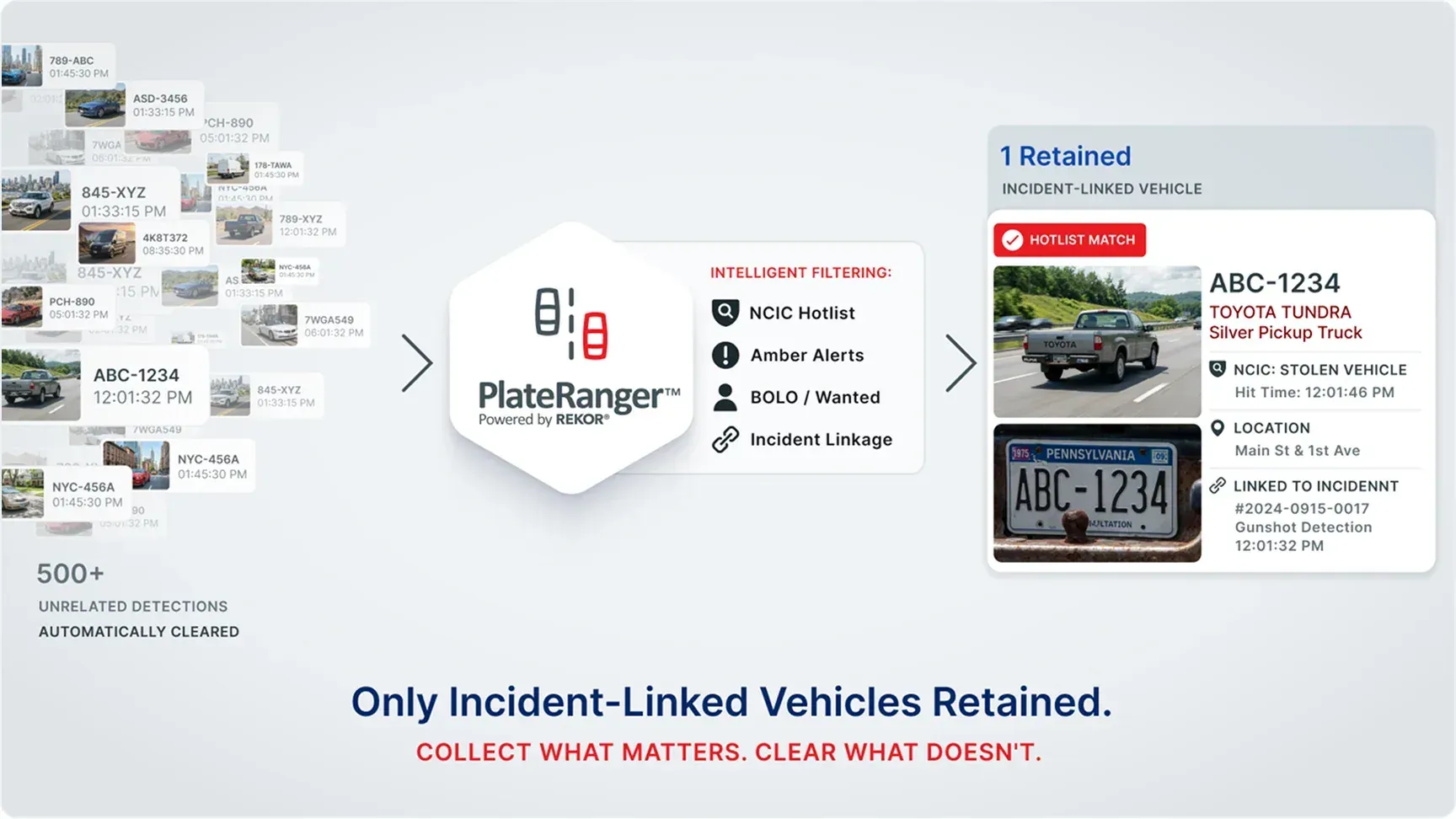
PlateRanger’s patented incident-based retention lets agencies set retention periods based on relevance to an investigation. Rekor was granted a U.S. patent for the approach in March 2026, and the capability is built into PlateRanger.
Agencies can set independent retention policies for alerts and hot lists. A vehicle that triggers no alert and matches no hot list is cleared on a much shorter schedule.
Shorter retention for routine reads does not mean lost cases. Records linked to alerts and hot lists, such as stolen vehicle reports or AMBER Alerts, are kept as long as agency policy and investigative need require. Officers still get real-time notifications from NCIC lists, Amber Alerts, and Silver Alerts. PlateRanger’s integrations with CrimeTracer and ShotSpotter also continue to connect vehicle data to broader investigations.
The principle is simple: retain information according to its investigative relevance. Agencies keep what investigations need. They don't hold on to what they don't need.
Privacy Is Paramount
Most plate reads belong to residents driving to work, school, or the grocery store. Keeping that data as long as it is tied to an active investigation adds risk without adding value.
Incident-based retention puts citizen privacy into the system’s design. Routine reads do not sit in a database waiting for a reason to be useful. They are cleared on schedule, reducing the amount of non-incident vehicle data an agency must store, secure, and defend.
PlateRanger Outcomes: Responsible use of LPR includes showing what the technology accomplished. PlateRanger Outcomes shows what your LPR program accomplished and what it means for the community.
Transparent System Use with Audit: Responsible LPR also means being able to show how the technology is used. PlateRanger audit capabilities let administrators confirm users followed established policies.
Responsible ALPR Is More Than Privacy and Transparency
Communities want to know what data agencies hold, how long they keep it, and whether the technology is used as policy says. Courts want evidence they can trust. Leaders want proof that the investment produces results. Agencies need answers to all of it, and they need to keep solving cases while they provide them.
PlateRanger is built for that standard. Agencies don't have to sacrifice privacy for investigative power, or vice versa.
Turn Vehicle Data into Investigative Leads
PlateRanger builds leads from vehicle make, model, color, direction of travel, and license plate recognition. Investigators can start with a partial description and narrow it to vehicles worth following up. The same data helps agencies locate potential suspects and identify witnesses.
Vehicle analytics for convoy, interdiction, and common vehicle analysis go beyond a single read. Convoy detection, interdiction support, and common vehicle analysis help investigators connect vehicles to criminal activity across events. A pattern that is not visible read by read becomes clear in this overview.
Real-Time Insights for Faster, Safer Response
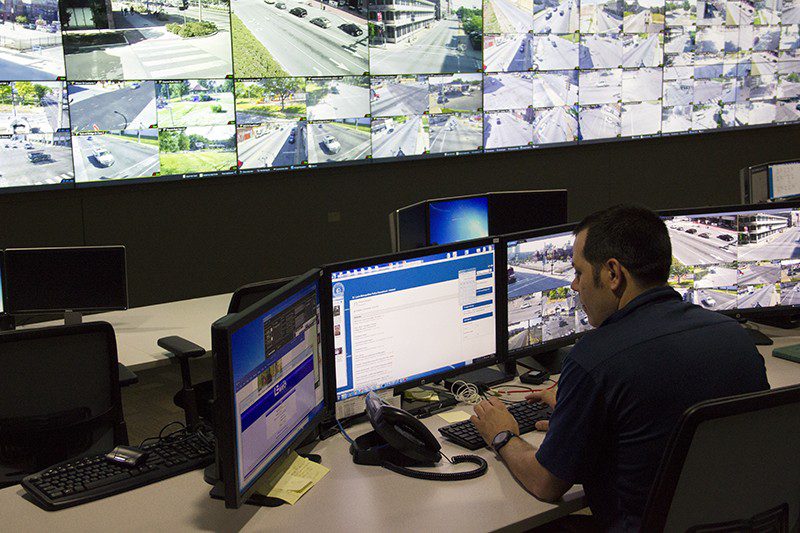
Live video feeds capture crucial moments around criminal events. Responding officers get a clearer picture sooner, and investigators get footage with investigative value. Real-time notifications keep alerts seamless, so the right people see them without delay.
Real-time alerts from integrated systems go out as soon as a vehicle of interest is recognized. Officers arrive with more information about who and what they may encounter. That situational awareness supports officer safety.
Integrations That Fit the Systems You Already Use
· Alerts from Critical Systems: PlateRanger delivers real-time alerts integrated with critical systems, including BOLOs, NCIC hits, Amber Alerts, and Silver Alerts.
· Open API for Faster Workflows: Agencies can share LPR data quickly through PlateRanger’s Open API. Automated workflows reduce manual entry and data errors. Sharing stays under agency control.
· Any ONVIF Camera Can Become an LPR Camera: Agencies can turn any ONVIF camera into an ALPR and vehicle recognition system. Existing camera investments can extend into LPR coverage without starting over.
Responsible LPR Goes Beyond Retention
Privacy, evidence integrity, and accountability earn an agency the community’s trust. They do not close cases on their own. A responsible ALPR program also helps investigators find the vehicle, connect the incident, and get officers to the scene with the right information.
PlateRanger is built to do both. PlateRanger’s patented incident-based retention protects privacy, while real-time insights support a faster and safer response. PlateRanger finds investigative leads through vehicles involved in crimes and integrates with much of the technology agencies already use. Responsible ALPR technology can benefit public safety while ensuring transparency and protecting community privacy.
A Responsible Approach to ALPR
See how PlateRanger™ powered by Rekor® helps your agency retain only what investigations need
Was this article helpful?




Search for More Insights
Here are some other topics you might be interested in: