Cambridge Ends ShotSpotter Contract — What’s at Stake When Gunshot Detection Goes Away
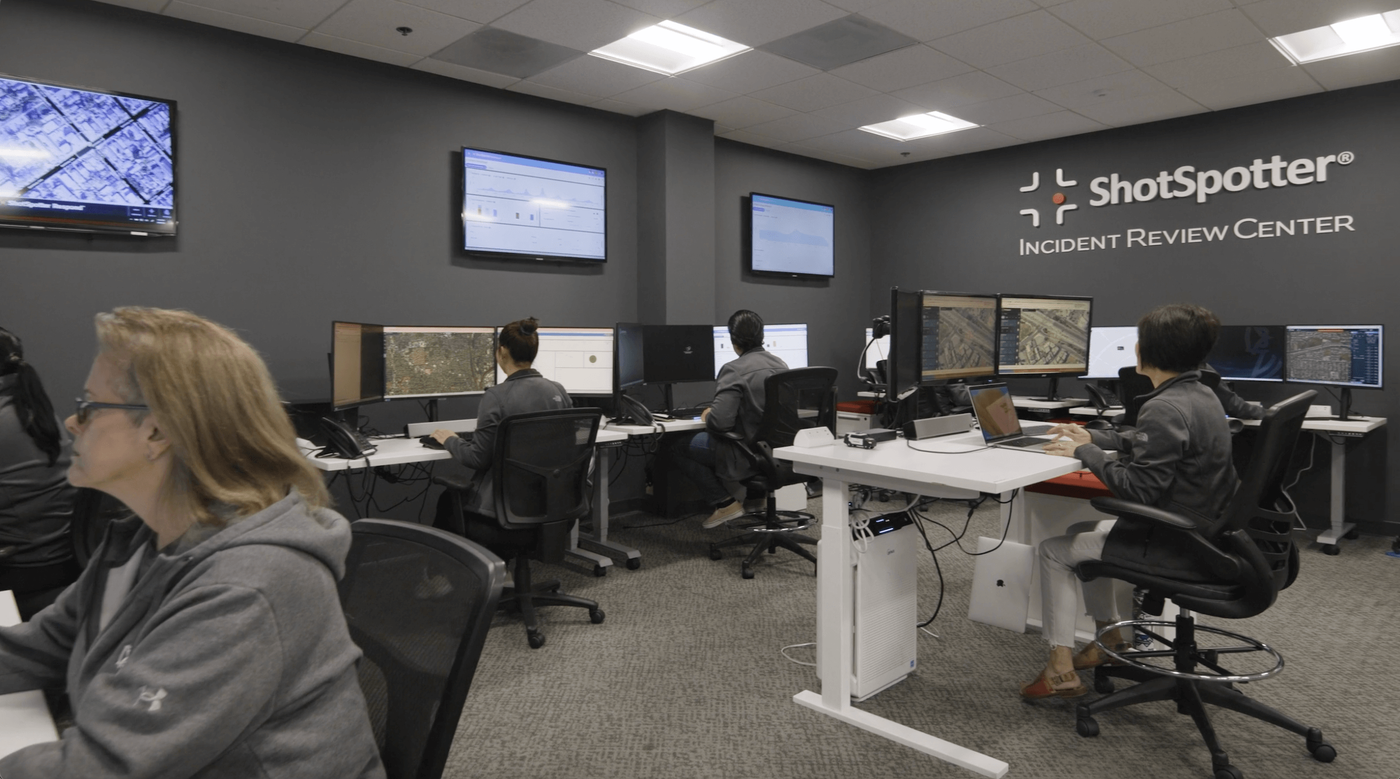

When the Cambridge City Council voted 5-2 to end its gunshot detection contract, it made headlines across New England. SoundThinking President and CEO Ralph Clark joined NightSide With Dan Rea on iHeartRadio’s WBZ Boston’s News Radio to walk listeners through what communities lose when acoustic gunshot detection is removed from their public safety toolkit — and why the decision matters beyond Cambridge’s borders.
Gunshot Detection Technology Built for the Gaps 911 Can’t Close
Clark opened by explaining how ShotSpotter® works and why Cambridge’s decade-plus relationship with the technology mattered. ShotSpotter has been deployed in the Boston area since at least 2010, with Cambridge’s coverage funded in part through an Urban Area Security Initiative (UASI) grant from the U.S. Department of Homeland Security — meaning it came at no direct cost to Cambridge taxpayers.
The system works by deploying approximately 20 to 25 sensors per square mile, which triangulate impulsive sounds consistent with gunfire. Before any alert is published, the audio is reviewed for confirmation. From trigger pull to law enforcement notification, the process typically takes 30 to 45 seconds. Location accuracy is within roughly 80 feet.
What makes that precision matter most is a statistic that surprises most people who haven’t worked in high-gun-violence communities: in cities with persistent gun violence, 80 to 90 percent of criminal outdoor gunfire generates no 911 call at all.
No call. No response. No chance to intervene. As Clark explained, “It’s not about getting calls late, or getting calls from a half a mile away that don’t know the exact location. It’s about not getting calls at all.”
Without gunshot detection, those incidents go entirely unaddressed. Victims may not receive aid. Evidence isn’t collected. And communities that already feel underprotected get a concrete reminder that no one is coming.
Why Communities Stop Calling
One of the most important points Clark made during the interview, and one that rarely surfaces in city council debates, is the behavioral dynamic behind the 911 gap.
In neighborhoods where gunfire is a recurring reality, residents sometimes normalize the sound, question whether what they heard was actually a gunshot, or hesitate out of fear of being perceived as informants. This pattern has been documented across SoundThinking’s deployments in more than 190 cities.
The communities most affected by this dynamic are also the communities that have historically had the hardest time accessing equitable police response. In that context, gunshot detection functions as much as an equity tool as a crime-fighting one — helping ensure that a gunshot in a lower-income neighborhood triggers the same level of response as one in a quieter neighborhood where neighbors would call immediately.
The Difference 90 Seconds Can Make
Perhaps the most striking moment in the interview came when Clark shared a personal story — one that doesn’t often make it into policy debates.
A close friend of his was shot at a gas station in Oakland in the middle of the day. As he lay on the ground bleeding, bystanders stopped to film him rather than call for help. By the time the first 911 call came in, a ShotSpotter alert had already dispatched officers to the scene. The difference in response time was approximately 90 seconds.
In Clark’s view, those 90 seconds spelled the difference between his friend reaching a Level 1 trauma center in time and not surviving.
As Clark noted, “In trauma medicine, there’s a phrase: time is tissue.” Every minute of delayed treatment for a gunshot wound compounds the injury. The faster the response, the better the odds – whether the victim is in Oakland, Boston, or Cambridge.
The Privacy Question
Rea raised the privacy concerns that Cambridge council members cited during the vote — specifically, the claim that ShotSpotter could capture community conversations. Clark addressed it directly.
New York University School of Law conducted a privacy audit of ShotSpotter and concluded that the risk of the system capturing conversations in any meaningful way is exceedingly low. The technology is specifically designed and calibrated to detect the acoustic signature of gunfire — not ambient speech, not neighborhood noise, not private conversations on front stoops.
Rea noted that former Cambridge Mayor Denise Simmons made a similar observation, arguing that ShotSpotter opponents had not adequately considered the perspectives of community members who had been victimized by gun violence. In her own neighborhood — the Port area near Central Square — she said residents had told her they wanted more public safety presence, not less, and that they supported continuing the program.
What Happens to the Cambridge Coverage?
A caller asked what happens to the sensor coverage when a city pulls out mid-deployment. Clark’s answer was direct. The sensors don’t sit idle.
The coverage previously allocated to Cambridge — approximately one square mile within the broader UASI deployment — would simply be redistributed to another participating community in the Greater Boston area. Coverage decisions are made in coordination with UASI funding structures, so no sensor capacity goes unused.
For Cambridge residents, that means the gap is real. For another city in Massachusetts, it means expanded protection they weren’t expecting.
The Broader Trend
It’s worth noting that Cambridge’s interim police chief and city manager both publicly supported continuing the program before the vote. These decisions are genuinely difficult, and reasonable people weigh privacy, cost, and public safety differently.
But the consequences of removing detection fall unevenly. The residents most affected are often those in neighborhoods where gunfire already goes unreported — the people the 911 gap leaves most exposed. That asymmetry, more than any single vote, is what’s worth keeping in view as other cities take up the same debate.
To hear the full conversation between Ralph Clark and Dan Rea, listen to the NightSide episode on iHeartRadio.
Was this article helpful?


Search for More Insights
Here are some other topics you might be interested in: