Border Security Funding for Technology

Home / Border Security Funding for Technology

Border security remains a critical issue for law enforcement agencies, requiring a combination of advanced technology and strategic border security funding to address complex threats that include organized crime, human trafficking, and narcotics smuggling. These threats require advanced, AI-driven technology solutions to enhance security and enforcement efforts.

Automated license plate recognition solutions, cross-jurisdictional search capabilities, data-driven patrol management, gunshot detection, and investigative management are some technologies available to help law enforcement quickly identify suspects and uncover criminal networks operating across borders. In a recent webinar hosted by SoundThinking, industry experts shared valuable insights on securing federal funding and leveraging technology to enhance border security.

Watch the Funding and Technology Strategies for Border Security Webinar

Border Security Funding

Securing sustainable funding is essential to effectively deploying border security and community safety technologies. Federal grants, such as the Department of Homeland Security (DHS) Preparedness Grants and Operation Stonegarden, provide crucial financial support for border security initiatives. By leveraging available funding sources, agencies can implement cutting-edge solutions that serve as force multipliers, improving response times and operational efficiency.

Investing in AI-powered tools and cross-jurisdictional data-sharing platforms that integrate with other policing technology ensures a proactive approach to border security, allowing law enforcement to stay ahead of evolving threats. Federal funding opportunities for border security continue to be available, with the following mentioned in the webinar:

  • DHS Preparedness Grants – Over $1 billion in annual funding through the FY2026 Homeland Security Grant Program ($1.064 billion total, including $584.25 million for the Urban Area Security Initiative and $394.25 million for the State Homeland Security Program), with $85.5 million allocated to Operation Stonegarden for border security. The FY2026 NOFO was published on June 24, 2026, and applications are due July 24, 2026, at 5 p.m. ET.

  • DOJ Grants – Including Byrne JAG, Project Safe Neighborhoods, Crime Gun Intelligence Center grants, and more.
  • Operation Stonegarden (OSG) – A DHS grant designed to fund local law enforcement efforts in border security. OPSG is funded at $85.5 million for FY2026 and is open to local, Tribal, and state law enforcement agencies in border states that apply through their State Administrative Agency.
  • State Homeland Security Grant Program – Available to agencies, even if not directly on the border. FY2026 allocation: $394.25 million, with at least 80 percent passed through to local jurisdictions.
  • Congressionally-directed Spending (Earmarks) – A way to secure funding directly through representatives and senators.
  • Multiple Funding Sources – Agencies can apply for multiple grants simultaneously, maximizing their opportunities.

For FY2026, DHS identified supporting border security efforts and improving coordination among law enforcement agencies among the national priorities for SHSP and UASI projects — strengthening the case for border-focused technology proposals.

Many of these funding opportunities require working with your state administering agency (SAA), or Urban Area Security Initiative working group, which may have different timelines for submitting your grant application. Reach out to your SAA as soon as possible to understand the timelines and due dates for your grant application.

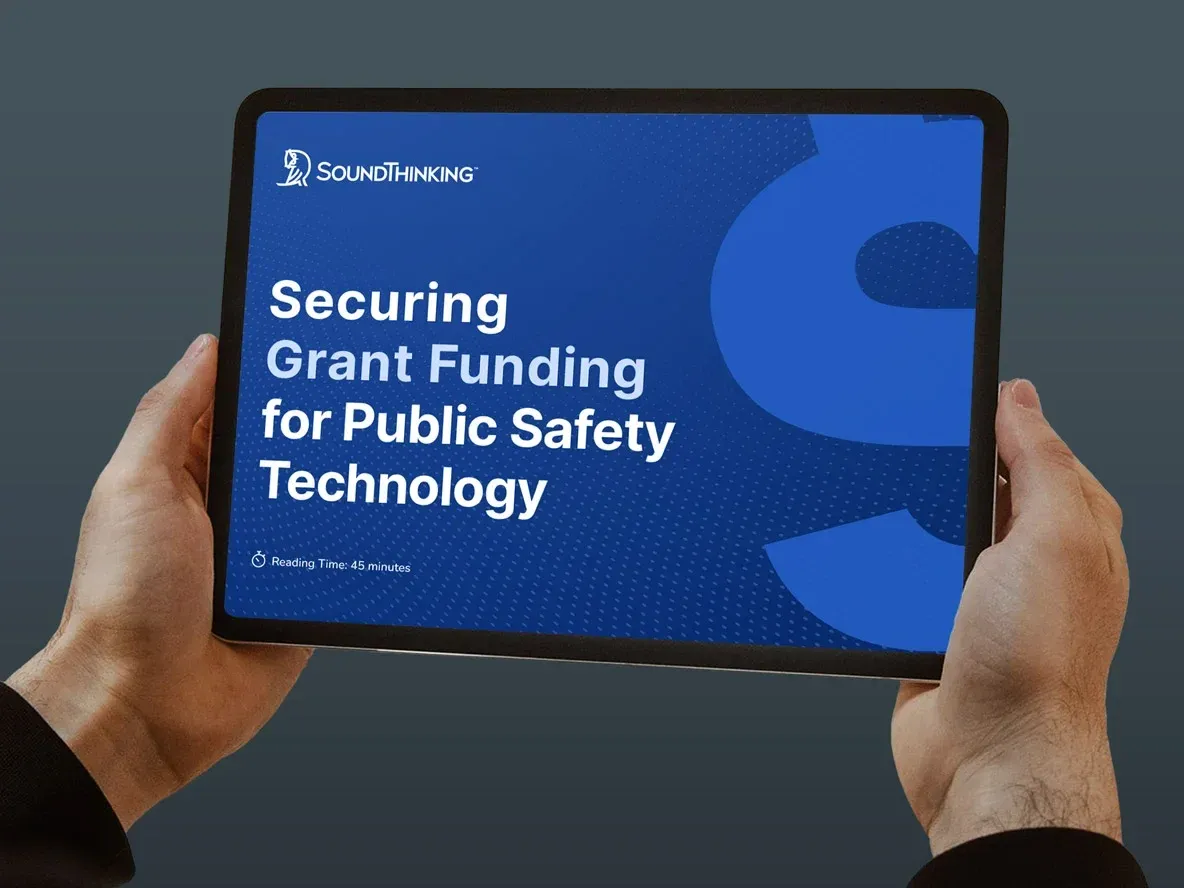
For more detailed grant funding information, strategies, insights, and resources, download the eBook “Securing Grant Funding for Public Safety Technology.”

Grant Application Best Practices

When applying for federal funding, agencies should focus on real-world use cases rather than simply listing desired technologies. Demonstrating how these solutions will enhance security and positively impact the community strengthens the application. Using local crime data to justify funding requests and engaging with state administrative agencies early in the process can also improve the chances of success.

Additionally, securing letters of support from local and federal partners adds credibility to the application. Establishing a strong track record of effective grant management increases the likelihood of receiving funding and positions agencies for future opportunities. A well-structured application highlighting measurable security improvements and community benefits is key to long-term funding success.

Download and view the Grant Preparation Checklist

Technology Solutions to Enhance Border Security

AI-driven solutions that integrate with existing and future technologies enhance border security strategies. Policing along the border presents many common challenges, but each border area also has agency-specific concerns that must be considered. Finding the right technology solutions for your agency is the first step as grant funding applications need to show how the technology will impact your agency’s community along the border.

Some of the law enforcement solutions to help agencies along the borders more effectively police their communities include:

  • ShotSpotter® provides law enforcement agencies along the border with real-time gunshot detection, pinpointing the exact location of gunfire within seconds. This rapid alert system allows officers to respond quickly to active threats, recover evidence, and provide life-saving medical aid to victims.
  • SafetySmart™ Field Agent lets agencies ask questions and get answers – instantly using an AI layer that turns your data into actionable intelligence.
  • PlateRanger™ is an AI-powered license plate recognition tool that enables border agencies to track suspect vehicles linked to criminal activity. Whether monitoring human trafficking, narcotics smuggling, or stolen vehicles, PlateRanger provides accurate real-time license plate reads, vehicle make, model, color, and directional information in real-time alerts to aid investigations.
  • CrimeTracer™ empowers law enforcement with a powerful investigative lead generation platform that connects data across multiple jurisdictions. Agencies working along the border can quickly search over a billion records to find suspects and known associates and identify patterns and links between suspects.
  • CaseBuilder® streamlines case management by providing a centralized platform for investigators to organize and analyze critical information. For border law enforcement handling complex cases like drug trafficking and firearm smuggling, CaseBuilder ensures all evidence, reports, and interviews are securely stored and easily accessible by the appropriate agencies and prosecutors.
  • ResourceRouter™ utilizes AI-driven analytics to help border agencies allocate patrol units effectively based on the Koper Curve methodology, crime trends, and agency-specific patrol metrics. By analyzing historical data, time-of-day patterns, and high-risk locations, the system ensures officers are positioned where they are most needed.

Why Technology Integration Matters

In border security operations, where rapid response and intelligence sharing are critical, integrated solutions enable law enforcement to detect and disrupt criminal activities with greater precision and efficiency. When law enforcement agencies connect their internal systems, they avoid data silos while optimizing efficiency. Integration can also create a seamless flow of real-time information that enhances situational awareness and decision-making.

Integrating technology systems is essential for improving efficiency, collaboration, and operational effectiveness. Integrated systems allow for faster suspect identification, improved coordination between local, state, and federal agencies, and streamlined case management, reducing administrative burdens on officers. By leveraging interoperability and AI-driven analytics, agencies can work proactively to deter crime and prevent threats, ensuring that technology is a force multiplier rather than a standalone tool.

Find out how SoundThinking can help your agency with the Operation Stonegarden and the grant funding process.

Search