Talk to our security team to explore how a layered approach can work in your environment.
Adapting Security in High-Traffic Environments: GSX 2026 Recap
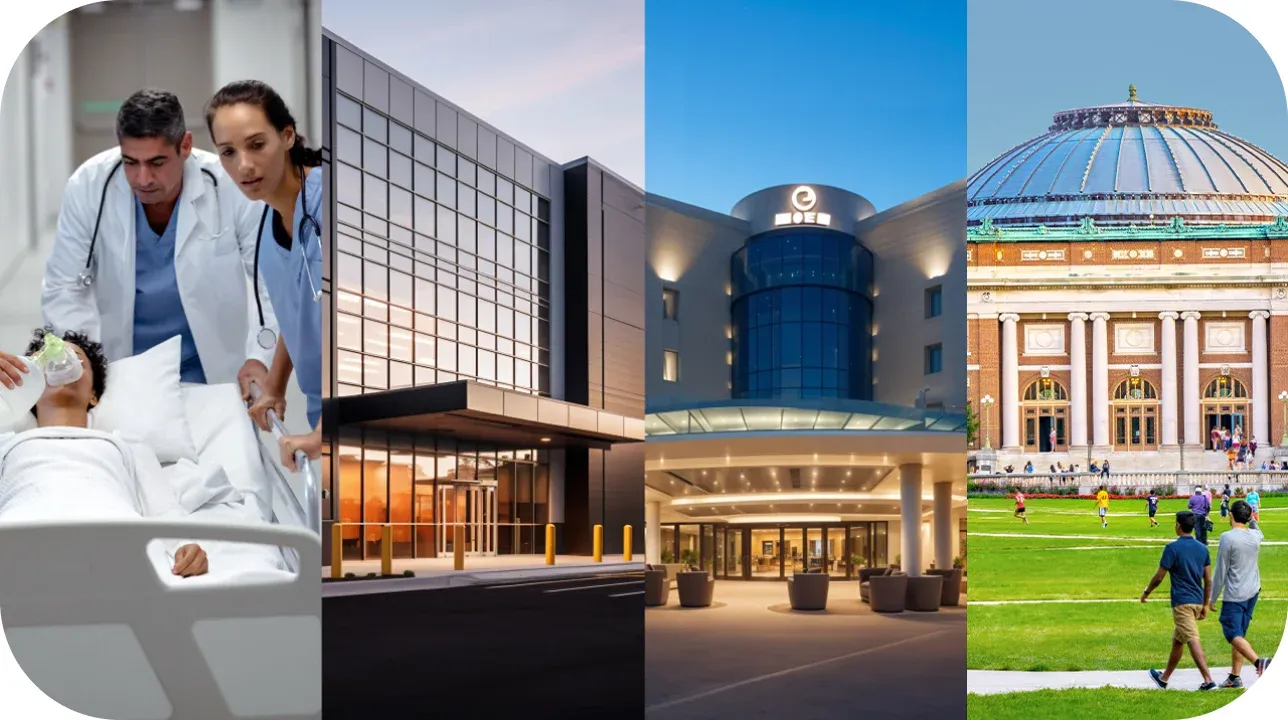

Security leaders gathered at Global Security Exchange (GSX) 2026 to examine one of the industry's most pressing challenges: how to protect people in high-traffic environments without compromising operational flow, user experience, or stakeholder trust.
Moderated by Kirk Arthur, Senior Vice President of Sales with SoundThinking, the panel discussion, “Adapting Security in High-Traffic Environments: AI, Staffing, and Workplace Violence,” explored the realities of modern security programs, including workplace violence prevention, AI-enabled detection, staffing limitations, executive expectations, and the complexities of introducing new security layers into active facilities.
One theme stood out throughout the conversation. Technology alone does not modernize security. People, processes, policies, physical design, and technology all have to work together as part of a responsible, layered strategy.
The Modern Security Challenge
High-traffic facilities face a difficult balancing act. Security teams must respond to evolving threats while maintaining access, convenience, and a positive experience for employees, visitors, customers, patients, students, and guests.
The discussion examined how workplace violence concerns, constrained budgets, staffing shortages, and rising safety expectations affect security decision-making. Leaders are being asked to strengthen preparedness while working within real operational and financial limits.
Modernization, therefore, is not simply a matter of adding more security measures. It is about adapting the overall program so each layer supports awareness, decision-making, response, and the environment's day-to-day operation.
Where AI Fits Within Layered Security
AI-enabled detection was discussed as one component of a broader security model. The session focused on where these tools can support security operations and where leaders should remain cautious about relying on technology without appropriate governance, validation, and human oversight.
Evaluating a detection capability requires more than reviewing a single performance measure. Operational flow, nuisance alarms, staff confidence, stakeholder acceptance, escalation requirements, and the experience of people moving through the environment all matter.
The objective is not to introduce technology for its own sake or simply generate more alerts. The objective is to provide useful information that helps trained personnel make informed decisions and respond appropriately.
Building Trust Through Operational Readiness
The panel also addressed what must be in place before a new security capability can earn the trust of security teams, executives, and frontline staff.
Testing, training, escalation paths, standard operating procedures, and clear accountability all contribute to operational readiness. Stakeholders need to understand how the system will be used, who will review and act on alerts, how performance will be evaluated, and what limitations or dependencies remain.
Transparent communication is equally important. Security leaders strengthen credibility when they communicate objectives and limitations clearly, avoid overstating technology, and acknowledge that no single system can eliminate risk or guarantee a specific outcome.
Implementation Is Where Strategy Meets Reality
Implementation is often where a strong strategy encounters its greatest friction. New tools must operate within existing floor plans, staffing models, policies, legacy systems, and workflows.
The discussion explored common pitfalls, including insufficient planning for integration, unclear alert ownership, gaps in staff training, outdated procedures, and failure to account for real traffic patterns. Successful deployments treat technology adoption as an operational change, rather than a stand-alone installation.
User experience also remains critical. High-volume facilities cannot improve security simply by slowing everyone down. Protection must be integrated in a way that limits unnecessary bottlenecks, supports movement, and fits the character of the environment.
Making the Business Case for Modernization
Security modernization competes with many other organizational priorities. The panel examined how security leaders can frame the business case in language that connects safety objectives to broader organizational responsibilities.
Depending on the environment, that case may include risk reduction, operational continuity, employee confidence, visitor experience, liability considerations, staffing efficiency, and organizational resilience.
The strongest case avoids fear-based messaging and unrealistic promises. Instead, it defines the problem, explains the operational consequences of inaction, identifies required resources, and establishes practical criteria for measuring success.
What Security Leaders Should Take Away
Security leaders face pressure to modernize, and new technology often gets the spotlight. The discussion made a clear case that lasting results come from a broader approach. These takeaways capture the practical lessons shared on evaluating, implementing, and sustaining a modern security program.
· Effective security programs balance technology with people, policies, processes, and physical design.
· AI-enabled detection should support security decision-making within a broader layered strategy.
· Performance evaluation should consider operational flow, nuisance alarms, staff confidence, and stakeholder acceptance.
· Trust is built through realistic validation, transparent communication, training, and clear ownership.
· Implementation succeeds when new capabilities are integrated into existing operations and workflows.
· Executive support is strengthened when security initiatives connect risk reduction to operational and organizational outcomes.
· Modernization is an ongoing process that requires review, learning, and adaptation.
Together, these lessons point to one conclusion. Modern security depends on how well each layer works with the others, and that work continues after deployment. Organizations that plan for integration, measure what matters to their people, and revisit their approach over time are better positioned to reduce risk and earn lasting trust.
Looking Ahead
As AI capabilities, staffing models, and threat patterns continue to evolve, security programs will need to evolve with them. Technology will remain an important part of that process, but long-term readiness will continue to depend on disciplined planning, trained people, clear procedures, and accountable leadership.
The discussion reinforced that security modernization is not a single project or deployment. It is an ongoing process of understanding risk, validating performance, gathering feedback, refining response procedures, and adapting the layered strategy as organizational needs change.
The question for security leaders is not simply, “What technology should we purchase?” A more useful question is, “What combination of people, processes, technology, and accountability will help us protect this environment responsibly?”
Technology works best when it fits the people, policies, and spaces it protects.
Schedule a Consultation
Was this article helpful?


Search for More Insights
Here are some other topics you might be interested in: