Edward Byrne Memorial Justice Assistance Grant (JAG) Program: Administered by the Bureau of Justice Assistance (BJA), this program offers funds to state and local jurisdictions to support various activities, including law enforcement programs. The state Byrne JAG program goes through the states and uses a formula to specify funds for law enforcement, with half of those funds going to the state level and the other half to local jurisdictions. The law enforcement funds can be used for technology and technology improvement programs.
Leveraging Law Enforcement Grant Funding

Leveraging law enforcement grant funding may be essential for agencies aiming to enhance their technological capabilities. Advanced tools such as acoustic gunshot detection, real-time crime centers (RTCCs), and drones as first responders can significantly improve public safety and operational efficiency, but acquiring these technologies often requires substantial financial investment.
Fortunately, various state grants, including those funded by federal programs, are available to support such initiatives. This guide provides an approach to identifying and obtaining state grant funds for law enforcement technology projects, focusing on programs like the State Homeland Security Grant Program (SHSGP), the Urban Area Security Initiative (UASI), and Byrne Justice Assistance Grants (JAG).
Federally Funded State and Local Grant Programs
Some federal programs provide funding to states, which in turn offer grants to local law enforcement agencies. Key programs include:
State Homeland Security Grant Program (SHSGP): This grant program through the Federal Emergency Management Agency (FEMA) supports state, tribal, and local programs to support preparedness and homeland security strategies to address potential public safety risks. For FY2026, FEMA allocated $394.25 million to SHSP, with at least 80 percent required to pass through to local units of government, including Tribal governments. The FY2026 NOFO was published June 24, 2026; applications are due July 24, 2026, at 5 p.m. ET. In this case, State Administrative Agencies are the applicants, and you’ll work through them to leverage these funds.
Urban Area Security Initiative (UASI): The largest HSGP component at $584.25 million for FY2026, UASI funds high-threat, high-density urban areas. Agencies within designated UASI regions should engage their Urban Area Working Group to align technology projects with the FY2026 national priorities, which include improving coordination among law enforcement agencies, supporting border security efforts, and enhancing the protection of crowded spaces.
Operation Stone Garden (OPSG): OPSG provides funding to enhance cooperation and coordination among federal, state, local, tribal, and territorial law enforcement agencies to jointly enhance security along the United States land and water borders. This program supports joint efforts to secure borders along routes of ingress from international borders, including travel corridors in states bordering Mexico and Canada and states and territories with international water borders. OPSG is funded at $85.5 million for FY2026.
Tribal Homeland Security Grant Program (THSGP): A separate FY2026 NOFO makes more than $14 million available directly to tribal nations to build capabilities to prevent, protect against, and respond to acts of terrorism.
Many of these funding opportunities require working with your state administering agency (SAA), which may have different timelines for submitting your grant application. Reach out to your SAA as soon as possible to understand the timelines and due dates for your grant application.
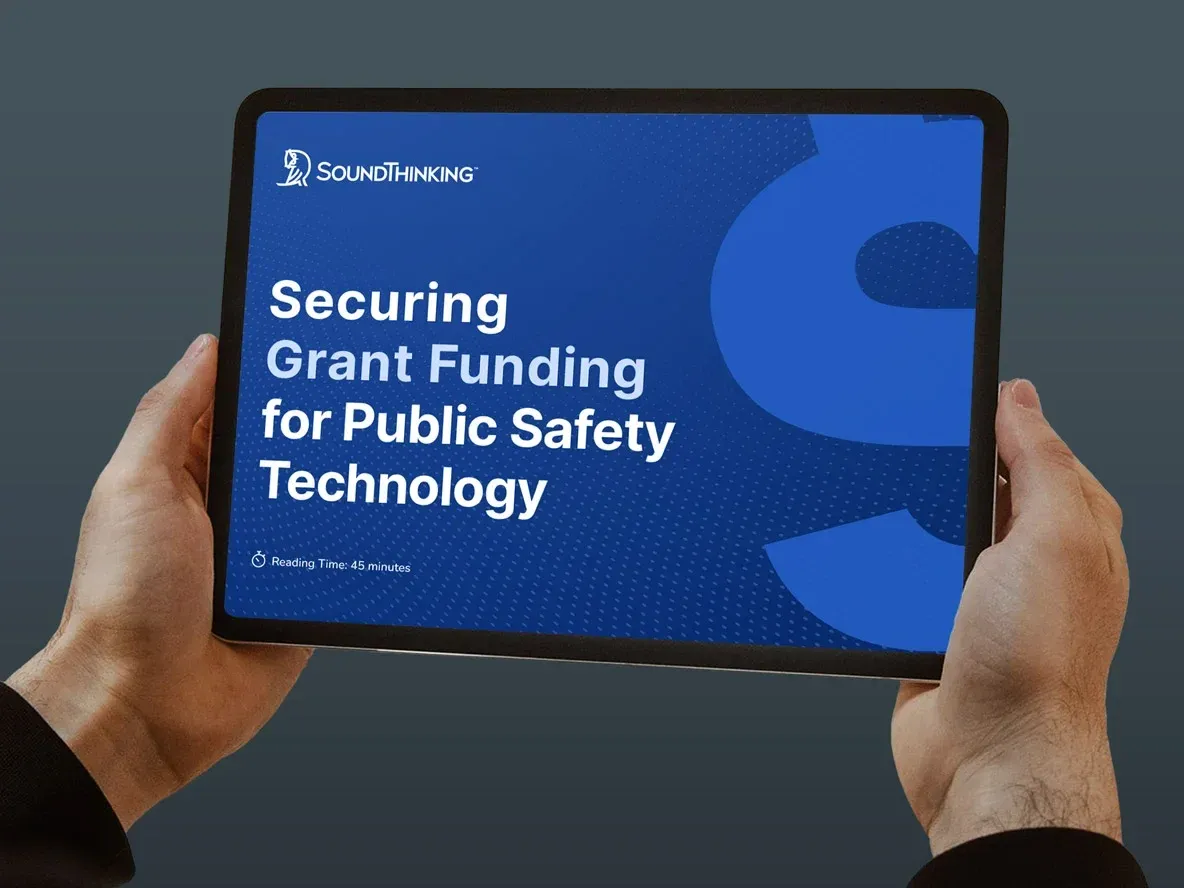
Download the Securing Grant Funding for Public Safety Technology eBook
State Administering Agencies
Each year, billions of federal dollars are allocated through formula-based and competitive grants, supporting public agencies at various levels.
The administration of federal grant funds at the state level is coordinated through different offices, depending on the grant. The US Department of Justice state administrators oversee the Byrne-JAG grant funds, and FEMA administrators at the state level oversee SHSGP and OPSG grant funding.
Congressionally-directed Funding
Earmarked funds are another key funding source, where Members of Congress allocate federal funds for specific projects in their districts. Law enforcement agencies can work with elected officials to advocate for funding that aligns with public safety priorities, leveraging relationships at the state and federal levels to increase the likelihood of receiving an earmark.
As with all funding options, agencies should plan ahead, as the earmark request process often begins before the Appropriations Subcommittee cycle in early spring, ensuring that projects are well-positioned for funding consideration.
Establish Partnerships
Building strong partnerships is essential in securing grant funding for law enforcement technology projects. Collaborating with other agencies, community organizations, elected officials, and private sector partners can enhance an application’s competitiveness and demonstrate broad support for a proposed initiative.
Partnerships with technology vendors can also be beneficial, as they can provide valuable insights, technical expertise, and assistance in navigating the grant application process. Additionally, academic institutions can help by offering research support and evaluation data, strengthening the project’s justification for funding.
Stay Informed and Seek Assistance
Finding the right grant can be challenging and agencies looking for funding sources need to have a plan and start ahead of funding cycles to maximize their chances for funding success. Monitor grant announcements from state agencies and other funding sources regularly. Many funding agencies provide newsletters or email alerts about upcoming opportunities.
Additionally, consider seeking assistance from professional grant writers or consultants to enhance the quality of your application. Seek out grant consultants with knowledge and expertise in funding public safety projects. Engaging with technology vendors like SoundThinking can also be beneficial, as they often have experience navigating the grant funding landscape and can provide valuable support throughout the funding process.
Find out how SoundThinking can help your agency throughout the grant funding process
Was this article helpful?



Search for More Insights
Here are some other topics you might be interested in: